
Commercial Roofers in 4th Avenue
Commercial roofers serving 4th Avenue should document leak sources, wet insulation, drainage, edge details, penetrations, and repair history before recommending a scope. Commercial roofing for Tucson's 4th Avenue historic restaurant and retail corridor - small-footprint mixed-use buildings, high penetration counts, off-hours scheduling, and parapet restoration on early 20th-century construction.
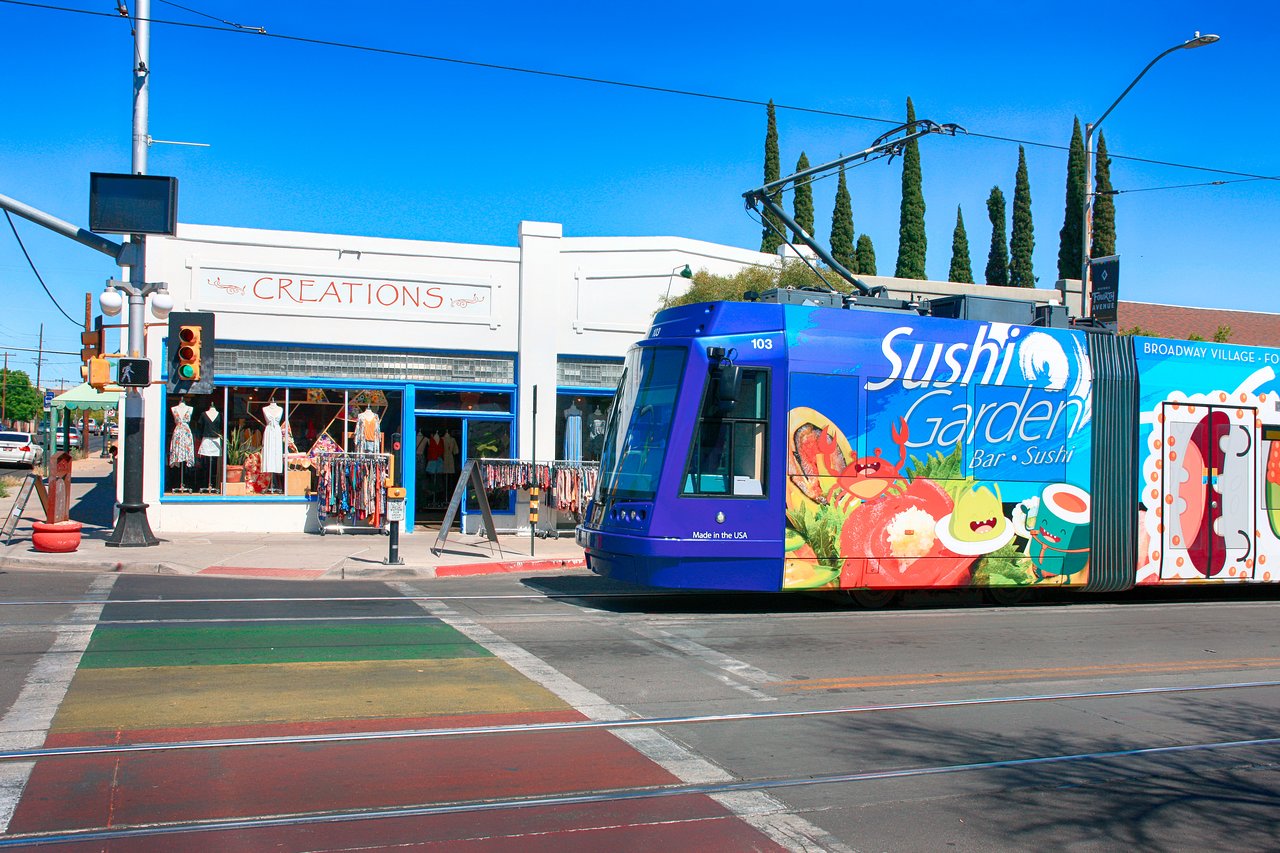
Tucson's 4th Avenue corridor is one of Arizona's most active independent restaurant and retail districts - and one of the most technically demanding commercial roofing environments in the city. Small footprints, high penetration counts, historic masonry parapets, and tenant operations that leave no scheduling slack define the work here.
The 4th Avenue commercial district runs north from University Boulevard to about 9th Street, anchored at the south end by the UA campus edge and at the north by the transitional midtown commercial blocks. The building stock is predominantly early 20th century - masonry construction from the 1920s through the 1950s, with wood-joist or steel-joist decks, parapets built to proportions that pre-date modern wind-load codes, and rooftop equipment that has been added over decades without coordinated penetration planning. The accumulated penetration inventory on a typical 4th Avenue building - kitchen exhaust hoods, multiple
Penetration count drives cost on 4th Avenue buildings more than any other factor. The actual membrane area is small; it is the flashing labor at every curb, pipe boot, and wall termination that determines the scope. Restaurant buildings also present drainage complexity: grease-laden kitchen exhaust deposits on roof surfaces accelerate membrane oxidation near exhaust penetrations, and standing water collecting in low areas around exhaust fan curbs is a chronic problem because the original drain layouts were not designed with the penetration density that decades of tenant buildouts have added.
The 4th Avenue Street Fair - one of Tucson's largest annual events - and the active seven-day restaurant and bar schedule in this corridor mean there is almost no scheduling window that does not affect a tenant. Evening bar operations, weekend restaurant peaks, and special events mean every roof project in this district has to be scoped around tenant schedules, with noise-generating and odor-generating work restricted to windows that tenants can tolerate.
Historic Masonry Buildings and Parapet Conditions
The 1920s through 1950s masonry buildings along 4th Avenue have unreinforced-masonry parapets that show consistent thermal-cycling damage: horizontal cracking at mortar joints, spalled brick faces, and separation at parapet-cap junctions. These parapets pre-date seismic and wind-load codes that would govern new construction - they are structurally intact in most cases but are not suitable for coping attachment methods designed for modern poured-concrete or CMU parapets. We assess parapet structural condition before specifying any coping system and consult with a structural engineer on parapets showing active crack progression.
Wood-joist decks on the older 4th Avenue buildings require special attention to fastener selection in replacement scopes. Standard mechanically attached TPO uses screw-and-plate fasteners that are designed for steel or concrete decks. Wood-joist decks require fastener pullout testing to confirm the deck can support the specified fastener density and pattern. We run pullout tests on representative joist bays before finalizing the attachment specification on any wood-deck building in this corridor.
Asbestos-containing materials are a legitimate consideration in the 4th Avenue building stock. Buildings constructed before 1980 may have asbestos in existing roofing felts, vapor-barrier materials, or pipe insulation at rooftop mechanical penetrations. We require a pre-demolition asbestos survey on all 4th Avenue buildings before we schedule any tearoff work. The survey determines whether abatement is required before roofing crews can proceed and whether the existing roofing material qualifies as ACM under EPA NESHAP standards.
Restaurant and Retail Scheduling Constraints
Active restaurant buildings on 4th Avenue typically operate from 11 AM through midnight seven days a week during peak season. Kitchen exhaust fans run continuously during service hours - any roof work that requires shutting down or bypassing exhaust equipment has to happen in the window after kitchen close and before morning prep. For roofing crews, this means 1 AM to 8 AM production windows for exhaust-area work. We build this scheduling reality into every 4th Avenue scope and price it accordingly.
Grease contamination on roof surfaces adjacent to kitchen exhaust penetrations requires surface preparation before any new membrane or coating can be applied. Grease bonds to existing membranes and prevents adhesion of new materials. We mechanically clean grease-contaminated areas, treat with a degreasing agent compatible with the substrate, and verify adhesion with a pull-test before applying new materials. Ignoring this step is the most common reason kitchen-area roof repairs fail within one season in the restaurant district.
Bar and entertainment businesses in the corridor have rooftop equipment - evaporative coolers, HVAC units, sound system infrastructure - that has been added and relocated over decades by different tenants. Many of these buildings have abandoned equipment curbs, capped penetrations, and decommissioned drain locations that are live leak points because they were never properly closed. Our inspection protocol specifically documents abandoned penetrations and rates each one for leak risk.
4th Avenue Access and Material Logistics
Street-level parking on 4th Avenue is metered and monitored by the City of Tucson Parking Division. Material staging from the street requires a temporary no-parking zone coordinated through the City's permit office - and because 4th Avenue is an active pedestrian corridor, the no-parking permit request gets scrutiny from the Transportation Department for traffic flow impacts. We file right-of-way permits four to six weeks before project start to allow for the review and any required public notice to adjacent businesses.
Roof access on many 4th Avenue buildings is interior - through a rooftop hatch from a storage room or stairwell - rather than from an exterior ladder on the building face. Interior access limits the size of materials that can be moved to the roof without mechanical assistance. Insulation boards, membrane rolls, and equipment have to be sized or staged for the available access hatch dimensions. We survey roof access conditions in the pre-construction walkthrough and document any access constraints that affect material handling.
Aerial lifts and small cranes can operate from the alley behind the 4th Avenue building row - the alley running parallel to 4th Avenue between 5th Avenue and 4th Avenue is the primary access spine for construction and delivery operations in this district. Alley access avoids the street-facing pedestrian constraints but has its own clearance and utility-line coordination requirements. We survey the alley access dimensions and overhead clearances before specifying any lift equipment for a 4th Avenue project.
Frequently asked questions
How do you handle grease-contaminated roof membranes on restaurant buildings?
Grease contamination requires mechanical cleaning and a compatible degreasing treatment before any new membrane or coating can adhere properly. We clean and test adhesion at all grease-affected areas before applying new materials. Skipping this step is why restaurant-area roof repairs commonly fail within one season - the new material simply does not bond to the contaminated substrate.
Can you work around active restaurant and bar schedules on 4th Avenue?
Yes, and we always build this into the scope before contract execution. Exhaust-area work that requires equipment shutdown happens in early-morning windows after kitchen close. Noise-generating operations - mechanical fastening, core drilling - are scheduled for daytime hours when businesses are not yet at full operation or between service shifts. The production schedule is written around tenant operations, not the other way around.
Do you require an asbestos survey before working on older 4th Avenue buildings?
Yes, for any building constructed before 1980. Pre-demolition asbestos assessment is required under EPA NESHAP regulations before any tearoff of roofing materials. If ACM is confirmed, we coordinate licensed abatement before roofing crews proceed. The asbestos survey timeline - typically two to three weeks from sampling to report - is built into the project schedule from the start.
How do you assess parapet condition on 1920s and 1930s masonry buildings?
We walk the parapet perimeter and document crack patterns, spalled brick, and separation at coping junctions. Active cracks - those showing differential movement between inspection visits - get referred to a structural engineer before we specify any coping system or flashing attachment that adds load or lever forces to the parapet. We do not attach mechanical fasteners to parapets showing active structural distress without written engineering sign-off.
Get a 4th Avenue commercial roofing assessment.
Our project managers understand the scheduling constraints, historic building conditions, and penetration complexity of Tucson's restaurant and retail district. We produce written condition reports with asbestos assessment status, penetration inventory, parapet documentation, and a scope written around your tenant operations.
Ready to talk through a roof?
Tell us about the building and the roof problem. We'll document it and put a plan in writing - with an honest repair-vs-replace recommendation and no upsell pressure.
Documented, repair-first commercial & industrial roofing across Tucson and Pima County. Flat and low-slope systems for occupied buildings, planned around your operation.
Services
© 2026 Commercial Roofing Contractors Tucson. All Rights Reserved. Privacy Policy · Terms of UseSite Map