
Distribution Center Roofing in Tucson
Commercial roof replacement and maintenance for Tucson distribution centers - Amazon TUS5/TUS2, FedEx, UPS, Walmart Distribution, and I-10 corridor logistics facilities - with 24-hour operations sequencing, monsoon dry-in discipline, and large-deck TPO specification.
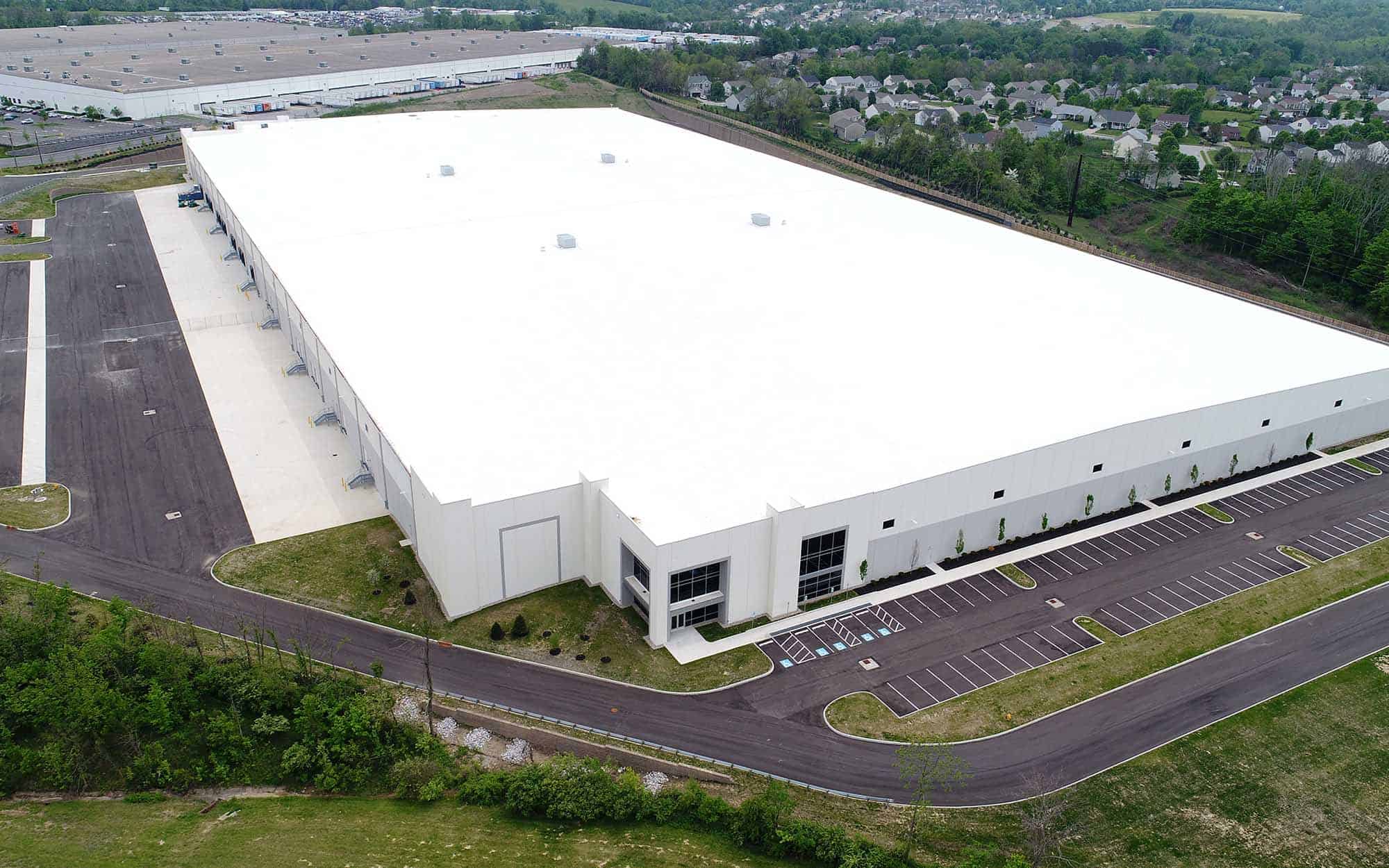
Amazon Tucson TUS5 and TUS2, FedEx Ground and Express, UPS, and Walmart Distribution anchor a growing I-10 corridor logistics cluster that extends from the Tucson metro into the Marana and Sahuarita industrial parks. Distribution center roofing in this market is defined by large deck areas, high equipment penetration density, 24-hour operations sequencing, and monsoon dry-in discipline that cannot be compromised for production speed.
Distribution center roofing in Tucson operates at a scale and operational intensity that separates it from standard commercial construction. Amazon Tucson TUS5 - the primary fulfillment and sortation center serving the Tucson metro - is a large-footprint facility with rooftop equipment density, conveyor ventilation stacks, and 24-hour processing operations that run every day of the year. Amazon TUS2 and related Amazon network facilities in the Tucson corridor are on similar operational profiles. FedEx Ground's Tucson hub on the west side and FedEx Express at Tucson International Airport serve the regional delivery network on continuous processing schedules. UPS's Tucson distribution facility and Walmart Distribution on the I-10 corridor complete the anchor tier of the local logistics market.
These facilities share a common roofing challenge: the roof is a working surface above a production environment that never stops. There is no weekend or holiday when the building is empty. Every torn-off section, every unsealed penetration, and every material delivery is happening above active freight sorting, pick-and-pack operations, or inventory storage. The roofing contractor that treats a distribution center like a standard large commercial building will have operational incidents - debris on a conveyor, a monsoon event through an open section, a penetration left unsealed above an active dock - that create real liability.
Beyond the major branded logistics operators, the I-10 corridor from the Tucson metro into Marana and the Sahuarita industrial park contains dozens of third-party logistics, cold-chain, and regional distribution buildings operated by tenants across a range of industries. Many of these buildings are in the 50,000 to 300,000 square foot range on first or second-generation single-ply or modified bitumen systems. The operational intensity varies, but the large-deck and monsoon-sequencing requirements are consistent across all of them.
Large-Deck Sequencing for 24-Hour Operations
A 500,000 square foot Amazon or Walmart Distribution facility on Tucson's I-10 corridor cannot simply be taken offline for a roof replacement. Processing does not stop, outbound freight windows do not move, and the building operates at full production during the work. We sequence distribution-center reroofs in zones that match the building's interior operations layout - coordinating the daily section boundaries with the facility's operations manager before each day's production begins.
Daily section sizes are calibrated to two constraints: what we can fully dry in within the same work window (monsoon season) and what the facility's operations team has confirmed as the acceptable daily footprint above active processing areas. On Amazon TUS5 and similar facilities, daily section coordination is a formal handoff - we submit the next day's proposed section to the facility's roof-coordinator contact by end of business each day and receive written confirmation before mobilization the following morning.
Penetration sealing is same-day on all distribution-center projects regardless of where total section production stands at crew departure. Conveyor ventilation stacks, dock-door exhaust vents, rooftop HVAC curbs, and fire-suppression risers are sealed before crew leaves. No exception for production pressure, schedule, or weather. This protocol is documented in writing before the project starts and confirmed with the facility's operations team.
Monsoon Dry-In Discipline at I-10 Corridor Logistics
Monsoon season (July through September) overlaps with peak summer processing at Amazon, FedEx, and UPS Tucson facilities. A distribution center processing tens of thousands of packages per day cannot absorb a monsoon-event water intrusion through an open roof section. We do not leave open sections overnight at distribution facilities during monsoon season - period. Daily section size is adjusted downward to match the dry-in capacity of our crew within the day's work window, and the project timeline reflects this discipline.
We maintain active weather monitoring during monsoon season using the National Weather Service Tucson point forecast and regional RADAR. When convective development within 30 miles of the Tucson I-10 corridor is tracking toward the job site, we initiate emergency dry-in regardless of production position. Emergency dry-in materials - cover boards, temporary membrane, or fully deployed sheets - are staged on the roof throughout the monsoon work window so that this response can happen in minutes rather than hours.
We provide facility operations managers with a written monsoon response protocol at project kickoff - the threshold for emergency dry-in, the contact chain when weather forces a production change, and the documentation that goes to the facility after any emergency weather response. Distribution-center facility managers who have dealt with monsoon intrusion events have a zero-tolerance standard for weather-response gaps, and we work to that standard.
Rooftop Equipment Density and Flashing Scope
Large distribution centers on the Tucson I-10 corridor have rooftop equipment density that drives the flashing scope far above what deck area alone suggests. A 400,000 square foot Amazon or Walmart Distribution facility may have 60 or more rooftop HVAC units, conveyor exhaust stacks, dock-door ventilation systems, fire-suppression risers, and communications equipment - each one a flashing detail that must be rebuilt during replacement. We document every penetration during the inspection walk and include a penetration count and flashing-scope estimate in the project proposal before any contract is signed.
Cold-chain distribution - refrigerated warehouse and freezer sections adjacent to ambient distribution - adds a constraint: penetrations above refrigerated zones cannot be left unsealed overnight, and the section-sizing protocol for refrigerated areas is tighter than for ambient areas. We identify refrigerated-zone boundaries during the pre-construction walk and include a separate sequencing note for those zones in the production schedule.
Tapered insulation is part of most I-10 corridor distribution-center replacement scopes. Original construction slope on facilities built in the 1990s and 2000s was designed to the minimum drainage standard, and drain sedimentation and insulation settling have created chronic mid-field ponding on many buildings. We design the taper package around the actual ponding map from our inspection, not a standard engineered-slope drawing.
Frequently asked questions
How do you coordinate daily section approval with Amazon or FedEx operations teams?
We submit the following day's proposed section boundaries to the facility's roof-coordination contact by end of business each day and receive written confirmation before morning mobilization. The daily coordination protocol - contact name, submission method, and confirmation timeline - is established during the pre-construction meeting with the facility's operations manager, not figured out on day one of production.
What happens if a monsoon storm develops during the middle of tear-off at a Tucson distribution center?
We initiate emergency dry-in as soon as convective development within 30 miles of the job site is tracking toward the facility - which is typically 20 to 30 minutes of warning from our weather monitoring. Emergency dry-in materials are staged on the roof throughout the monsoon season so response begins in minutes. We contact the facility's operations coordinator immediately when emergency dry-in is initiated and provide a written incident summary the same day.
How long does a large distribution center reroof take in Tucson?
A 400,000 to 500,000 square foot distribution center takes 10 to 14 weeks of production under monsoon dry-in protocol, accounting for daily section-size limits, penetration density, and the daily operations coordination. We provide a written zone-by-zone production schedule before contract signing - facility management should know the expected completion date and the production sequence before we mobilize, not after.
Do you handle refrigerated cold-storage zones within a larger distribution facility?
Yes. Refrigerated zones require same-day penetration sealing and smaller daily tear-off sections because open sections above refrigerated areas cannot be left overnight. We identify refrigerated-zone boundaries during the pre-construction walk and include a separate sequencing protocol for those zones in the production plan. Coordination with the facility's refrigeration contractor for temporary unit isolation during curb-flashing work is part of our pre-construction scope on cold-storage sections.
Get a distribution center roof scope for your Tucson I-10 corridor facility.
Our project managers will walk the full deck, document every penetration and refrigerated-zone boundary, and produce a written scope and daily-coordination protocol before any mobilization date is set.
Ready to talk through a roof?
Tell us about the building and the roof problem. We'll document it and put a plan in writing - with an honest repair-vs-replace recommendation and no upsell pressure.
Documented, repair-first commercial & industrial roofing across Tucson and Pima County. Flat and low-slope systems for occupied buildings, planned around your operation.
Services
© 2026 Commercial Roofing Contractors Tucson. All Rights Reserved. Privacy Policy · Terms of UseSite Map