
Funeral Home Roofing in Tucson, AZ
Tucson funeral home and mortuary roofing handled with quiet scheduling and a dignified appearance - services protected, preparation exhaust never interrupted.
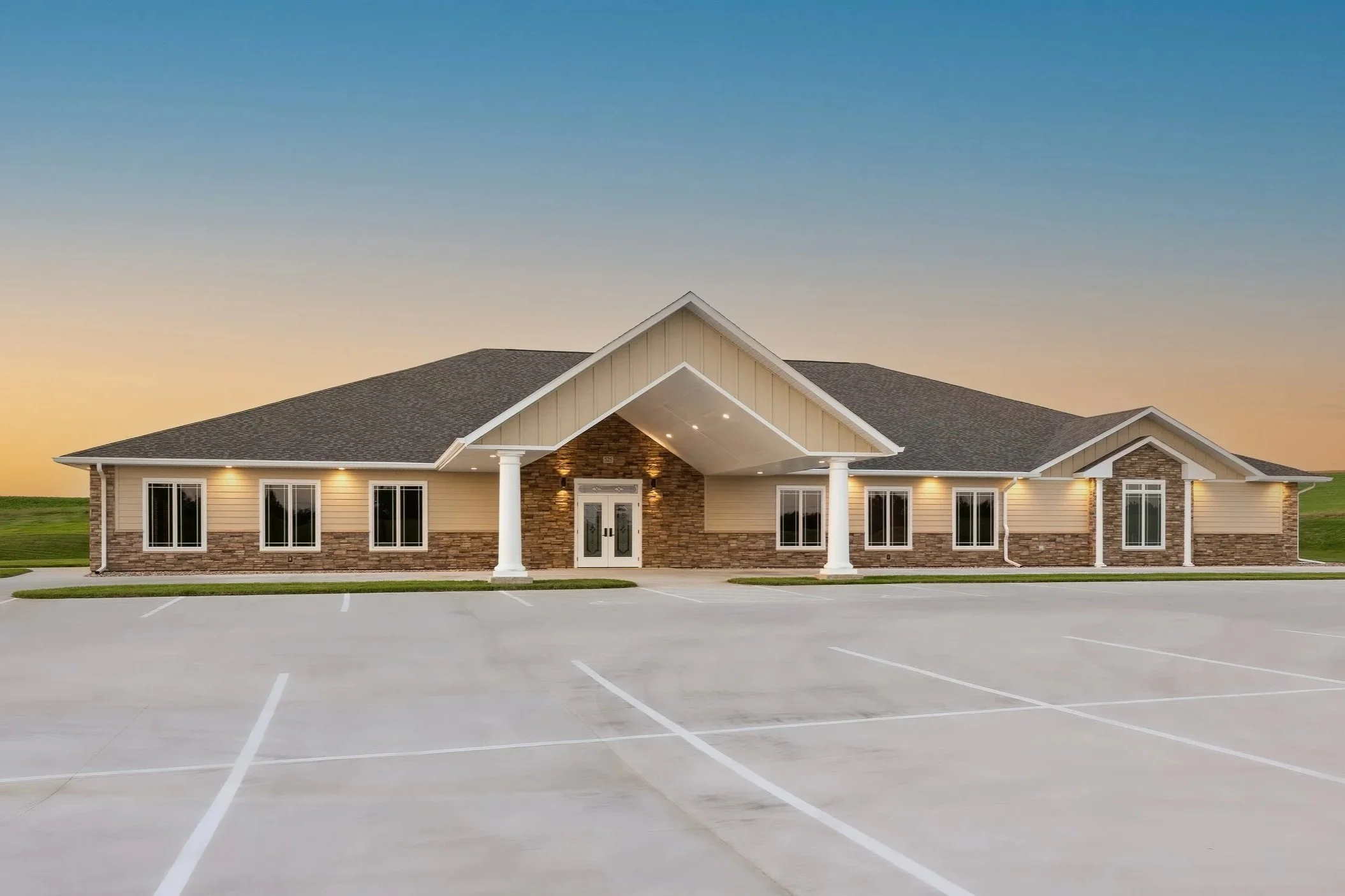
Tucson's funeral homes and mortuaries are woven into the city's oldest neighborhoods and its established commercial streets - long-standing chapels near downtown and along Speedway and Oracle, family operations that have served the same families for generations, and the larger memorial campuses out toward the east side and the Catalina foothills. A funeral home is unlike almost any other building we roof. It carries grief, it has to look composed and cared for from the street, and it is rarely empty. Roofing it well means doing demanding work without the family in the chapel ever knowing a crew was on the building.
Two things make these projects distinct, and they have nothing to do with the membrane itself. The first is scheduling discretion - services and visitations land on a calendar driven by death calls, not by construction convenience, and the building has to be fully presentable on short notice. The second is appearance, because a funeral home that looks neglected undercuts the trust families place in it on the hardest day of their lives. We plan around both before we ever discuss roof systems.
Quiet Scheduling Around Services
The core of a funeral home roofing job is staying invisible. We build the work plan off the funeral director's weekly calendar and take advance notice of every scheduled service and visitation. Loud work stops well before a service begins, the crew stays clear of the chapel, the entry, and the porte-cochère while families are arriving and gathering, and we keep equipment and staging out of sightlines from the parking areas and the front of the building. Daily dry-in is confirmed before the facility closes each evening so an unexpected after-hours arrangement is never affected. The standard we hold is simple: a family attending a service should have no idea the roof is being replaced over their heads.
The Preparation Room Exhaust Never Stops
The embalming and preparation area sets a hard technical rule. Those rooms run under negative pressure to contain formaldehyde and other chemical vapors, and the rooftop exhaust serving them has to stay live continuously to keep the facility compliant and safe. We locate that exhaust stack before mobilization, flash around it as its own scope item with the director's sign-off, and confirm the exhaust keeps running during any work near it. That stack is never capped, blocked, or taken offline for roofing convenience - the ventilation comes first and the roof work plans around it.
Chapel Spans and Older Decks
Many Tucson funeral homes carry a chapel or visitation room that spans forty to sixty feet without an interior column, much like a small church sanctuary. Those clear spans generate real wind-uplift loads and need a fastening pattern and membrane specification matched to the deck and the span rather than a stock detail. Where the chapel sits on a wood or concrete deck, we confirm the load capacity before settling on insulation thickness. The older funeral homes in Tucson's established districts often still wear built-up roofing, and on those we core-sample and run a moisture survey before any recover decision, because a surface that still looks serviceable frequently hides wet, failed insulation underneath.
Appearance, Drainage, and the Right System
A dignified building reads as cared-for, and the roof is part of that even when no one looks directly at it - clean edge metal, sound flashings, no staining bleeding down a parapet or over the entry canopy. For flat-roof funeral homes here we typically specify a 60-mil TPO mechanically attached over tapered polyiso, the taper correcting the drainage shortfalls common on older structures and clearing the ponding water that ages a low-slope roof fastest under the desert sun and the hard monsoon rains. The porte-cochère and any covered entry canopy get their own attention, since the canopy-to-building transition and its drainage are a frequent source of chronic leaks on these buildings and deserve to be addressed as discrete items. We bring the same composure and professional discretion to a funeral home that we bring to a hospital or a house of worship, because the families counting on the building deserve nothing less.
An Occupied Building With No Real Maintenance Window
A funeral home is never conveniently empty. Visitation runs into the evenings, services can be scheduled with little notice, and the preparation side works on its own clock. There is no Sunday-only closure or summer break to slip a reroof into. That means the discipline of an occupied-building job applies the whole way through: containing noise and debris, keeping interior spaces clean and free of dust drifting down from work above, and confirming the building is fully presentable at the end of every single day rather than at the end of the project. We protect interior finishes, the chapel furnishings, and the visitation rooms below the work area, because a family should never walk into a space that smells of construction or shows a trace of it.
Communication carries the project. We keep one direct line to the funeral director, take the upcoming calendar at the start of each week, and adjust the plan when an arrangement comes in unexpectedly. A loud tear-off scheduled over a morning that suddenly has a service moves - that flexibility is part of the work, not an exception to it.
Maintenance and Coatings to Extend a Sound Roof
Not every funeral home needs a full replacement, and on a building that values quiet and continuity, a less disruptive path is often the better one. Where the existing roof is structurally sound but aging, a restoration coating can extend its life with far less noise and intrusion than a tear-off. A reflective coating over a sound substrate also knocks down the Tucson heat load and the daily thermal cycling that ages a low-slope roof, buying years before a full replacement is needed. We inspect honestly and recommend the coating or repair path when it genuinely serves the building, and a full replacement only when the roof has reached the end of what maintenance can do.
Desert Exposure on a Building That Must Look Cared-For
Tucson's sun and UV are hard on any low-slope roof, and on a funeral home the consequences are visible as well as functional. A surface that degrades, an edge metal that streaks, a parapet that stains - these read from the street and quietly undercut the dignity the building is supposed to project. We keep the visible details clean and specify reflective surfaces that resist the heat-driven aging that shows up fastest here. The monsoon brings the other test: short, hard storms that drive water at the flashings and the entry-canopy transitions, which are the very spots that produce the chronic leaks families never see coming until a ceiling stain appears over the chapel. We address those transitions deliberately and size the drainage for the real storm rather than a gentle average rain.
Across Tucson's long-established funeral homes - the downtown-area chapels, the family operations on Speedway and Oracle, the memorial campuses out toward the foothills - the assignment is the same: keep the building sound and dignified, protect the preparation ventilation without interruption, and do demanding roof work so quietly that the families it serves never know it happened.
Ready to talk through a roof?
Tell us about the building and the roof problem. We'll document it and put a plan in writing - with an honest repair-vs-replace recommendation and no upsell pressure.
Documented, repair-first commercial & industrial roofing across Tucson and Pima County. Flat and low-slope systems for occupied buildings, planned around your operation.
Services
© 2026 Commercial Roofing Contractors Tucson. All Rights Reserved. Privacy Policy · Terms of UseSite Map