
Silicone Roof Coating Systems in Tucson - Dominant Restoration Choice in the Sonoran Desert
Silicone roof coating systems for Tucson commercial buildings - the dominant restoration strategy in the Sonoran Desert market for flat roofs with dry insulation, UV-degraded membranes, and owners seeking 10-to-15-year service life extension at one-third the cost of replacement.
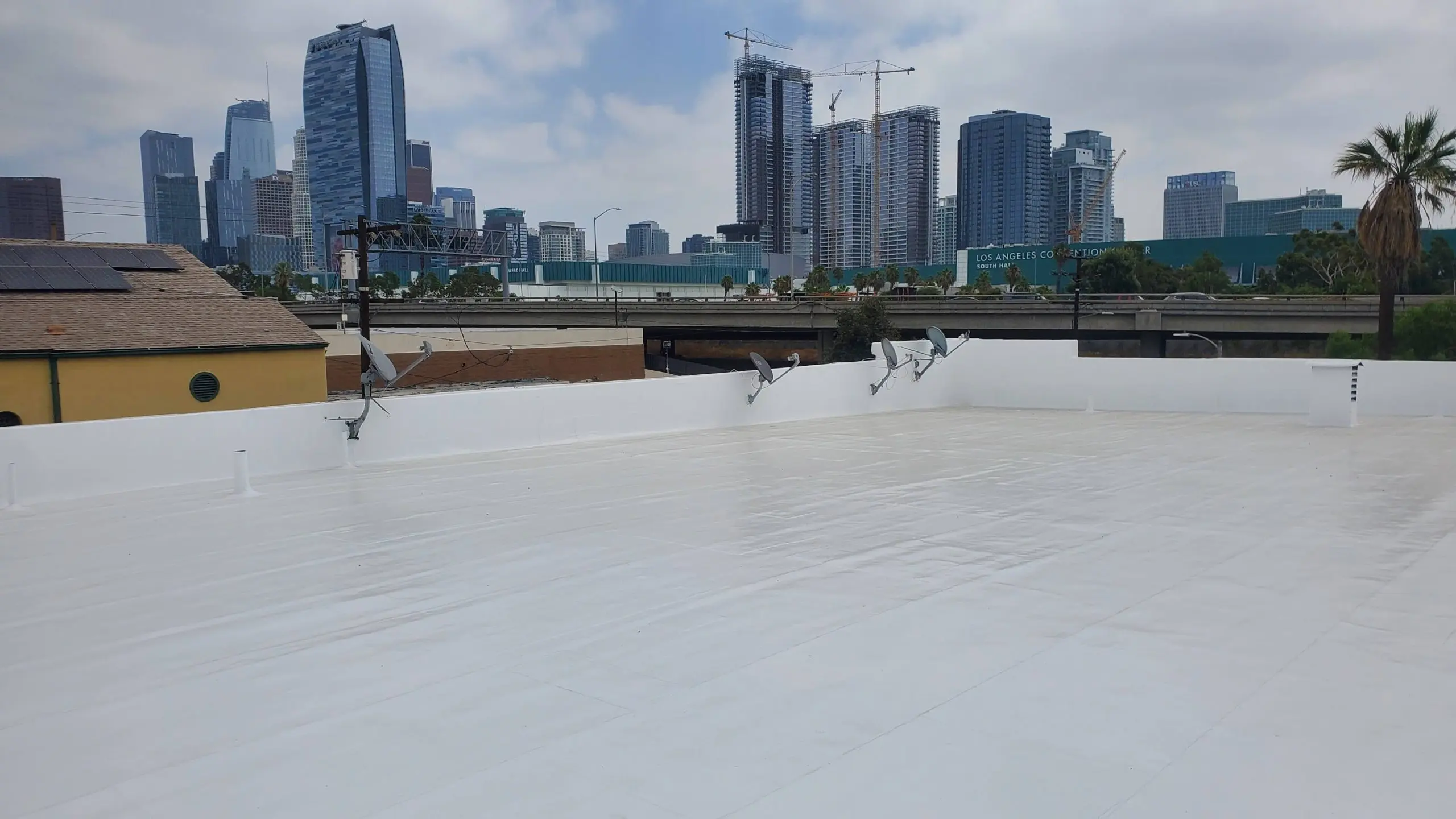
Silicone roof coating is the most widely used commercial roof restoration strategy in the Tucson market. The reasons are specific to the Sonoran Desert: white silicone restores reflectance on UV-oxidized membranes, handles ponding water without degrading - critical in a market with blocked-drain monsoon exposure - and delivers a warranted 10-to-15-year service life extension at roughly one-third the cost of tear-off and replacement.
No other restoration product has achieved the market penetration in Tucson commercial roofing that silicone coatings have. The reasons are grounded in what the Sonoran Desert does to commercial membranes over time and what silicone chemistry handles well in response. UV-oxidized TPO and PVC that has darkened over years of extreme UV exposure gets its reflectance restored by a white silicone top coat. Modified bitumen and BUR cap sheets with surface checking and minor lap separations get those defects sealed before they become active leaks. The result is a warranted system with a documented service life extension - not a patch job.
Silicone's ponding-water resistance is a specific performance advantage in the Tucson market. Unlike acrylic coatings, which degrade when exposed to sustained standing water, silicone maintains its adhesion and waterproofing performance under ponding conditions. Tucson's monsoon events can leave standing water on flat commercial roofs with blocked drains or insufficient slope - a condition that an acrylic coating handles poorly and silicone handles without degradation. This characteristic makes silicone the default coating specification in the Tucson market for any roof with known ponding conditions.
The prerequisite for silicone restoration is a dry, sound substrate. Silicone cannot fix saturated insulation - it creates a waterproof layer over the top of the existing assembly, but if the insulation below is wet, the trapped moisture continues to drive deck corrosion and substrate deterioration. We pull moisture cores at multiple locations across every roof we assess for coating candidacy. If the cores are dry, coating is a legitimate capital option. If they are wet, the honest recommendation is replacement.
Why Silicone Is the Dominant Restoration Choice in the Tucson Market
Tucson's UV environment degrades commercial membranes faster than manufacturer service-life tables predict for moderate climates. A white TPO installed 12 years ago may have surface oxidation and reflectance loss that is visible - the membrane has darkened, granular texture has developed, and minor surface checking is present - but the membrane underneath is still structurally intact, the seams are sound, and the insulation is dry. That roof is not a replacement candidate; it is a silicone coating candidate. The coating restores reflectance to new-membrane levels, seals the surface checking, and adds 10 to 15 years of warranted life at roughly one-third the replacement cost.
The economics in the Tucson market favor silicone as a capital-planning tool. A 50,000-square-foot commercial roof approaching the end of its membrane's service life faces a replacement cost of $400,000 to $700,000 depending on system and substrate conditions. A silicone restoration on the same roof, if the substrate is dry, runs $100,000 to $180,000 and delivers a warranted 10-to-15-year service life with the manufacturer's NDL coating warranty at closeout. The owner can defer the full replacement capital outlay and maintain a warranted roof system through the intervening years.
The silicone coating market in Tucson has several regional suppliers and applicators with Sonoran Desert-specific experience. We work with coating specifications from GE Silicones, Tremco, and other manufacturers with active field representation in the Arizona market. Manufacturer field rep involvement at pre-application inspection and closeout is standard for warranted systems - we manage that coordination as part of every coating project.
Silicone Coating Application Process in Tucson Conditions
Silicone coating application in Tucson requires specific attention to surface preparation and ambient conditions. The existing membrane must be cleaned to remove dust, biological growth, and any contaminants that would prevent primer adhesion. In the Sonoran Desert, roof surfaces accumulate mineral dust from monsoon events and windblown Sonoran soils that must be pressure-washed and allowed to dry before coating. The drying window in Tucson's summer months is typically short - low humidity allows surfaces to dry quickly after washing.
Primer selection and application is critical to coating adhesion on UV-aged membranes. TPO and PVC that has been on a Tucson roof for 10-plus years may have surface chemistry changes from UV exposure that affect primer adhesion. We test primer adhesion on the specific membrane before committing to the full coating specification, and we document the primer type and application rate in the project record as a warranty requirement.
Silicone top coat is applied in two coats to reach the manufacturer's minimum dry-film thickness requirement - typically 20 to 30 mils for a warranted system. Coat sequencing in Tucson's summer heat must account for skin-over time - silicone skins over quickly in high-UV, low-humidity conditions, and applying a second coat before the first has reached appropriate cure can trap solvent and reduce adhesion between coats. We schedule coat sequencing around ambient temperature and UV conditions, typically running second coats in morning hours during peak summer.
Silicone Coating Maintenance and Warranty
Warranted silicone coating systems require documented annual maintenance to keep the warranty active - drain cleaning, seam inspection, and prompt repair of any damaged coating areas. In Tucson, pre-monsoon drain inspection and clearing is the most important annual maintenance item: a blocked drain on a silicone-coated roof creates a ponding condition that silicone handles well chemically but that can overwhelm scuppers and create hydrostatic pressure at perimeter flashings if the blockage is severe enough.
Silicone coating surfaces in Tucson accumulate Sonoran Desert dust and biological matter over time, which progressively reduces the surface reflectance. Annual rinsing of silicone-coated roofs in Tucson - a straightforward maintenance item - maintains the surface reflectance that drives energy performance and warranty compliance. Coating manufacturers specify a minimum reflectance threshold for warranty maintenance; we document reflectance readings in annual inspection reports for buildings we maintain.
At the end of a silicone coating system's warranted service life, recoating is an option if the underlying membrane is still sound. A silicone recoat - cleaning, priming, and applying new top coats - can extend the system for another 10-plus years. Silicone bonds well to cured silicone, which makes this approach practical. Some Tucson commercial buildings are on their second or third silicone application over the original single-ply membrane - a cost-effective capital cycle that defers major replacement for decades on the right substrates.
Frequently asked questions
How do I know if my Tucson commercial roof qualifies for silicone coating?
Moisture cores at multiple locations across the roof are the primary qualification test. If the insulation is dry, the existing membrane is structurally intact - not cracked through, seams still bonded, no areas of active delamination - and the deck is sound, the roof is a coating candidate. If any of those conditions are not met, coating is not appropriate. We pull cores at drain pans, parapet corners, mid-field locations, and any area flagged from interior ceiling staining, and we give you the core results with a written coating-vs-replacement assessment before any capital commitment.
Why is silicone preferred over acrylic coatings on Tucson commercial roofs?
Ponding-water resistance. Acrylic coatings re-emulsify when exposed to sustained standing water - they lose adhesion and waterproofing performance in the ponding conditions that Tucson's monsoon events create on roofs with imperfect drainage. Silicone maintains its performance under sustained ponding without degradation. For a Tucson commercial roof with any areas of known ponding, silicone is the only appropriate coating choice.
Does a silicone coating system carry a manufacturer warranty?
Yes. Major silicone coating manufacturers offer 10-to-15-year NDL warranties on qualifying applications - installation by a credentialed applicator, adherence to the manufacturer's specification for primer and coat thickness, manufacturer field rep inspection at closeout, and documented annual maintenance. We deliver the warranty document at project closeout along with the roof-zone diagram, photo record, and reflectance documentation.
What does silicone coating cost compared to roof replacement in Tucson?
Silicone restoration on a qualifying Tucson commercial roof typically runs 25 to 35 percent of the cost of full tear-off and replacement with a new single-ply system. The exact numbers depend on roof size, surface preparation requirements, existing membrane condition, and the coating system specified. We produce a written cost comparison - coating scope and estimated cost alongside a replacement scope and estimated cost - for every roof we assess as a coating candidate, so the decision is grounded in documented numbers.
Is your Tucson commercial roof a silicone coating candidate?
Our project managers will walk the roof, pull moisture cores, and produce a written assessment with a coating-vs-replacement recommendation and cost comparison specific to your building and its Sonoran Desert condition.
Ready to talk through a roof?
Tell us about the building and the roof problem. We'll document it and put a plan in writing - with an honest repair-vs-replace recommendation and no upsell pressure.
Documented, repair-first commercial & industrial roofing across Tucson and Pima County. Flat and low-slope systems for occupied buildings, planned around your operation.
Services
© 2026 Commercial Roofing Contractors Tucson. All Rights Reserved. Privacy Policy · Terms of UseSite Map