
Cool Roof Systems in Tucson - Arizona Energy Code Compliance & Sonoran Desert Heat Reduction
Cool roof systems for Tucson commercial buildings - Arizona IECC 2018 Climate Zone 2 Solar Reflectance Index compliance, membrane and coating specifications that reduce rooftop surface temperatures by 50 to 70 degrees, and documented energy-compliance closeout.
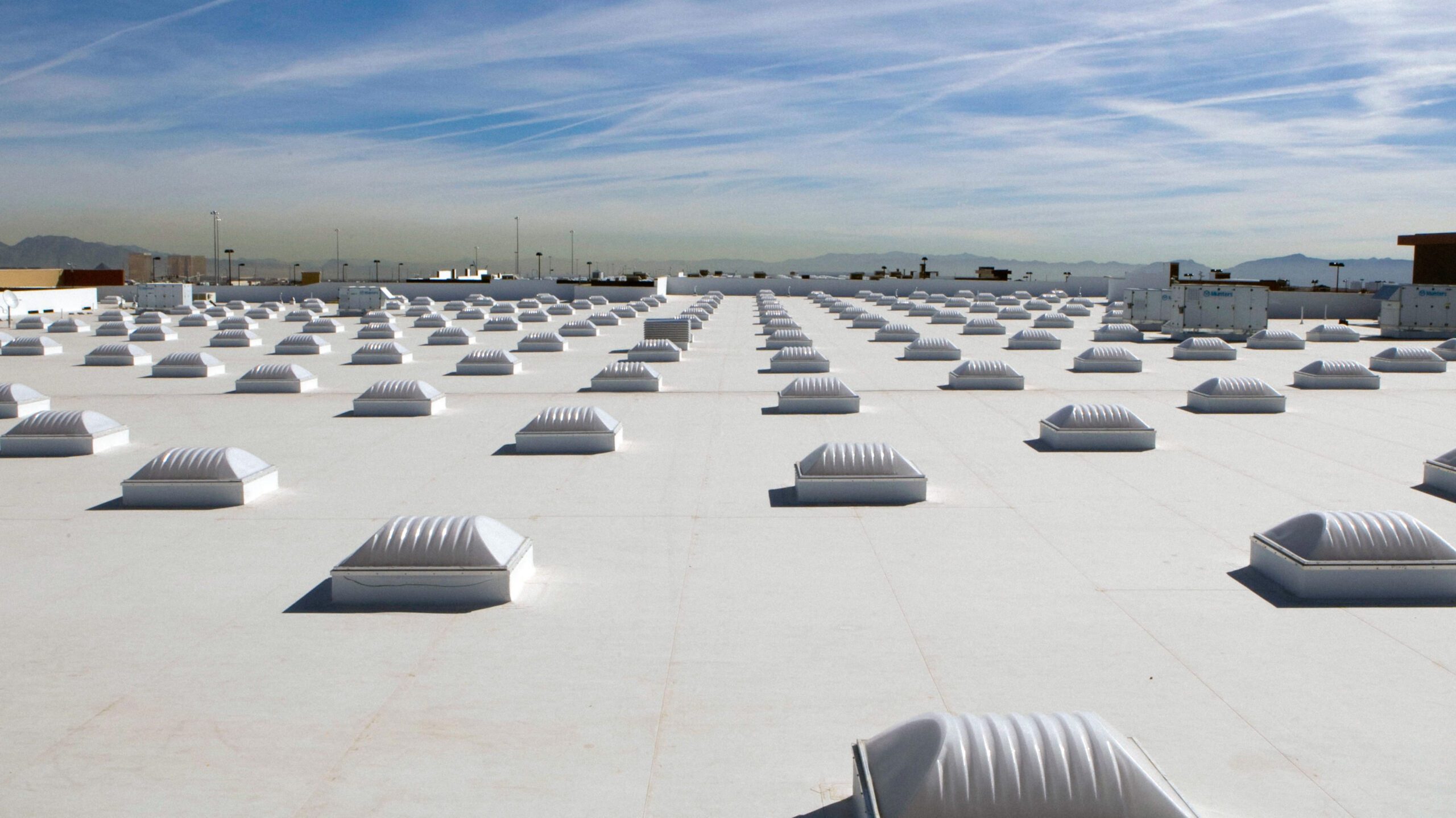
Arizona requires cool roofs on new commercial buildings in Tucson. The energy code mandate is IECC 2018 with Arizona amendments, and the Sonoran Desert provides the clearest possible rationale: rooftop surface temperatures on non-compliant dark membranes routinely exceed 175°F in Tucson summers, driving HVAC loads that a cool roof system reduces by 50 to 70 degrees of surface temperature.
A cool roof is defined by its ability to reflect solar radiation rather than absorb it. The two metrics that matter for Arizona energy code compliance are solar reflectance (the fraction of incoming solar radiation reflected by the surface) and thermal emittance (the fraction of absorbed heat that the surface re-emits as thermal radiation). The combination of these values produces the Solar Reflectance Index (SRI), which is the single compliance metric specified in IECC 2018 for commercial roofs in Climate Zone 2.
For low-slope commercial roofs in Tucson - flat and low-pitched roofs with a slope of 2:12 or less - Arizona IECC 2018 requires a minimum initial SRI of 82 or a three-year-aged SRI of 64. These requirements apply to new roof construction and to roof replacements that White TPO, white PVC, white silicone coatings, and some standing seam metal panels Dark membranes - black EPDM, standard modified bitumen, dark aggregate BUR - typically do not.
In practice, the energy code requirement aligns with what the Sonoran Desert climate makes pragmatically necessary anyway. A dark commercial membrane in Tucson reaches surface temperatures that measurably increase HVAC cooling load, accelerate membrane polymer degradation, and reduce the service life of the insulation stack below. The code mandates what climate physics recommends independently.
Arizona IECC 2018 Cool Roof Requirements for Tucson
IECC 2018 as adopted in Arizona applies cool-roof requirements by roof pitch: low-slope roofs (2:12 or less) must Steep-slope roofs (greater than 2:12) must These values apply to both new construction and replacement roofing that triggers the code's replacement provisions. Exceptions exist for specific roof types and building uses - we document the applicable exception or compliance path in the permit package for every project.
The City of Tucson Development Services Center reviews IECC energy compliance documentation at permit submittal for commercial roof permits. This means the membrane's SRI value, the insulation R-value calculation, and the installation method all appear in the permit package and are reviewed before the permit is issued. We prepare that documentation for every project and manage the submittal process as part of the standard project scope.
Documenting the cool-roof specification in the project closeout file matters beyond permit compliance. Insurance carriers are beginning to recognize cool-roof systems as a risk-mitigation factor for commercial buildings in hot-climate markets. The building owner needs the SRI documentation in their files to take advantage of any rate considerations that apply. We include the membrane's SRI value and the compliance summary in the closeout package delivered at the end of every project.
Cool Roof System Options for Tucson Commercial Buildings
White TPO and white PVC are the dominant cool-roof membranes in the Tucson commercial market because they The market share of these two membranes in Tucson new-roof and replacement work is substantial - the climate alignment is strong enough that specifying a non-compliant system requires more justification than specifying a compliant one.
White silicone coatings applied over existing non-compliant membranes are the standard cool-roof compliance path for the large inventory of dark-surface membranes and built-up systems on Tucson commercial buildings. The silicone restores surface reflectance to SRI-compliant levels while simultaneously extending system life and providing warranted waterproofing. This is a common permit path for existing buildings undergoing triggering repairs - rather than a full tear-off-and-replace, the owner coats the existing system with white silicone and documents the SRI compliance in the permit package.
Cool-color metal panels with Kynar 500 coatings deliver SRI compliance on standing seam applications. These panels use solar-reflective pigment technology to reflect near-infrared radiation even in medium-tone colors - tan, gray, bronze, and terra cotta finishes that complement Tucson's desert architectural palette while meeting the SRI threshold. We document the panel manufacturer's SRI value for the specified color in the permit package for every metal roof project.
The Energy Performance Case Beyond Code Compliance
Arizona utility rate structures make the energy-performance argument for cool roofs straightforward to quantify. A 50,000-square-foot Tucson commercial building with dark membrane replacing it with a white TPO system will typically see measurable reductions in peak cooling demand - the HVAC units are not trying to overcome 185°F surface temperatures driving heat into the building below. The reduction in peak demand is relevant for commercial utility customers on demand-charge rate schedules, where reducing peak kW draw can produce meaningful billing savings.
The membrane longevity argument reinforces the economics. A non-compliant dark membrane in Tucson's UV environment degrades faster than its manufacturer's service-life estimate, which is calibrated for moderate climates. A white cool-roof membrane on the same building reaches the same UV and thermal exposure with surface temperatures 50 to 70 degrees lower - a difference that extends the membrane's useful life and delays the next replacement capital event. We document both the energy performance rationale and the lifecycle cost analysis in the project scope for any replacement project where a non-compliant-to-compliant conversion is occurring.
Frequently asked questions
Is a cool roof required by law on my Tucson commercial building replacement?
IECC 2018 as adopted in Arizona requires cool-roof SRI compliance on new commercial roofs and on replacements that The specific trigger depends on the percentage of roof area being replaced and the building's permit classification. We review the applicable code requirement and exception paths for every project before permit submittal and document the compliance approach in the permit package.
My existing dark EPDM does not What are my options to achieve compliance without a full replacement?
A white silicone coating applied over the existing EPDM - if the substrate is dry and the membrane is intact - can bring the assembly into SRI compliance at roughly one-third the cost of tear-off and replacement. The silicone coat's SRI value is documented in the permit package as the compliance demonstration. We pull moisture cores to verify the substrate is coating-eligible before recommending this approach.
Does a cool roof actually reduce my building's energy bills in Tucson?
Yes, measurably in Tucson's climate. The reduction in rooftop surface temperature - 50 to 70 degrees compared to a dark membrane - reduces the heat flux into the building envelope below the roof, reducing cooling load on the HVAC system during peak summer hours. For commercial buildings on demand-charge utility rate schedules, the reduction in peak cooling demand can be a meaningful billing factor. The exact savings depend on building geometry, insulation R-value, and HVAC system efficiency - we do not make specific savings claims, but the physics are clear and the utility billing data from maintained cool-roof buildings in Tucson supports the case.
Need Arizona energy code documentation for a Tucson commercial roof?
Our project managers will assess the existing system, determine the compliance path - new membrane specification or silicone coating over the existing surface - and produce a written scope with SRI documentation ready for City of Tucson or Pima County permit submittal.
Ready to talk through a roof?
Tell us about the building and the roof problem. We'll document it and put a plan in writing - with an honest repair-vs-replace recommendation and no upsell pressure.
Documented, repair-first commercial & industrial roofing across Tucson and Pima County. Flat and low-slope systems for occupied buildings, planned around your operation.
Services
© 2026 Commercial Roofing Contractors Tucson. All Rights Reserved. Privacy Policy · Terms of UseSite Map