
Commercial Solar Roof Integration in Tucson, AZ
We coordinate rooftop PV with your roof in Tucson, AZ: racking penetration flashing, membrane compatibility, ballast and uplift loads, and warranty sign-off between roofer and solar installer.
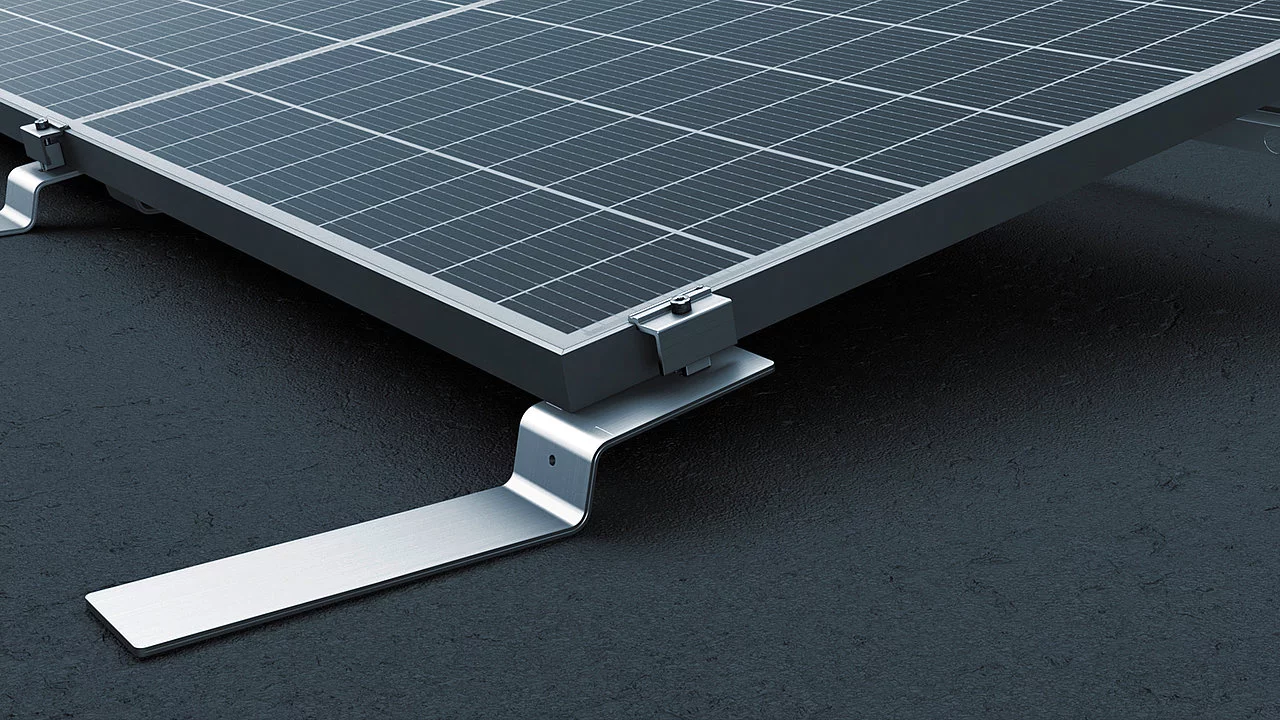
The roof has to outlive the array it carries
Southern Arizona gets enough sun that the math on rooftop generation is hard to argue with, and we see arrays going up everywhere from the logistics buildings off the Aerospace Parkway corridor near Tucson International to the office product around Williams Centre and the warehouse rows feeding the I-10 freight lanes south of downtown. What gets lost in the excitement is that a photovoltaic system is a 20-to-25-year commitment fastened to a membrane that may not have 20 years left in it. When those two timelines do not line up, somebody ends up paying to lift an entire array off a roof so the roof underneath can finally be replaced. We exist to keep that from happening.
Our lane is the roof, not the panels. We do not size inverters or sell modules. What we do is confirm the deck and membrane can take a solar system, flash every place the system breaks the roof, and get the membrane manufacturer to bless the whole thing so nobody's warranty quietly disappears. When an owner loops us in alongside their solar contractor early, the array sits on a roof that was actually prepared to receive it instead of one that was simply available.
Remaining service life sets the whole sequence
Before anyone talks about panel counts, we want to know how many years the existing roof has left. That single number decides everything downstream. On a roof off East Broadway or out in the Rita Ranch retail pockets where we core into the assembly and find a sound membrane with a documented decade-plus of service ahead of it, the array can land on what is already there. On a roof showing five or six years of remaining life, putting solar down first is almost always the more expensive route, because the inevitable tear-off then drags a detach-and-reset of the entire system along with it.
So every solar conversation we have starts with a condition assessment and a written remaining-service-life range. The owner and whoever is financing the array can then make an honest choice: install on the current roof, or reroof now and set the panels right afterward onto an assembly engineered to outlast them. Both are legitimate. Guessing at it is not.
What we check before signing off on a solar-ready roof
- An infrared scan or core cuts to confirm the insulation is dry, because moisture sealed beneath a new array is brutally hard to locate and fix once panels cover it.
- Seam, flashing, and fastener condition across the field, with extra attention to the zones where racking feet or ballast pads will sit.
- Drainage paths, since an array changes how crews reach drains and how dust and debris collect around them in a climate that delivers both monsoon runoff and blowing grit.
- A documented service-life range the owner and the solar financier can both plan capital against.
Two loads pull against each other up there
A Tucson solar roof has to answer for weight and for uplift at the same time, and the two work in opposite directions. Ballasted racking is the default on flat commercial roofs because it anchors the array with concrete pavers instead of puncturing the membrane. But that ballast is real dead load, and a lot of Tucson's mid-century commercial building stock was framed for lighter roofs than a fully ballasted system imposes. So the structural capacity gets verified before a single block goes down.
Then the wind argues the other way. Monsoon outflow boundaries and the microbursts that ride them slam low-slope roofs every summer, and a panel field is a big sail for that wind to lever against. Ballast quantities are run for the building's exposure and its roof zones, with the heaviest concentrations packed into the perimeter and corners where uplift pressure spikes. Where the structure simply cannot carry enough ballast to hold the array down in that wind, the design switches to mechanical attachment, and every one of those anchor points becomes a roofing detail that lands squarely on us.
The penetrations are what leak three years later
Mechanically anchored racking feet and the conduit dropping power down into the building's electrical room all puncture the roof plane. Each of those holes is a future leak if it gets flashed in a hurry. We detail every racking foot to the membrane manufacturer's specification and fold it into the warranty rather than leaving it as an undocumented penetration sitting out in the field.
Conduit is where trade coordination falls apart most reliably. When a solar electrician straps conduit flat to the membrane with no standoffs, that pipe expands and contracts through Tucson's enormous daily temperature swing and saws itself a slot right through the roof. A generic pipe boot slipped over conduit fails the same way on the same timeline. We set the conduit routing and the through-roof penetration details with the solar contractor before any pipe is pulled, so the flashing is an engineered assembly instead of an improvisation invented on installation morning.
Keeping the membrane warranty alive
The major single-ply manufacturers will permit solar on a warranted roof, but strictly on their terms: approved ballast pads, approved walkway pads on the maintenance routes, approved penetration details, and a pre-installation review by their field technician. Skip any of those and the manufacturer is within its rights to void coverage on the entire roof, not just the patch under the panels. We schedule and walk that manufacturer review as part of the job and document the install so the roofing warranty and the solar warranty both register cleanly.
Why a reflective membrane belongs beneath the panels
A white TPO or PVC membrane under an array earns its keep twice in this climate. It pulls down the surface temperature directly beneath the modules, which nudges panel output up during the worst of the summer heat, and it holds the cooling load down across the unshaded stretches of roof. A mechanically attached white single-ply also gives ballasted racking a flat, consistent bed to rest on. Where ballast weight has to stay minimal, we shift to a fully adhered assembly so nothing is fighting the structure.
How we run the job with your solar contractor
A solar roof only works when roofing and solar happen in the correct order. The membrane goes down and gets inspected before any racking touches it. Our roofing crew flashes the conduit penetrations, not the solar electrician, and they get flashed before conduit is run. We sit down with the solar contractor in a pre-construction meeting and lock the sequence, the conduit plan, the penetration details, and the final sign-offs that both warranties hang on. What the owner ends up holding is one coordinated project, not two trades pointing fingers at each other after the first leak shows up on the ceiling tile.
Questions Tucson owners ask us about rooftop solar
Should we reroof before the panels go on, or install on the roof we have?
It hinges on remaining service life. With fifteen or more documented years left in the membrane, install on what is there. With six or seven years or less, reroofing first almost always costs less over the life of the system than detaching and resetting the whole array during a forced tear-off later. We hand you the service-life number so the call is grounded in the roof's real condition rather than optimism.
Do the solar attachments have to puncture the roof?
Often they do not. Ballasted racking holds the array with weighted blocks and leaves the membrane intact, which is the usual approach on Tucson's flat commercial roofs. Penetration-anchored racking comes in only where the structure or the uplift numbers will not allow enough ballast, and in that case every foot is individually flashed to the manufacturer's detail and pulled under the warranty.
What does adding solar do to our roof warranty?
The major membrane manufacturers allow solar on a warranted roof when the design and installation follow their rules, which means approved ballast pads, walkway protection, approved penetration details, and a pre-install review by their representative. We run that review and document the work so coverage stays in force on the whole roof.
Which membrane is best under an array?
White 60-mil TPO or PVC is the typical spec. The reflective surface keeps temperatures down under the modules and across the field, and a mechanically attached system gives ballasted racking a stable base. We use a fully adhered assembly where ballast loads have to be kept low.
Will you coordinate the build sequence with our solar installer?
Yes. We meet the solar contractor before construction to nail down the order of work, the conduit routing, the penetration specs, and the inspection steps that register both warranties, and our crew flashes every roof penetration before conduit is pulled.
Ready to talk through a roof?
Tell us about the building and the roof problem. We'll document it and put a plan in writing - with an honest repair-vs-replace recommendation and no upsell pressure.
Documented, repair-first commercial & industrial roofing across Tucson and Pima County. Flat and low-slope systems for occupied buildings, planned around your operation.
Services
© 2026 Commercial Roofing Contractors Tucson. All Rights Reserved. Privacy Policy · Terms of UseSite Map