
Car Wash Roofing in Tucson, AZ
Tucson car wash roofing built for chemical vapor and constant humidity - tunnel bay membranes, vacuum canopy work, and drainage corrections that hold up.
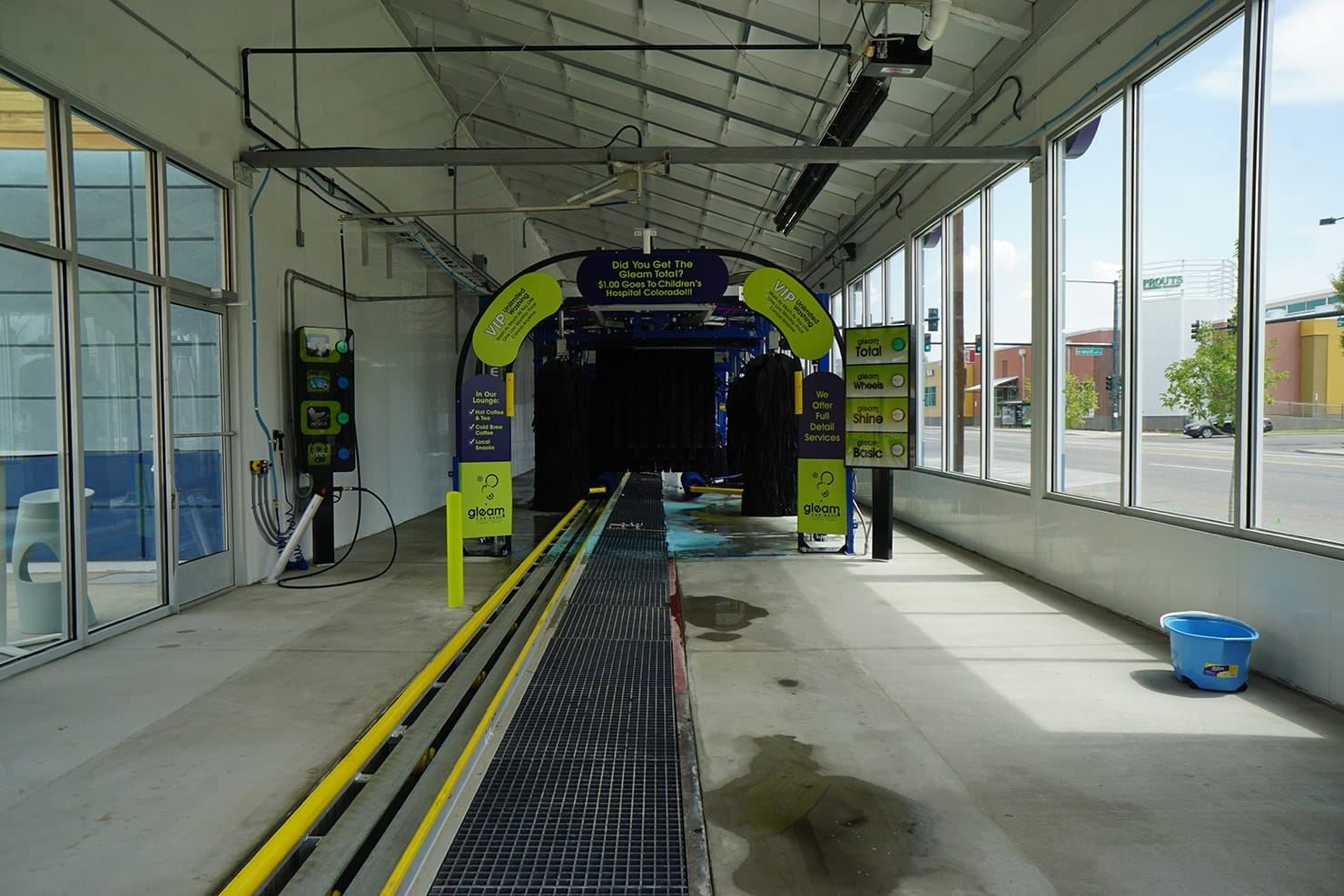
Drive the high-traffic stretches of Tucson and you pass a wash bay every few minutes. Express tunnels cluster along Speedway Boulevard and Broadway, in-bay automatics sit beside the fuel stops feeding the I-10 frontage roads, and self-serve operations dot the neighborhoods around Oracle Road and out toward Marana and Oro Valley. Tucson runs more than two hundred sunny days a year and the dust kicks up off the desert constantly, so residents wash often and the wash count stays high. That volume is good for the operator and hard on the roof, because every cycle pushes heat, water, and chemistry up against the deck from the inside.
We treat a car wash as a chemistry problem before we treat it as a roofing job. The thing that kills these roofs is not the Arizona sun on top - it is what happens underneath. Hot detergent, tire-shine compounds, drying agents, and rust inhibitors aerosolize inside the tunnel and ride the rising air straight to the underside of the deck. That vapor condenses on the steel, on the fastener heads, and on the seams, and it does it twenty hours a day. A membrane chosen off a generic spec sheet has no defense against that, which is why so many wash bays leak within a few years of a roof that looked fine on paper.
Why the Inside of the Roof Fails First
On almost every other building we inspect, weather drives the damage from above. On a wash, the attack comes from below. The interior of an operating tunnel can sit at near-total humidity for the whole business day. That moisture carries the dissolved cleaning chemistry with it, and when it hits cooler steel near the deck it plates out as a corrosive film. Fasteners back out as the metal around them oxidizes. Insulation soaks through and stops drying. By the time a stain shows on the tunnel ceiling, the corrosion has usually been running for a long stretch out of sight.
So we start by reading the chemistry. We ask what is actually in the wash arches - the alkaline presoaks, the low-pH acid bath, the ceramic and graphene sealants newer Tucson tunnels are adding - and we match the membrane and the underside vapor strategy to that exact program. The detergent menu on a flagship express tunnel is far more aggressive than the soap at a coin-op bay, and the roof assembly has to reflect that difference rather than ignore it.
Membrane Selection for the Wash Bay
For the tunnel itself we lean toward PVC, usually 60-mil fleece-back, fully adhered. PVC holds up to the alkaline soaps and wax compounds far better over time than TPO or EPDM, and bonding it down fully kills the membrane flutter that tunnel air pressure creates while removing the fastener field that vapor loves to corrode. We confirm with the manufacturer that the specific wash chemistry falls inside the membrane's chemical-resistance range and that the warranty will actually stand behind a car wash environment, because plenty of standard warranties carve chemical exposure out entirely. Where a tunnel is too far gone to recover, we look at a corrosion-resistant deck and a vapor retarder on the warm side so the next roof does not repeat the failure.
Away from the tunnel - the equipment room, the pay station, the office and break area - the exposure drops sharply, and there a mechanically attached TPO or PVC system is a sensible, cost-effective choice. We do not over-specify the dry parts of the building, but we never under-specify the wet ones.
Drainage, Penetrations, and the Vacuum Canopy
Standing water is the second recurring problem we find on Tucson wash roofs. When the summer monsoon dumps an inch in twenty minutes, an under-drained roof over the equipment bays ponds and stays wet, and ponding plus chemical residue is a fast route to a soft spot. We map the drainage during every inspection and add tapered insulation to move water to the scuppers and drains where the original layout fell short.
The big exhaust fans that pull steam off the tunnel are another weak point. Those penetrations move air all day and carry chemical vapor right past the flashing, so a stock curb detail does not last. We oversize and detail each one for the airflow and the chemistry it sees. Every penetration gets evaluated on its own rather than waved through as routine.
The vacuum canopy and the entry or exit canopies need their own plan. They take vehicle exhaust, overspray from tire dressing, and full sun, and the spot where the canopy meets the main building is the single most common leak we trace on Tucson express sites. We handle canopy membrane or metal panels, the gutters and downspouts, and that transition flashing as distinct line items, because lumping them in with the main roof is how they get missed.
Keeping the Wash Open While We Work
Tucson washes run seven days a week through most of the year, and a closed tunnel is lost revenue, so we sequence around the operation instead of asking it to stop. Tunnel roof work goes into the early-morning or late-evening window when the line is down. Exterior building and canopy work proceeds during business hours with the crew positioned and traffic controlled so cars keep moving through. We confirm a watertight dry-in before we leave each day. The goal is a roof built for the environment it actually lives in, installed without costing the operator a single wash cycle we can avoid.
Tucson Weather Stacks the Deck Against a Wash Roof
The desert climate adds its own pressure on top of the chemistry. Tucson summers push rooftop surface temperatures far above the air temperature, and that heat bakes a membrane and works the seams through a daily expansion-and-contraction cycle. A dark or worn surface only soaks up more of it. We favor reflective membranes on wash buildings to pull that heat load down, which also helps the equipment room and any conditioned office space stay cooler and eases the load on the building's own HVAC.
Then the monsoon arrives. From roughly July into September Tucson takes short, violent storms that drop a lot of water in a few minutes and drive it sideways with the wind. A wash roof that already carries a chemical-residue film and marginal drainage is exactly the roof that ponds and backs up when one of those cells parks overhead. We size and detail the drainage for those peak bursts, not for a gentle average rain that this region never actually gets. Edge metal and parapet flashings get the same scrutiny, because wind-driven rain finds the weak transition long before a calm day ever would.
Catching Problems Before They Reach the Tunnel Ceiling
Because the worst damage on a wash hides on the underside of the deck, waiting for a visible drip is waiting too long. We set these buildings up on a regular inspection rhythm and look specifically at the things that warn early: fastener heads starting to bloom with corrosion, seams lifting at the tunnel, soft or spongy spots underfoot near the arches, staining beginning to creep across the ceiling deck, and standing water that lingers a day after a storm. Catching a backing-out fastener or an opening seam while it is still small is the difference between a targeted repair and a full tunnel tear-off down the road.
We document what we find with photos and notes the operator can actually use, so a small ownership group or a multi-site chain can plan repairs on a budget instead of getting surprised by an emergency. A car wash roof rewards attention more than almost any commercial roof we work on, precisely because the environment underneath it never lets up.
Built for Tucson Operators
Whether the site is a high-volume express tunnel on a busy commercial corridor, an in-bay automatic tucked beside a fuel stop on the I-10 frontage, or a neighborhood self-serve set of bays out in Marana or Oro Valley, the underlying job is the same: respect the chemistry, respect the water, and respect the fact that the wash needs to keep running. We match the system to the specific operation in front of us rather than installing one generic roof and hoping the environment goes easy on it - because on a Tucson car wash, it never does.
Ready to talk through a roof?
Tell us about the building and the roof problem. We'll document it and put a plan in writing - with an honest repair-vs-replace recommendation and no upsell pressure.
Documented, repair-first commercial & industrial roofing across Tucson and Pima County. Flat and low-slope systems for occupied buildings, planned around your operation.
Services
© 2026 Commercial Roofing Contractors Tucson. All Rights Reserved. Privacy Policy · Terms of UseSite Map