
Commercial Roofers in South Tucson
Commercial roofers serving South Tucson should document leak sources, wet insulation, drainage, edge details, penetrations, and repair history before recommending a scope. Commercial roofing for South Tucson and the South 6th Avenue corridor - independent restaurant and retail buildings, light industrial on Ajo Way, and commercial zones adjacent to Tucson International Airport.
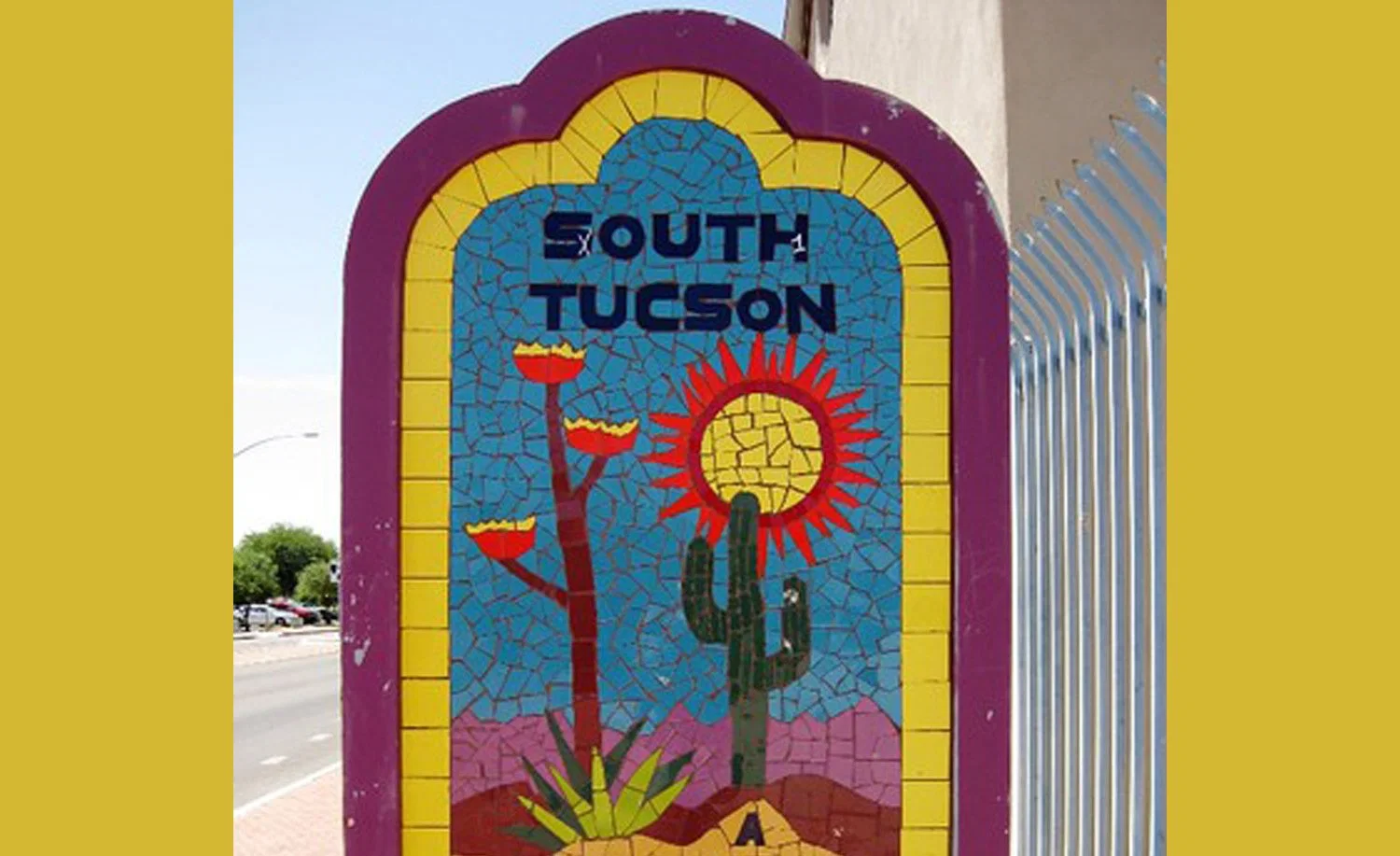
South Tucson's commercial inventory concentrates on the South 6th Avenue restaurant and retail corridor, the Ajo Way and Irvington Road light-industrial zones, and the commercial and logistics buildings serving the Tucson International Airport periphery - a diverse inventory headlined by the independent business character of one of Tucson's most distinct neighborhoods.
South Tucson is an independent municipality - a one-square-mile city surrounded by the City of Tucson - with its own permitting authority and business character. The South 6th Avenue corridor through the heart of South Tucson is one of Tucson's most recognized independent restaurant districts: long-established Mexican food restaurants, bakeries, and specialty retail in masonry buildings that range from 1930s construction to 1960s commercial infill. Roofing work in this corridor requires the same approach as any historic small-commercial district - small footprints, high penetration density, pre-1980 asbestos assessment, and scheduling around active tenant operations.
South of the South Tucson city limits, the commercial and industrial inventory transitions to the Ajo Way and Irvington Road corridors - light-industrial, automotive, logistics, and service-commercial buildings from the 1970s through 1990s that serve the south Tucson residential base and provide industrial real estate adjacent to I-19 and the airport. These buildings are predominantly on modified-bitumen or first-generation TPO systems approaching replacement milestones.
Tucson International Airport's commercial periphery - the business parks along East Tucson Airport Road and the logistics and cargo buildings along Aerospace Parkway - represents a distinct building type: aviation-support, logistics, and light-manufacturing buildings in the 20,000 to 150,000 square-foot range, built primarily 1990 through 2015, many of them on current-specification TPO that is reaching its first major maintenance milestone. FAA height restrictions and proximity to active airfield operations add coordination requirements that standard commercial roofing projects do not have.
South 6th Avenue Restaurant and Retail Corridor
The South 6th Avenue commercial corridor through South Tucson - running roughly from Ajo Way north to the 22nd Street corridor - is characterized by one- and two-story masonry buildings from the 1930s through the 1960s in active restaurant and retail use. Building conditions in this corridor share characteristics with the 4th Avenue historic district: wood or steel joist decks, unreinforced-masonry parapets, accumulated kitchen-exhaust grease contamination on roof surfaces adjacent to hood penetrations, and drain layouts that have been modified through multiple tenant buildouts.
South Tucson's permitting authority is separate from the City of Tucson - commercial roof work in the incorporated city of South Tucson requires permits from the South Tucson Building Department. We have working familiarity with South Tucson's building permit process and manage the submittal as part of every project in the incorporated area. The South Tucson Building Department's permit timelines and energy-code documentation requirements are similar to the City of Tucson's but processed through a separate office.
Restaurant scheduling constraints on South 6th Avenue are compounded by the neighborhood's cultural calendar - during major events like Día de los Muertos celebrations, Cinco de Mayo, and the Tucson Rodeo week, the corridor operates at elevated traffic levels that restrict staging and equipment access beyond normal weekday constraints. We identify event-calendar impacts in the pre-construction scheduling discussion and build them into the production timeline.
Ajo Way and Irvington Road Industrial Zone
The Ajo Way commercial and industrial corridor from I-19 east to the railroad crossing carries a mix of big-box retail, automotive service, and light-industrial buildings built primarily east of I-19 extends the zone into warehouse, distribution, and manufacturing buildings typical of south-side Tucson industrial development from the same era.
Modified-bitumen APP and SBS systems on these buildings have been through decades of Sonoran heat cycling. Failed base flashings at equipment curbs, parapet-cap separation, and drain-area saturation from years of debris-blocked drain bowls are consistent findings on Ajo Way and Irvington industrial inventory. Replacement scopes in this corridor are straightforward compared to the complexity of historic small-commercial buildings - the challenges are access for large-format material delivery on Ajo Way's active arterial and tenant-operation sequencing for the retail buildings.
Automotive service buildings along Ajo Way have a specific roof contamination consideration: oil vapor and exhaust from floor-level automotive operations is drawn upward through the building's HVAC system and deposits on roof membrane surfaces near HVAC exhaust penetrations. This contamination profile is similar to kitchen exhaust contamination in restaurant buildings - mechanical cleaning and adhesion verification are required before any new membrane or coating is applied in these zones.
Tucson International Airport Periphery
Commercial and logistics buildings along Tucson Airport Road, Aerospace Parkway, and the south side of the airport periphery operate within FAA Part 77 obstruction surfaces that restrict the height of temporary structures - including cranes and aerial lifts - near the airfield. Any equipment used for roof work on airport-periphery buildings that exceeds Part 77 height thresholds requires a Notice to Airmen (NOTAM) filed through the FAA and coordination with Tucson Airport Authority operations.
We assess Part 77 applicability for every airport-periphery commercial building before specifying lift equipment. Most standard boom lifts used for commercial roofing work are within Part 77 thresholds at the building locations typical in this zone, but the assessment is documented in the project file regardless. Tucson Airport Authority requires contractor vehicle badges for access to certain logistics areas that are within the airport's controlled perimeter - we obtain required badging before crew mobilization on any project requiring airport perimeter access.
Logistics and cargo buildings along Aerospace Parkway are some of the most active 24-hour operations in the south Tucson commercial zone - air cargo handling does not stop at night. Sequencing tear-off sections away from active loading operations, maintaining daily dry-in discipline so no section is open when overnight shift operations are at peak, and providing advance notification of production activities that create debris or noise near cargo handling areas are standard elements of airport-periphery commercial roofing scopes.
Frequently asked questions
Does South Tucson have its own building permit process separate from the City of Tucson?
Yes. South Tucson is an independent incorporated municipality with its own Building Department. Commercial roof work within the city limits of South Tucson requires permits from the South Tucson Building Department, not the City of Tucson Development Services Center. We manage the South Tucson permit submittal as part of every project and are familiar with their process and timeline.
Do FAA restrictions affect crane use near Tucson International Airport?
FAA Part 77 obstruction surfaces restrict temporary structure heights near the airfield. We assess Part 77 applicability for every airport-periphery project and document the assessment before specifying lift equipment. Where NOTAM filing is required for equipment that exceeds Part 77 thresholds, we manage that filing and coordinate with Tucson Airport Authority operations before mobilization.
How do you handle grease and oil contamination on south Tucson restaurant and automotive buildings?
Kitchen exhaust grease and automotive oil vapor both contaminate roof membrane surfaces near exhaust and HVAC penetrations. We mechanically clean contaminated areas, treat with a compatible degreasing agent, and verify adhesion with a pull test before applying any new membrane or coating. Contamination-area preparation is documented in the project scope as a line item - not a change order discovered during production.
Can you work around 24-hour cargo operations at airport logistics buildings?
Yes. We size daily tear-off sections to what can be dried in during the same shift, maintain dry-in discipline so no section is open during overnight peak-operation windows, and coordinate with facility managers on production activities that generate debris or noise near active cargo handling areas. The sequencing plan is documented and reviewed with the facility manager before tearoff begins.
Schedule a South Tucson commercial roof assessment.
Our project managers cover the South 6th Avenue restaurant corridor, Ajo Way industrial zone, and the Tucson International Airport periphery commercial buildings. Written condition reports with South Tucson permit coordination, FAA assessment documentation, and contamination-area notation - scoped to your building's specific operating environment.
Ready to talk through a roof?
Tell us about the building and the roof problem. We'll document it and put a plan in writing - with an honest repair-vs-replace recommendation and no upsell pressure.
Documented, repair-first commercial & industrial roofing across Tucson and Pima County. Flat and low-slope systems for occupied buildings, planned around your operation.
Services
© 2026 Commercial Roofing Contractors Tucson. All Rights Reserved. Privacy Policy · Terms of UseSite Map