
EPDM Roofing in Tucson, AZ
EPDM commercial roofing installation and replacement for Tucson industrial and institutional buildings - 60-mil fully adhered and mechanically attached systems, with honest guidance on where EPDM fits in the Sonoran Desert and where white TPO or PVC is the better specification.
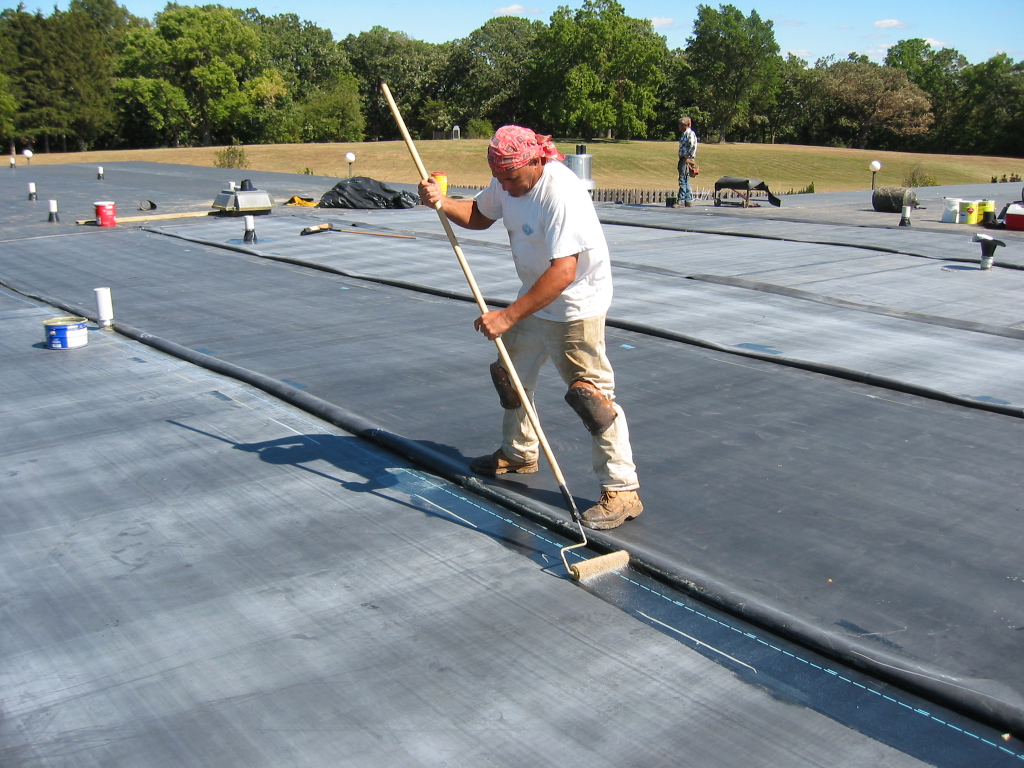
60-mil EPDM installation and replacement for Tucson commercial buildings - fully adhered and mechanically attached, with an honest Sonoran Desert assessment of where EPDM's chemical resistance and temperature range make it the right specification, and where white reflective membranes are the more durable capital decision.
EPDM (ethylene propylene diene monomer) is a thermoset membrane with a 30-year track record in demanding climate conditions. In Tucson's commercial market, EPDM occupies a specific niche: medical and research facilities where chemical exhaust from HVAC systems makes it the conservative specification, industrial buildings where heat absorption is not a primary concern, and Tucson's older commercial inventory built through the 1980s and 1990s that ran early-generation 45-mil EPDM systems now well past their 20-year design service life.
The honest performance note for Tucson: black EPDM absorbs heat rather than reflecting it. On a standard dark EPDM membrane in Tucson's summer sun, rooftop surface temperatures can exceed 175 degrees Fahrenheit - a condition that accelerates membrane aging and increases cooling load on the building's HVAC system. For most Tucson commercial buildings without a specific chemical-resistance requirement, white TPO or white PVC is a better Sonoran Desert specification: equivalent or superior seam durability, reflectivity compliance with Arizona's IECC 2018 energy code, and equivalent 20-year warranty availability. We say this directly. EPDM is the right call in specific Tucson situations - and the routine specification on every project is not one of them.
On new installations where EPDM is the appropriate specification - Banner Health and University Medical Center satellite buildings with chemical exhaust adjacency, industrial buildings with specific substrate compatibility requirements, or institutional owners with an established EPDM maintenance program - we install 60-mil systems in fully adhered and mechanically attached configurations with manufacturer warranty closeout.
60-mil EPDM Specifications and Attachment in Tucson Conditions
60-mil is the current commercial-grade standard for new EPDM installations. 45-mil systems - the dominant specification on Tucson commercial buildings built through the late 1990s - are no longer specified for new work by any major manufacturer on commercial projects. The additional thickness of the 60-mil specification provides meaningful improvement in puncture resistance, seam durability, and overall system longevity. On a University of Arizona research building with rooftop equipment maintenance traffic, the puncture-resistance differential between 45-mil and 60-mil is operationally significant.
Fully adhered EPDM: Membrane bonded to a cover board or insulation surface with a contact-type EPDM adhesive applied to both surfaces, flashed, and rolled for uniform adhesion. Fully adhered eliminates mechanical fastener penetration of the membrane field, which is the attachment preference for Banner Health and University of Arizona Facilities Management on occupied-building projects where vibration and fastener-pattern read-through are concerns. In Tucson's heat, adhesive selection matters - we use adhesives specified for elevated-temperature performance, not standard formulations that can soften and lose bond at sustained 130-to-140-degree substrate temperatures.
Mechanically attached EPDM: Membrane fastened with screws and plates through seam laps into insulation and deck. Attachment pattern is designed per IBC 2021 wind-uplift requirements for Tucson's wind exposure - Pima County and the Tucson basin are predominantly Exposure B, but buildings along Irvington Road and Alvernon Way adjacent to Davis-Monthan AFB in open terrain are assessed for Exposure C fastener density at perimeter and corner zones.
EPDM in Tucson Medical and Research Facilities
The chemical-resistance case for EPDM in Tucson is concentrated in the medical and research sectors. Banner University Medical Center Tucson, TMC HealthCare, and the Banner Health satellite medical office buildings that run clinical-lab HVAC exhaust have chemical discharge profiles - sterilant agents, fume-hood exhaust, reagent vapors - that degrade some TPO formulations over time. EPDM's thermoset chemistry is broadly resistant to these exhaust types. Conservative medical facility managers who have managed EPDM roofs for 20-plus years in this environment continue to specify it precisely because the performance data is established in their specific building type.
Hot-work restrictions at active medical facilities influence attachment method selection. Fully adhered EPDM eliminates the hot-air welding and open-flame operations that characterize TPO and torch-applied modified bitumen installation, which simplifies hot-work permitting at facilities where the process is burdensome. Banner Health and UA Medical facilities require hot-work permit approval from the facility safety officer for each day of qualifying operations - fully adhered EPDM installation does not qualify as hot work in most Arizona building code applications.
University of Arizona research buildings at UA Tech Park and the main campus contain clean-room and sensitive-instrument spaces that require off-hours scheduling for overhead work. EPDM's cold-adhesive installation process is less odor-intensive than some solvent-based TPO bonding adhesives and creates fewer HVAC-system contamination concerns during occupied-building installation windows.
End-of-Life EPDM Replacement on Tucson's Older Commercial Inventory
Tucson's commercial building inventory built between 1985 and 2000 - the Broadway corridor medical offices, Midtown professional buildings along Speedway and Grant, and the early industrial buildings on the southeast side - carried original 45-mil EPDM mechanically attached systems that are now 25 to 40 years old, well past their 20-year design service life. Seam lap sealant on these systems is typically cracked and brittle after years of Tucson UV exposure. The field membrane shows surface checking - fine cracking that is cosmetic on a thick modern membrane but a water pathway on degraded 45-mil. These are replacement projects, not repair candidates.
For end-of-life EPDM replacement on the older Tucson inventory, the first decision is whether to continue with EPDM or transition to white TPO or PVC. The reflectivity argument for TPO or PVC is strong in Tucson - and for buildings without a specific chemical-resistance requirement, it often wins the capital conversation. We present the system comparison with the reflectance compliance documentation and 20-year lifecycle cost differential so the building owner makes an informed decision rather than a default one.
Frequently asked questions
Can an aging EPDM roof in Tucson be coated instead of replaced?
On an EPDM roof with dry insulation, intact field membrane, and no systemic seam failure, yes - silicone coating over properly primed EPDM can extend service life 10 to 15 years with a manufacturer warranty. EPDM requires a solvent-based primer formulated for EPDM before silicone adhesion is reliable. On 1990s 45-mil EPDM with cracked lap sealant, brittle seams, and UV-checked field membrane, coating is not sustainable - the coating fails at seam locations within two to three Tucson monsoon seasons. We pull cores and probe the seams before recommending coating versus replacement.
Why does EPDM stay dark in Tucson rather than reflecting heat the way TPO does?
EPDM in standard commercial grades is a dark gray or black thermoset membrane - it absorbs solar radiation rather than reflecting it, which is the opposite of what Tucson's energy code and rooftop temperature management require. White EPDM membrane is available from some manufacturers, but it is less common, costs more, and does not have the same seam and warranty track record as standard EPDM. For most Tucson commercial buildings, white TPO or PVC is the better reflective-membrane specification. EPDM's advantage is its specific chemical resistance profile and its proven track record in certain medical and industrial applications.
What warranty can I get on a new 60-mil EPDM roof in Tucson?
20-year NDL manufacturer warranties are available from Carlisle, Firestone, and Johns Manville on qualifying 60-mil EPDM systems installed by credentialed contractors with manufacturer-specified attachment patterns and flashings. We carry credentials with all three manufacturers and close out every installation with a manufacturer field inspection before the warranty document is issued. Arizona ROC licensure and required insurance certificates are included in every warranty submittal package.
EPDM installation or end-of-life replacement in Tucson?
We will walk the roof, pull cores where insulation saturation is suspected, and give you a written scope and an honest system recommendation - EPDM where it is the right call, and a plain explanation of the reflectivity trade-off when white single-ply is the better Sonoran Desert specification.
Ready to talk through a roof?
Tell us about the building and the roof problem. We'll document it and put a plan in writing - with an honest repair-vs-replace recommendation and no upsell pressure.
Documented, repair-first commercial & industrial roofing across Tucson and Pima County. Flat and low-slope systems for occupied buildings, planned around your operation.
Services
© 2026 Commercial Roofing Contractors Tucson. All Rights Reserved. Privacy Policy · Terms of UseSite Map