
Restaurant and Food Service Building Roofing in Tucson, AZ
Commercial roofing for restaurants, quick-service chains, breweries, and food service facilities throughout Tucson, AZ.
Beyond Bread, the beloved Tucson-based bakery and sandwich restaurant group with multiple locations across the metro, represents the type of full-service food operation whose roofing needs go well beyond keeping rain out of the dining room. Restaurant commercial roofing in Tucson demands an understanding of grease management, Type I hood exhaust systems, fire suppression penetrations, and the specific way that cooking vapors chemically attack roofing membranes when they are not properly managed at the point of exhaust. Getting a restaurant roofing project right means understanding the kitchen, not just the building envelope.
Grease-laden exhaust from Type I kitchen hoods is the primary membrane threat on any full-service restaurant roof. When cooking exhaust exits through the hood and the associated exhaust fan, it carries aerosolized grease that deposits on the roof surface in the zone around the fan outlet. Over time, grease accumulation dissolves asphalt-based roofing materials, degrades TPO seams in the affected area, and creates fire risk from accumulated combustible deposits. NFPA 96 governs the installation of commercial cooking ventilation systems and specifies that grease collection and drainage from rooftop exhaust systems must prevent grease from accumulating on the roof surface. We design and install grease containment details - including grease-resistant membrane in exhaust zones, collection gutters around fan bases, and grease trap containers - as standard elements of every Tucson restaurant roofing project.
Fire suppression system piping is a roof penetration category unique to restaurant buildings, and it requires specific treatment to maintain both roofing integrity and fire system performance. Suppression line penetrations must be sealed to prevent air infiltration that degrades fire system pressure while also being water tight against Tucson's monsoon season rainfall. We use UL-listed pipe boot products rated for fire suppression line penetrations, ensuring that the penetration detail meets both the roofing performance requirement and the fire code requirement simultaneously.
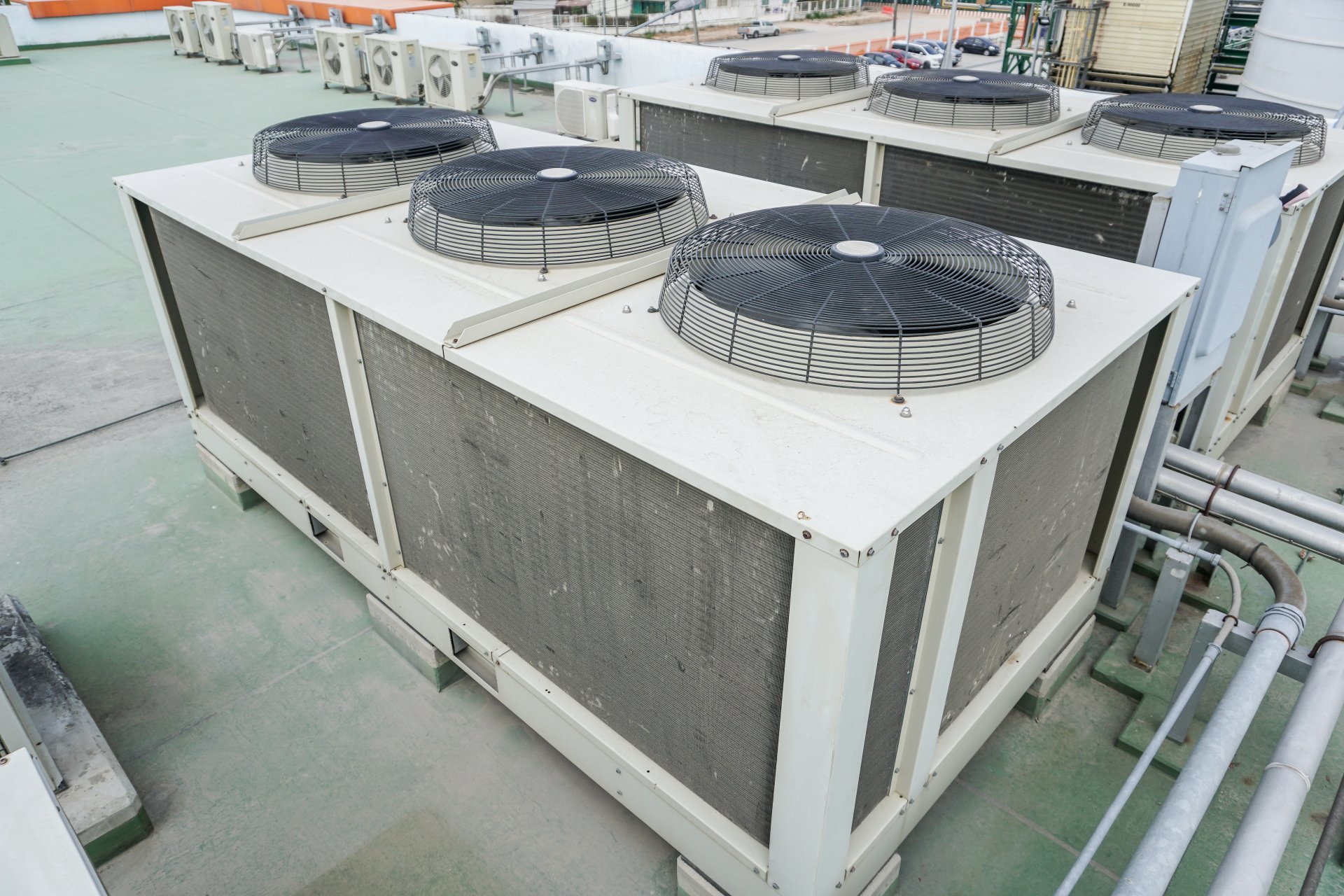
HVAC equipment loads on Tucson restaurant roofs are typically heavier than on comparable commercial buildings because food service operations require supplemental exhaust capacity and makeup air systems in addition to standard comfort cooling. The mechanical footprint on a restaurant roof is denser, curb spacing is tighter, and the vibration from multiple operating units creates more fatigue stress on surrounding membrane and flashing details than a simple office building's HVAC layout. We perform equipment curb surveys before every Tucson restaurant reroofing project to document the existing penetration inventory and design appropriate isolation and flashing details for each unit.
Tucson's monsoon season creates a drainage urgency for restaurant roofs that is compounded by the drainage obstacles that dense mechanical equipment creates. Curbs, duct boots, and electrical conduit packages create flow barriers that can trap water in pockets between equipment, accelerating membrane degradation and creating standing water conditions that breed insects - a health code concern for food service operations. We perform drainage flow analysis as part of every restaurant roofing assessment, identifying ponding zones and specifying tapered insulation corrections or additional drain points to eliminate standing water.
The intense UV environment of Tucson affects restaurant roofing materials in the same way it affects all commercial membranes here, but restaurants have the additional complication that grease-contaminated zones can absorb heat more intensely than the clean membrane surface, creating hot spots that accelerate aging. Specifying UV-stabilized 60-mil TPO and maintaining grease containment equipment in working order is the two-part strategy that addresses both the UV and grease degradation mechanisms on Tucson restaurant roofs.
Restaurant tenant improvements - changes in kitchen layout, addition of new cooking equipment, or installation of new exhaust systems - require coordination with the roofing contractor to address the new and modified penetrations these changes create. A new commercial range installed by a kitchen contractor without roofing coordination often results in an exhaust fan that is installed without proper membrane flashing, creating an immediate water infiltration risk. We offer restaurant operators a roofing coordination service for tenant improvement projects that ensures all penetration work is properly integrated with the existing membrane system.
Energy performance for Tucson restaurant roofs benefits from the same cool roof principles that apply to any commercial building here, but with the amplification that kitchen heat generation makes the building's cooling load particularly high. A high-reflectance TPO membrane reduces the portion of roof cooling load that the HVAC system must handle, which matters for a food service operation whose kitchen equipment is generating substantial internal heat simultaneously. Arizona utility efficiency incentive programs may apply to qualifying restaurant roofing improvements.
Restaurant operators throughout Tucson - from the Fourth Avenue and University area through the Foothills and the south side - can schedule a complimentary commercial roofing assessment that addresses both the standard roof performance concerns and the kitchen-specific grease, exhaust, and fire suppression details that make food service buildings unique. We provide written reports with NFPA 96 compliance observations alongside standard condition and drainage assessments.
- What is NFPA 96 and how does it affect restaurant roofing in Tucson?
- NFPA 96 is the Standard for Ventilation Control and Fire Protection of Commercial Cooking Operations, and it governs the entire kitchen exhaust system including the rooftop components. It requires that grease not be allowed to accumulate on roof surfaces, that exhaust fan installations include grease containment, and that access for cleaning be provided. Restaurant roofing that does not address NFPA 96 compliance at the exhaust penetrations is both a roofing performance failure and a fire code violation.
- How do I know if grease from my kitchen exhaust is damaging my Tucson restaurant roof?
- Visible grease staining on the membrane surface around exhaust fan outlets is the obvious indicator. Less obvious is membrane softening or discoloration in the exhaust plume zone, which indicates that grease-laden vapor has been depositing for an extended period. If you have not had a grease containment inspection in the past twelve months, schedule one before the next monsoon season, as grease-compromised membrane fails much faster under monsoon rain exposure than clean membrane.
- Can restaurant exhaust fans be relocated during a reroofing project?
- Yes, and it is often the most cost-effective time to correct exhaust fan placement issues because the surrounding membrane is already being replaced. Common corrections include moving fans to provide better drainage clearance, improving grease drip line routing, and adding electrical capacity for replacement fans with better grease filtration. We coordinate these modifications with kitchen equipment contractors as part of the overall project scope.
- How often should a Tucson restaurant roof be inspected?
- Twice annually as a minimum - before monsoon season and after it ends. Additionally, a grease containment inspection should be performed after any major kitchen equipment change and following any NFPA 96 code inspection that identified deficiencies in the exhaust system. Grease containment failures are cumulative - the longer they persist, the more membrane area is affected.
- What type of membrane should be installed under and around restaurant kitchen exhaust equipment?
- Grease-resistant membrane materials are required in the exhaust plume zone. Modified bitumen with granulated cap sheets has better inherent grease resistance than standard TPO, and grease-resistant TPO products are available from major manufacturers for zones immediately surrounding exhaust equipment. The perimeter of all exhaust fans should be equipped with grease collection gutters that direct accumulation to a removable container, preventing grease from contacting the surrounding membrane.
Frequently asked questions
Can you coat a BUR roof instead of replacing it?
Sometimes - and in Tucson it is often the right call when the substrate qualifies. We pull moisture cores before making any recommendation. If the insulation is dry, the gravel contact is intact, and there is no active blistering, a silicone coating system with the appropriate BUR primer is frequently the most cost-effective path: typically one-third the cost of tear-off and replacement, with a 10-15 year warranty from the coating manufacturer. If the insulation is wet, coating is not the answer and we say so.
How does Tucson's climate affect BUR faster than other markets?
Sustained UV at Index 11-plus for roughly five months of the year oxidizes the surface bitumen at a faster rate than in northern or coastal markets. The monsoon season then stress-tests seams and flashings that have been UV-cycled all summer. The combination accelerates alligatoring, flashing degradation, and gravel contact breakdown faster than manufacturer service-life tables - which are typically calibrated to moderate-climate exposure - predict. Annual inspection and maintenance is not optional on Tucson BUR systems; it is what determines whether the system reaches the end of its useful life on a planned schedule or fails on a monsoon emergency.
Is new BUR installation an option for Tucson commercial buildings?
Rarely, and we do not recommend it as a first choice. New BUR installation in the Tucson market has been largely supplanted by TPO and silicone coating systems that provide better reflectivity performance in the IECC Climate Zone 2B compliance environment. We can spec and install new BUR where a building's situation specifically requires it - but for most Tucson commercial buildings, a reflective single-ply system or a silicone restoration coating is the more defensible recommendation.
Aging BUR on a Tucson commercial building?
We will walk the roof, pull core cuts, and produce a written assessment - replace vs. coat vs. recover - with system options, installed cost bands, and warranty paths. No obligation.
Ready to talk through a roof?
Tell us about the building and the roof problem. We'll document it and put a plan in writing - with an honest repair-vs-replace recommendation and no upsell pressure.
Documented, repair-first commercial & industrial roofing across Tucson and Pima County. Flat and low-slope systems for occupied buildings, planned around your operation.
Services
© 2026 Commercial Roofing Contractors Tucson. All Rights Reserved. Privacy Policy · Terms of UseSite Map