
Built Up Roofing in Tucson, AZ
BUR assessment and recovery for aging Tucson commercial buildings - honest evaluation of when the Sonoran Desert heat has ended BUR life versus when a recover still extends the asset.
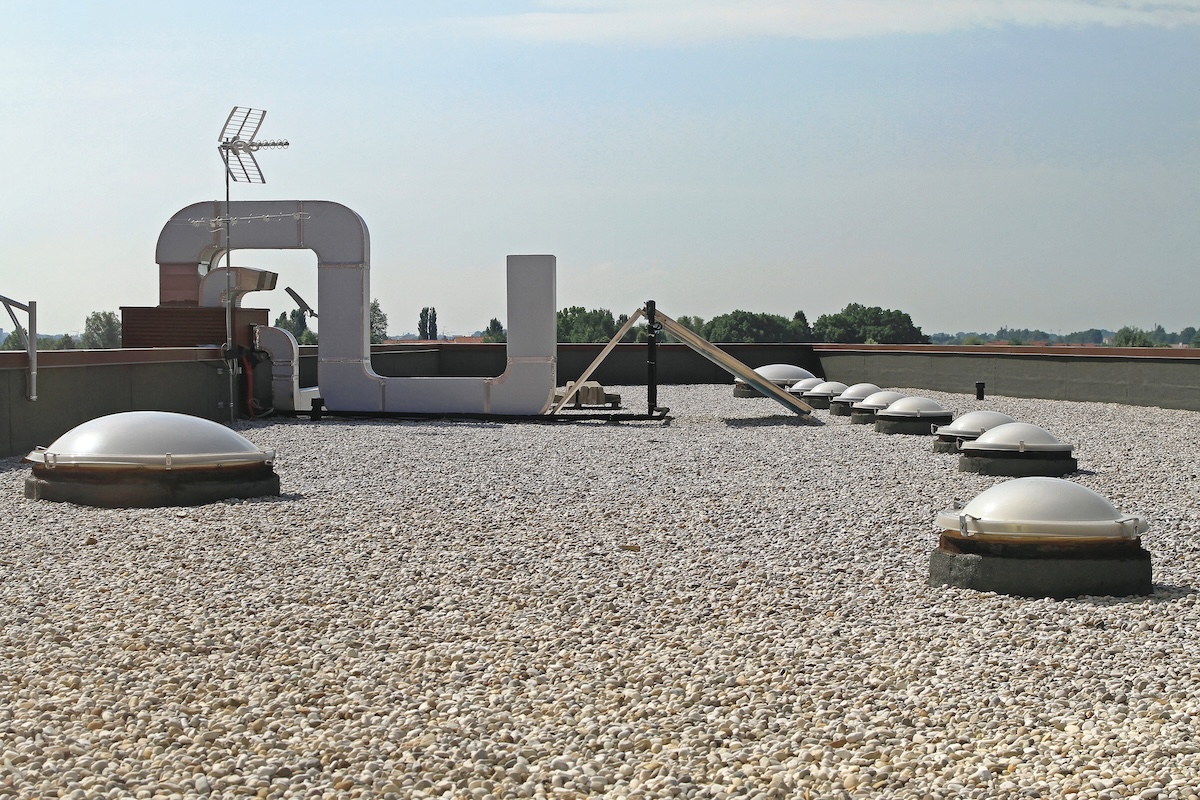
Tucson's commercial building stock from the 1960s through the early 1990s was predominantly built-up roofing - bitumen and ply sheet systems that have now spent three to five decades under Sonoran Desert UV and thermal cycling. We assess BUR systems honestly: the Sonoran climate accelerates BUR degradation, but it does not always make replacement the right call.
Built-up roofing - alternating layers of bitumen and reinforcing felt, topped with a mineral surface or gravel cap - was the dominant flat-roof system installed on Tucson commercial buildings from the 1950s through the early 1990s. The University of Arizona's older academic buildings, the downtown government and office structures along Congress Street and Stone Avenue, and the midtown medical and professional buildings that predated Banner Health's expansion all carry aging BUR systems that are approaching or past their expected service life under the Sonoran Desert's UV and heat load.
We assess BUR in two modes. The first is honest condition evaluation: we walk the roof, pull core cuts, document alligatoring, blister patterns, and gravel contact, and tell the owner whether the BUR has genuinely reached end of life or whether targeted repairs combined with a silicone coating recover system can extend it cost-effectively. Silicone coating over sound, dry BUR substrate is a legitimate and frequently appropriate Tucson capital strategy - the coating restores reflectivity on a surface that has darkened from UV oxidation and adds 10-15 years of service life at roughly one-third the cost of full replacement. The second mode is replacement: when the BUR has failed or the insulation is saturated, we scope the correct replacement system for the building and its capital horizon.
What we do not do is push replacement on a BUR that a coating recover would honestly serve, or recommend coating over wet insulation to hit a lower price point. Our assessment goes to the owner in writing with the core-cut data and the recover-vs-replace recommendation attached.
How the Sonoran Desert Ages BUR Systems
BUR roofs age in predictable patterns, and the Sonoran Desert accelerates each of them. Alligatoring - the cracked, scaly surface texture that develops as surface bitumen oxidizes and loses elasticity - occurs faster in Tucson than in northern or coastal markets because UV degradation of the bitumen oxidation layer is continuous and intense. Alligatoring on a Tucson BUR is cosmetically alarming but not by itself an indicator of replacement urgency; it is the predictable result of a bitumen surface that has been UV-cycled for 15 or more summers.
Blistering - bubbles between plies driven by moisture vapor or thermal pressure - is more diagnostic. In Tucson's climate, closed and firm blisters can be monitored; blisters that are growing or have broken indicate active moisture migration between plies and require action. Monsoon infiltration at failed seams or flashings is the most common cause of active blistering on Tucson BUR - the dry season prevents the moisture from evaporating once it enters the ply stack.
Gravel surfacing on BUR systems serves a UV-protective function that is especially important in Tucson: the gravel cap shields the underlying cap sheet from direct UV exposure. When gravel contact with the cap sheet breaks down - typically from surface bitumen degradation - the UV exposure to the cap sheet accelerates rapidly. Core cuts are the definitive diagnostic. We pull cores at representative locations across the roof, inspect each ply for moisture and delamination, and document the gravel contact condition. A Tucson BUR with dry plies and intact gravel contact still has remaining life. A roof with broken gravel contact and any wet plies is a replacement or silicone-recover scope.
Silicone Coating as the First-Choice Recover on Qualifying BUR
On Tucson BUR roofs where core cuts come back dry and the surface is in fair condition - no active blistering, no broken gravel contact across more than a quarter of the field, no open seams - a silicone fluid-applied coating system is frequently the correct capital recommendation. Silicone applied over properly primed BUR substrate adds 10-15 years of manufacturer-warranted service life, restores solar reflectance on a surface that has darkened from bitumen oxidation, and eliminates the cost of tear-off and landfill disposal. For a mid-life Tucson institutional building with a 10-15 year holding horizon, this math is often compelling.
The coating path on BUR requires more conservative substrate assessment than TPO or modified bitumen because BUR surface variability is higher. We require dry cores at all pull locations, positive gravel-to-cap-sheet contact across the field, and no active blister growth before recommending coating. We also specify a BUR-appropriate primer from the coating manufacturer - not all fluid-applied systems adhere reliably to bitumen surfaces without proper surface preparation and priming.
Arizona building code allows one recover layer over an existing roof before full tear-off is required. Tucson BUR buildings that already had a recover layer applied in the 2000s or 2010s - common in the midtown commercial stock - need full tear-off at the next reroof cycle. We document the layer count during core investigation and surface that finding before a scope is written, not after.
BUR Replacement - When It Is the Right Call
The replacement indicators on Tucson BUR roofs are: more than 25% of core pulls reading wet insulation, active blistering in the field membrane, gravel cap sheet with broken contact to the underlying bitumen across more than a third of the field, or any deck deterioration found during core investigation. In Tucson's climate, deck corrosion on older corrugated metal deck is less common than in humid markets, but parapet wall connection points on older downtown buildings sometimes show moisture infiltration from failed coping flashings rather than from the field membrane - we investigate every core zone independently rather than assuming a single failure mode.
Replacement system selection on Tucson BUR follows the same logic as any other Tucson commercial replacement: TPO or PVC for reflectivity compliance with IECC Climate Zone 2B requirements, polyiso insulation specified for actual rooftop temperature performance rather than rated-value compliance only, and monsoon dry-in discipline written into the production schedule before contract execution. We do not spec modified bitumen as the default BUR replacement in Tucson - TPO and PVC's reflectivity advantage in this market is significant, and there is no technical reason to stay on a dark-surface system when the replacement scope opens the roof.
For Tucson's older institutional buildings - the University of Arizona's 1960s-70s academic and laboratory stock, the Pima Community College main campus buildings on West Ajo Way, the downtown Pima County government facilities - replacement scope often involves deck condition findings that could not be diagnosed before tear-off. We build deck investigation into every BUR replacement scope on buildings over 30 years old and stop work to document any deck findings before proceeding.
Frequently asked questions
Can you coat a BUR roof instead of replacing it?
Sometimes - and in Tucson it is often the right call when the substrate qualifies. We pull moisture cores before making any recommendation. If the insulation is dry, the gravel contact is intact, and there is no active blistering, a silicone coating system with the appropriate BUR primer is frequently the most cost-effective path: typically one-third the cost of tear-off and replacement, with a 10-15 year warranty from the coating manufacturer. If the insulation is wet, coating is not the answer and we say so.
How does Tucson's climate affect BUR faster than other markets?
Sustained UV at Index 11-plus for roughly five months of the year oxidizes the surface bitumen at a faster rate than in northern or coastal markets. The monsoon season then stress-tests seams and flashings that have been UV-cycled all summer. The combination accelerates alligatoring, flashing degradation, and gravel contact breakdown faster than manufacturer service-life tables - which are typically calibrated to moderate-climate exposure - predict. Annual inspection and maintenance is not optional on Tucson BUR systems; it is what determines whether the system reaches the end of its useful life on a planned schedule or fails on a monsoon emergency.
Is new BUR installation an option for Tucson commercial buildings?
Rarely, and we do not recommend it as a first choice. New BUR installation in the Tucson market has been largely supplanted by TPO and silicone coating systems that provide better reflectivity performance in the IECC Climate Zone 2B compliance environment. We can spec and install new BUR where a building's situation specifically requires it - but for most Tucson commercial buildings, a reflective single-ply system or a silicone restoration coating is the more defensible recommendation.
Aging BUR on a Tucson commercial building?
We will walk the roof, pull core cuts, and produce a written assessment - replace vs. coat vs. recover - with system options, installed cost bands, and warranty paths. No obligation.
Ready to talk through a roof?
Tell us about the building and the roof problem. We'll document it and put a plan in writing - with an honest repair-vs-replace recommendation and no upsell pressure.
Documented, repair-first commercial & industrial roofing across Tucson and Pima County. Flat and low-slope systems for occupied buildings, planned around your operation.
Services
© 2026 Commercial Roofing Contractors Tucson. All Rights Reserved. Privacy Policy · Terms of UseSite Map