
Auto Dealership Roofing in Tucson, AZ
Commercial roofing for auto dealerships, car lots, service centers, and automotive facilities throughout Tucson, AZ.
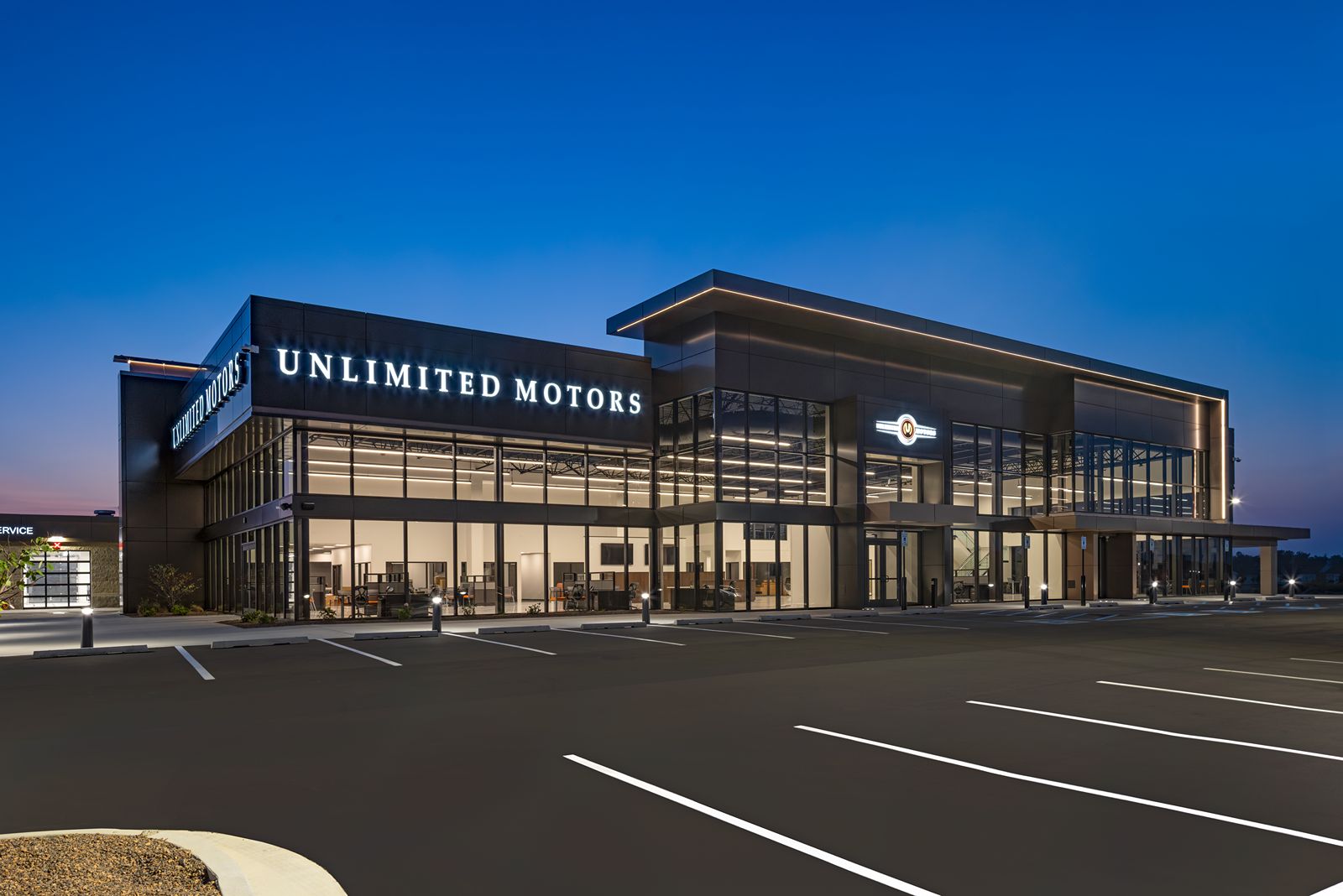
Jim Click Automotive Team, one of the largest dealer groups in southern Arizona with locations spanning Ford, Chrysler, Jeep, and other brands across the Tucson metro, operates facilities whose roofing needs are markedly different from typical commercial buildings. A modern auto dealership has at least two structurally distinct roofing challenges: the showroom with its wide-open sales floor, glass walls, and often skylighted ceiling, and the service department with its heavy HVAC load, exhaust ventilation requirements, and the constant vibration of lifts and compressor equipment. Getting either of those wrong costs money - through energy losses, customer experience problems, or structural damage - and getting both right requires a roofing contractor who has worked on occupied dealership facilities before.
Tucson's desert sun makes skylights a double-edged amenity for auto dealerships. Natural light in the showroom enhances vehicle presentation and creates an inviting atmosphere that customers respond to, but each skylight is a thermal and waterproofing challenge. Skylights must be flashed against the flat roof membrane with details that accommodate the differential thermal movement between the metal skylight frame and the roofing system beneath. In Tucson's temperature range - from below freezing on winter nights to over 110 degrees in summer - that movement is substantial and the flashing must be designed to accommodate it through hundreds of thermal cycles per year.
Service department roofing on Tucson dealerships deals with a different set of demands. Exhaust ventilation for service bays requires large-diameter duct penetrations through the roof membrane, and those penetrations must be detailed to resist the grease and solvent-laden air that passes through them. Vibration from vehicle hoists, alignment equipment, and air compressors is conducted to the roof structure and needs to be isolated at equipment curbs to prevent fatigue damage to the surrounding membrane. We detail all service department penetrations with flexible isolation flashing and specify sealant products rated for petroleum solvent exposure.
Operating a dealership continuously during a roofing project is a customer-facing requirement that places constraints on how work must be sequenced. Vehicles on the showroom floor cannot be moved under open roof sections where debris, dust, or the possibility of rain exposure exists. New car inventory staged in the lot must be accessible at all times. Service bays must stay operational because revenue from scheduled service appointments is daily income that cannot simply be redirected. Our dealership project methodology divides work into sections that can be advanced without interrupting any of these operational needs.
Tucson's UV intensity is the primary accelerant of roofing membrane aging on dealership buildings. The light-colored or clear skylights that dealerships favor also allow UV penetration into the showroom that can fade vehicle upholstery and dashboard materials if not managed with UV-filtering glazing. The roof membrane surrounding those skylights experiences the same UV load, plus elevated heat from absorbed radiation. We specify 60-mil or 80-mil TPO with enhanced UV stabilizer packages on all Tucson dealership projects, supplemented by reflective coatings on aged BUR systems that are being refurbished rather than replaced.
Parts department and inventory storage areas within dealership complexes often have roofing systems separate from the showroom and service buildings, sometimes with lower design standards because they were constructed as accessory structures. Those areas still protect valuable parts inventory and need to be maintained at the same standard as the primary dealership structures. We evaluate all roofed structures on a dealership campus as part of our assessment process, not just the most prominent building facing the street.
Energy performance matters significantly on Tucson dealership roofs because of the cooling load that large showroom glass areas create. A high-reflectance TPO membrane on the roof reduces the contribution of solar heat gain through roof penetration to the building's overall cooling load, partially offsetting the heat gain from the showroom glass that cannot be easily reduced. Cool roof credits and Arizona utility efficiency incentives may be available for qualifying dealership installations, and we document system specifications to support those applications.
Warranty coordination with automaker brand standards is an occasional complication on dealership roofing projects. Some manufacturer facility programs specify roofing system requirements as part of their facility image standards, and operators completing planned facility updates should confirm that proposed roofing systems meet any manufacturer specifications before installation. We are familiar with these requirements across major automaker programs and can advise on compliance during the design phase.
Tucson dealership groups with facilities throughout the metro - including locations along Oracle Road, Automall Drive, and the major commercial corridors of east Tucson - can schedule a complimentary commercial roofing assessment that addresses both showroom and service building roofing needs. We provide written condition reports, energy performance analysis, and capital planning estimates appropriate for dealership operations in the Sonoran Desert climate.
- How should skylight flashing on an auto dealership be maintained in Tucson?
- Annual inspection of all skylight perimeter seals and flashing laps is the minimum maintenance standard. In Tucson's temperature range, sealant at skylight-to-membrane transitions works through significant movement each year and should be inspected for cracking or separation. Deteriorated sealant should be cleaned and replaced before monsoon season, which represents the primary water infiltration risk period for skylight flashing failures.
- Can a Tucson auto dealership service department stay open during reroofing?
- Yes, with proper project sequencing. Service bay roofing work is scheduled in sections that keep active bays operational while adjacent bays are being reroofed. Bay access is maintained, exhaust fans and air lines remain connected through each work section, and temporary weather barriers at section boundaries protect active work areas. Coordination with the service manager during project planning ensures that high-volume service days are avoided for adjacent bay tie-off work.
- What causes roof membrane failure at auto dealership service departments?
- The most common causes are unsealed or poorly detailed exhaust penetrations, vibration-fatigue failure at equipment curbs, and petroleum product contamination of membrane surfaces near service bay exhaust outlets. Petroleum solvents and grease attack many membrane materials, so penetration flashing near exhaust paths must use sealants and membrane materials with petroleum resistance. We specify solvent-resistant products for all service department penetration details.
- Are there energy rebates for cool roof installations on Tucson auto dealerships?
- Tucson Electric Power and APS both offer commercial demand-side management programs that may include incentives for cool roof installations meeting minimum solar reflectance standards. Eligibility and incentive amounts change periodically, so we recommend checking current program availability with your utility representative. We document installed system reflectance values to support rebate applications as part of project closeout.
- How does a roofing contractor protect new vehicle inventory during a dealership reroofing project?
- Vehicle protection planning begins during the project proposal phase. New vehicle storage areas are identified and roofing work sections are sequenced to keep those areas protected under finished membrane at all times. Vehicles are never staged beneath open roof sections or adjacent to active tear-off work. Debris containment netting and cleanup protocols are established before work begins to prevent particles from reaching vehicle surfaces.
Frequently asked questions
Can you coat a BUR roof instead of replacing it?
Sometimes - and in Tucson it is often the right call when the substrate qualifies. We pull moisture cores before making any recommendation. If the insulation is dry, the gravel contact is intact, and there is no active blistering, a silicone coating system with the appropriate BUR primer is frequently the most cost-effective path: typically one-third the cost of tear-off and replacement, with a 10-15 year warranty from the coating manufacturer. If the insulation is wet, coating is not the answer and we say so.
How does Tucson's climate affect BUR faster than other markets?
Sustained UV at Index 11-plus for roughly five months of the year oxidizes the surface bitumen at a faster rate than in northern or coastal markets. The monsoon season then stress-tests seams and flashings that have been UV-cycled all summer. The combination accelerates alligatoring, flashing degradation, and gravel contact breakdown faster than manufacturer service-life tables - which are typically calibrated to moderate-climate exposure - predict. Annual inspection and maintenance is not optional on Tucson BUR systems; it is what determines whether the system reaches the end of its useful life on a planned schedule or fails on a monsoon emergency.
Is new BUR installation an option for Tucson commercial buildings?
Rarely, and we do not recommend it as a first choice. New BUR installation in the Tucson market has been largely supplanted by TPO and silicone coating systems that provide better reflectivity performance in the IECC Climate Zone 2B compliance environment. We can spec and install new BUR where a building's situation specifically requires it - but for most Tucson commercial buildings, a reflective single-ply system or a silicone restoration coating is the more defensible recommendation.
Aging BUR on a Tucson commercial building?
We will walk the roof, pull core cuts, and produce a written assessment - replace vs. coat vs. recover - with system options, installed cost bands, and warranty paths. No obligation.
Ready to talk through a roof?
Tell us about the building and the roof problem. We'll document it and put a plan in writing - with an honest repair-vs-replace recommendation and no upsell pressure.
Documented, repair-first commercial & industrial roofing across Tucson and Pima County. Flat and low-slope systems for occupied buildings, planned around your operation.
Services
© 2026 Commercial Roofing Contractors Tucson. All Rights Reserved. Privacy Policy · Terms of UseSite Map