
Industrial Roofing in Tucson, AZ
Industrial Roofing for manufacturing facilities, warehouses, and industrial buildings throughout Tucson area.
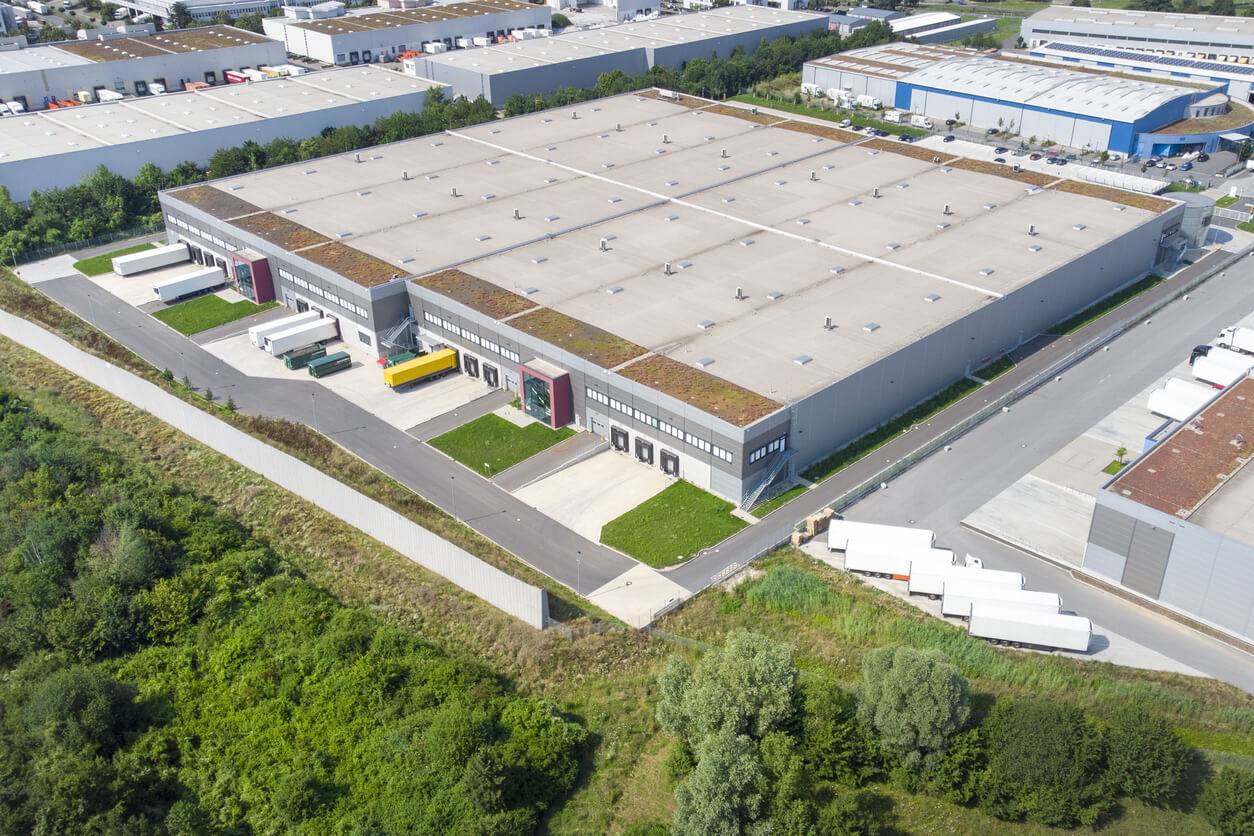
Tucson's industrial economy is rooted in military, defense, and aerospace operations at a scale that makes it a significant industrial roofing market despite the city's relatively modest population. Davis-Monthan Air Force Base houses the 309th Aerospace Maintenance and Regeneration Group - the largest aircraft storage and maintenance facility in the world, known as "The Boneyard," with more than 3,400 aircraft in preservation across its desert grounds. Raytheon Missile Systems employs thousands of Tucson residents at its manufacturing facilities producing guidance systems, missiles, and electronic warfare equipment. Amazon has built major fulfillment operations in Tucson. Marana Regional Airport to the northwest hosts Evergreen Air Center and other aviation maintenance operations. The University of Arizona's technology park anchors an emerging advanced-manufacturing and research cluster. The I-10 and I-19 corridors tie the industrial zones together and extend logistics reach toward Phoenix, Nogales, and El Paso. Roofing in Tucson's industrial market means understanding a climate that is almost the exact opposite of most of the country.
Extreme heat is the primary climate driver for Tucson industrial roofing decisions. Temperatures regularly exceed 105 degrees Fahrenheit in June and July, and rooftop surface temperatures on dark or uncoated industrial roofs can reach 170 to 180 degrees under direct summer sun. At that temperature, asphalt-based membranes soften, lose their dimensional stability, and develop the blistering and alligatoring patterns that signal premature aging. TPO and PVC white-membrane systems perform significantly better in this environment because their reflective surfaces reduce rooftop temperatures by 40 to 60 degrees compared to dark membranes, extending membrane life and dramatically reducing cooling loads on facilities with active HVAC. In Tucson's industrial climate, cool-roof specification is not a marketing concept - it is the correct engineering choice.
High UV radiation at Tucson's 2,400-foot elevation amplifies the heat damage story. UV intensity increases roughly 4 percent per 1,000 feet of elevation, meaning Tucson receives measurably more UV exposure than Phoenix, which is already among the highest UV markets in the country. UV degrades sealant compounds, attacks exposed flashing membranes, and breaks down elastomeric coating systems faster than manufacturers' flat-terrain performance data would suggest. Roofing products specified for Tucson industrial applications should have documented high-UV performance data, and maintenance inspection programs should account for accelerated sealant aging cycles - annual sealant inspection and reapplication rather than the three-to-five-year cycles that are adequate in lower-UV markets.
Tucson receives only about 12 inches of annual rainfall, but what it does receive creates roofing challenges that surprise facility managers unfamiliar with desert climate roofing. The summer monsoon season - roughly July through September - delivers intense, short-duration rainfall events that can drop an inch or more of rain in 30 minutes. A large, flat industrial roof that sits bone-dry for eight months of the year suddenly faces a hyperintense drainage event. Drain systems that have accumulated a year's worth of dust and debris are particularly vulnerable to being overwhelmed. Pre-monsoon drain cleaning is the most important single maintenance action for Tucson industrial facilities, and it needs to happen before the first monsoon event - not after the first flood.
Thermal cycling in Tucson is extreme even by Sun Belt standards. Summer afternoon temperatures of 105 degrees followed by overnight lows near 80 degrees, and winter daily swings from near-freezing to 60-plus degrees, create membrane stress cycles that accumulate over the life of the system. Thermal shock - the rapid transition from cool night temperatures to intense morning sun exposure - is particularly hard on membrane joints and flashings. Systems installed without adequate allowance for thermal movement, or with insufficient fastener engagement to resist the cycling forces, develop seam separations and flashing failures over time. This mechanism is less intuitive than the hurricane damage that dominates Florida discussions, but it is an equally reliable path to roof failure in the desert Southwest.
Davis-Monthan and Raytheon's facilities represent the government and defense-contractor end of Tucson's industrial roofing market. These facilities operate under federal facility standards and often require contractors with security clearances or the ability to work under supervision protocols that are not typical of commercial work. Permitting and inspection for on-base or defense-contractor facilities involves coordination with facility management chains that differ from standard municipal processes. Contractors with prior experience working in secure or access-controlled industrial environments understand how to manage the scheduling and documentation requirements that these facilities demand.
Aviation maintenance facilities at Marana Regional Airport and related operations present roofing challenges related to the specific use of the buildings. Hangars and MRO (maintenance, repair, and overhaul) facilities have very large clear-span footprints with hangar doors that create extreme thermal gradients when open - cold outside air meeting heated interior spaces in winter or cool interior air meeting desert heat in summer. These gradient conditions stress roofing at the building perimeter. Additionally, fuel, hydraulic fluid, and solvent use in MRO environments can contaminate rooftop drainage, and roofing systems must be compatible with hydrocarbon exposure at penetrations and near-equipment areas.
Amazon's fulfillment operations in Tucson represent the large-footprint distribution center segment of the local industrial market. These buildings, typically 500,000 to 1,000,000 square feet under a single roof, have roofing requirements dominated by the need for high-performance cool-roof systems to manage the extreme cooling loads that summer heat imposes on large warehousing spaces. Energy-efficient roofing is directly tied to operating cost in a Tucson distribution center. Arizona utility programs through Tucson Electric Power and Trico Electric offer commercial efficiency incentives that can apply to qualifying cool-roof installations, partially offsetting the premium cost of high-performance roofing systems.
Industrial roofing contractors serving Tucson must carry Arizona Registrar of Contractors licensure and appropriate insurance coverage. Pima County and City of Tucson permitting requirements for large industrial reroofing projects must be planned into project timelines. Roofing construction in Tucson's climate is feasible year-round, but summer work during the June-through-September heat peak requires early-morning scheduling to protect both workers and materials - many roofing membranes should not be installed when ambient temperatures exceed manufacturer guidelines, which Tucson routinely breaches in summer.
Our team has worked on industrial facilities throughout the Tucson market - from aerospace and defense facilities near Davis-Monthan and Raytheon to distribution centers in the I-10 corridor to aviation maintenance operations at Marana. We understand desert climate roofing, cool-roof specification for the 2,400-foot UV environment, monsoon drainage requirements, and the operational protocols of secure industrial facilities. Contact us to schedule a professional roof assessment for your Tucson industrial property.
Questions Owners Ask
Yes, substantially. Dark membrane systems that absorb heat can reach surface temperatures of 170 to 180 degrees Fahrenheit in a Tucson summer. This dramatically accelerates the oxidation and volatilization of asphalt compounds, the fatigue of membrane seams under thermal cycling, and the degradation of sealants. Studies show that equivalent roofing systems in Phoenix and Tucson have service lives 20 to 30 percent shorter than the same systems in moderate climates. Cool-roof membranes - white TPO or PVC - dramatically extend service life by keeping surface temperatures 40 to 60 degrees lower.
Tucson's 12-inch annual rainfall is concentrated in the July-September monsoon season, arriving as intense short-duration events rather than spread across the year. A drain clogged with desert dust, debris from dry-season winds, and biological material accumulated over eight dry months may be completely blocked when the first monsoon storm arrives. When a large flat industrial roof's drainage fails during a one-inch-per-hour monsoon event, ponding can reach depths that exceed the deck's design load and force water under flashings faster than any annual precipitation total would suggest. Pre-monsoon cleaning is essential.
Tucson sits at approximately 2,400 feet elevation versus Phoenix at roughly 1,100 feet. UV intensity increases approximately 4 percent per 1,000 feet of elevation. This means Tucson receives roughly 5 to 6 percent higher UV exposure than Phoenix, which is already at the extreme high end of the US UV scale. Sealants, elastomeric coatings, and membrane surfaces that carry standard performance ratings should be expected to degrade faster than their rated schedules in Tucson's elevation-amplified UV environment.
Tucson Electric Power (TEP) and Trico Electric Cooperative both offer commercial efficiency programs that may include incentives for qualifying cool-roof or energy-efficient roofing systems. Specific rebate amounts and qualifying specifications are updated periodically. For large-footprint industrial facilities with significant cooling loads, the combination of reduced utility costs and available rebates can substantially reduce the net cost premium of high-performance cool-roof systems over standard specification.
Aviation maintenance facilities face roofing challenges at the intersection of large clear-span structures, extreme thermal gradients when hangar doors are open, and potential hydrocarbon contamination from fuel, oil, and solvents used in aircraft maintenance. Roofing systems must be compatible with hydrocarbon exposure at penetration and drainage areas, and the large deck spans of hangar buildings require careful attention to thermal movement accommodation in the membrane and flashing systems. Contractors without specific hangar-roofing experience often miss the details that make these buildings perform reliably.
Frequently asked questions
Can you coat a BUR roof instead of replacing it?
Sometimes - and in Tucson it is often the right call when the substrate qualifies. We pull moisture cores before making any recommendation. If the insulation is dry, the gravel contact is intact, and there is no active blistering, a silicone coating system with the appropriate BUR primer is frequently the most cost-effective path: typically one-third the cost of tear-off and replacement, with a 10-15 year warranty from the coating manufacturer. If the insulation is wet, coating is not the answer and we say so.
How does Tucson's climate affect BUR faster than other markets?
Sustained UV at Index 11-plus for roughly five months of the year oxidizes the surface bitumen at a faster rate than in northern or coastal markets. The monsoon season then stress-tests seams and flashings that have been UV-cycled all summer. The combination accelerates alligatoring, flashing degradation, and gravel contact breakdown faster than manufacturer service-life tables - which are typically calibrated to moderate-climate exposure - predict. Annual inspection and maintenance is not optional on Tucson BUR systems; it is what determines whether the system reaches the end of its useful life on a planned schedule or fails on a monsoon emergency.
Is new BUR installation an option for Tucson commercial buildings?
Rarely, and we do not recommend it as a first choice. New BUR installation in the Tucson market has been largely supplanted by TPO and silicone coating systems that provide better reflectivity performance in the IECC Climate Zone 2B compliance environment. We can spec and install new BUR where a building's situation specifically requires it - but for most Tucson commercial buildings, a reflective single-ply system or a silicone restoration coating is the more defensible recommendation.
Aging BUR on a Tucson commercial building?
We will walk the roof, pull core cuts, and produce a written assessment - replace vs. coat vs. recover - with system options, installed cost bands, and warranty paths. No obligation.
Ready to talk through a roof?
Tell us about the building and the roof problem. We'll document it and put a plan in writing - with an honest repair-vs-replace recommendation and no upsell pressure.
Documented, repair-first commercial & industrial roofing across Tucson and Pima County. Flat and low-slope systems for occupied buildings, planned around your operation.
Services
© 2026 Commercial Roofing Contractors Tucson. All Rights Reserved. Privacy Policy · Terms of UseSite Map