
Mixed-Use Development Roofing in Tucson, AZ
Commercial roofing for mixed-use buildings, urban infill developments, and live-work-play properties throughout Tucson, AZ.
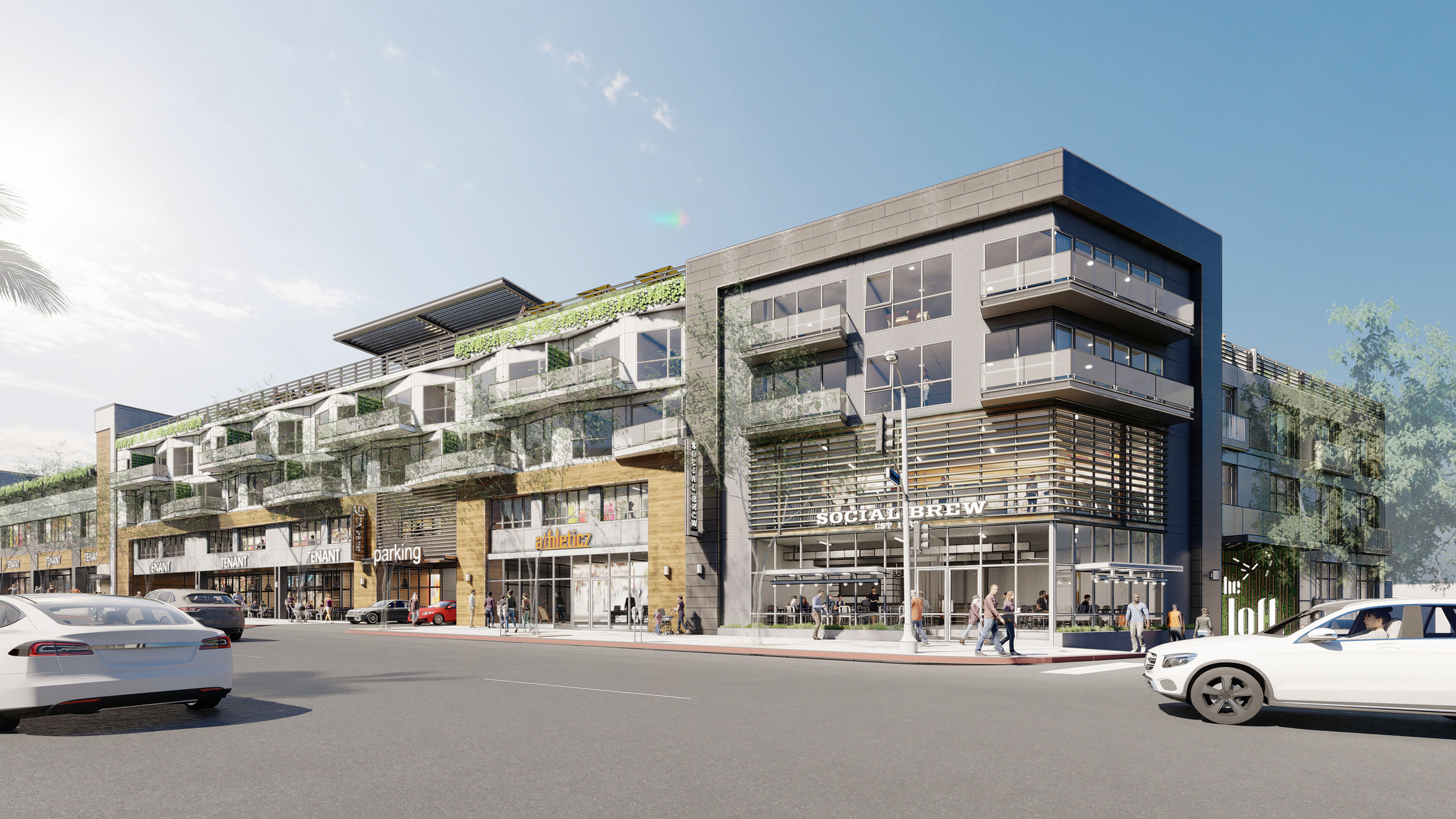
Tucson's mixed-use development is reshaping the city along corridors that connect the University of Arizona to downtown and the Mercado District, with Sun Link streetcar stops catalyzing infill projects that stack residential floors above ground-level retail and restaurant uses. The 4th Avenue corridor, the downtown arts district, and the Mercado San Agustín expansion have all produced mixed-use buildings that challenge roofing contractors accustomed to the simpler demands of single-story Sonoran Desert commercial construction. The leap from a flat-roof retail box to a multi-story mixed-use building with occupied rooftop terraces, rooftop mechanical equipment, and the need to accommodate multiple stakeholder interests requires a fundamentally different approach.
Southern Arizona's desert climate is not the gentle, forgiving environment that its reputation sometimes suggests to contractors from other regions. Tucson receives 11 to 12 inches of annual rainfall, but the monsoon season from July through September delivers that precipitation in violent, concentrated bursts-often an inch or more falling in 30 to 45 minutes, faster than poorly designed drain systems can evacuate. The intense UV radiation at Tucson's 2,400-foot elevation accelerates membrane oxidation significantly faster than lower-elevation markets, and the thermal cycling between 105°F summer afternoons and 25°F winter nights creates expansion-contraction stress at membrane seams and flashing terminations that exceeds the tolerance of materials specified for more temperate climates. Rooftop membrane systems in Pima County should carry documented UV-resistance ratings and be specified with thermal-movement accommodation built into the flashing design.
The transition between Tucson's ground-floor restaurant and bar tenants-heavily concentrated along 4th Avenue and the Congress Street entertainment corridor-and the residential floors above requires careful attention to grease exhaust penetrations, which in the desert climate present a different failure mode than in wetter regions. In Tucson's dry air, grease vapor from commercial kitchen exhaust stacks desiccates adjacent flashing sealants faster than monsoon-season moisture can re-hydrate them, creating a cyclical stress that produces cracking and separation at penetration edges. Elastomeric sealants with documented performance in extreme temperature differentials-rated for both UV resistance and flexibility at low temperatures-are required at these penetrations, and annual inspection before the monsoon season is the minimum maintenance standard.
Cool-roof requirements are a central specification driver for Tucson mixed-use buildings. Title 24 energy compliance and Pima County's heat island mitigation guidelines both encourage-and in some cases require-high-reflectance membrane surfaces that reduce cooling loads on the commercial floors below rooftop level. White TPO membranes with ENERGY STAR certification are the dominant choice in this market, and their reflectance performance makes a measurable difference in the HVAC energy costs of the residential floors they cover. However, highly reflective membranes also experience more severe thermal cycling than dark surfaces because they heat and cool more rapidly, and the membrane specification must account for that accelerated cycling in the formulation selection and seam-welding parameters.
Rooftop amenity terraces on Tucson mixed-use buildings oriented toward the University of Arizona student market and the downtown arts community have become important project differentiators. Shade structures, misters, and drought-tolerant planted zones on rooftop decks need to be integrated into the waterproofing design from the start, because post-installation addition of shade structure anchors or planter boxes inevitably creates new penetrations in already-installed membranes. Shade structure base plates on occupied rooftop decks must be anchored through the waterproofing system with engineered penetration details-not wood blocks or adhesive pads-and the drainage system must be sized to accommodate both monsoon surge flows and the irrigation drainage from any planted zones, even if those zones use drought-tolerant species that require only minimal supplemental water.
Fire-rated assemblies in Tucson mixed-use buildings follow IBC provisions as adopted in the Arizona Building Code, and the desert climate introduces a specific maintenance challenge to fire-rated assemblies: the dry conditions that accelerate UV degradation of exposed membrane surfaces also desiccate the intumescent materials used in fire-rated penetration seals. Annual inspection of fire-rated penetrations-pipe seals, cable tray seals, and duct damper assemblies within the rated roof-ceiling assembly-should include a moisture assessment to confirm that intumescent materials have not dried out and cracked. This maintenance requirement is not universally understood by building management companies in Tucson's mixed-use market and represents a gap in standard protocols that building owners should specifically address with their roofing contractors.
The multi-stakeholder coordination challenge on Tucson mixed-use projects is compounded by the city's significant university-adjacent property investment from out-of-state buyers who purchase residential units for UA student housing. These investor-owners often have no relationship with the local property management ecosystem and make decisions about building maintenance based on annual cash-flow reports rather than physical property assessments. The result is a class of mixed-use buildings-particularly concentrated in the University neighborhood and the Rincon District-where roof maintenance is deferred until a failure becomes visible inside a residential unit. The roofing contractors who serve this segment most effectively are those who have established relationships with property management companies that can act as a consistent maintenance intermediary between distant owners and local building systems.
Long-term performance on Tucson mixed-use roofs requires an annual maintenance protocol calibrated to the monsoon cycle. Pre-monsoon inspection in late May or early June should assess drain cover security, scupper opening integrity, and sealant condition at all penetrations-the conditions most likely to produce interior damage during the concentrated July storm season. Post-monsoon inspection in October should document any membrane displacement, ponding evidence, or scupper debris accumulation before the winter period. Buildings that maintain this biannual protocol and document it for insurance underwriting purposes consistently achieve better terms on commercial property policies in Pima County's competitive insurance market.
Tucson's development momentum along the Sun Link streetcar corridor and in the emerging Barrio Viejo mixed-use zone near downtown will continue to produce mixed-use roofing projects through the remainder of the decade. The Sun Tran transit expansion and the city's investment in pedestrian infrastructure along Broadway and Stone Avenue are attracting additional mixed-use proposals that will require roofing contractors with demonstrated desert-climate expertise, TPO cool-roof certification, and the coordination capabilities to work across the complex stakeholder structures of multi-occupancy urban buildings. Contractors who have completed comparable projects in the Tucson market, who understand Pima County permit requirements, and who can document monsoon-season performance on reference projects are the tier to engage first.
- Why do Tucson's monsoon rains create different roofing challenges than steady Pacific Northwest rainfall?
- Monsoon storms deposit an inch or more of rain in 30 to 45 minutes, a flow rate that overwhelms drainage systems designed for average rainfall rather than peak-event discharge. Drain sizing for Tucson mixed-use roofs must be calculated using 100-year storm intensity data from the National Weather Service for Pima County, not national average tables. Emergency overflow scuppers are essential at every level change, and drain cover configurations must prevent clogging from the dust and organic debris that accumulates on rooftops during the dry pre-monsoon months.
- What cool-roof specifications are required for Tucson mixed-use buildings?
- Pima County energy compliance and heat island mitigation guidelines encourage high-reflectance roof membranes, and Title 24 energy code compliance typically requires ENERGY STAR-certified surfaces on occupied roofs. White TPO with documented solar reflectance index values above 78 is the standard specification for new construction. Building owners should be aware that highly reflective membranes experience more severe thermal cycling than dark surfaces and should specify membrane formulations and seam-welding parameters selected for high-temperature differential environments.
- How should shade structure anchors be integrated into rooftop deck waterproofing on Tucson mixed-use buildings?
- Shade structure base plates must be anchored through the waterproofing membrane using engineered penetration details with fabricated stainless-steel sleeves and counter-flashing collars-not adhesive pads or compressible underlayments. The anchor penetration must be integrated into the primary membrane system during installation, not added afterward, because post-installation core drilling inevitably damages the membrane beyond what sealant can reliably repair. Structural anchors and penetration locations should be finalized on drawings before membrane installation begins.
- What maintenance risks do Tucson's dry conditions create for fire-rated penetration seals?
- Intumescent materials used in fire-rated pipe and cable penetration seals can dry out and crack in Tucson's low-humidity environment, compromising their ability to expand and seal during a fire event. Annual inspection of all fire-rated penetrations in the roof-ceiling assembly should include a visual and tactile assessment of intumescent material condition. Dried or cracked materials should be replaced by a fire-protection contractor using manufacturer-approved replacement products, and the inspection should be documented for the building's fire-protection maintenance records.
- How do grease exhaust penetrations behave differently in Tucson's desert climate compared to wetter markets?
- The extreme temperature cycling between summer highs and winter lows, combined with Tucson's low humidity, desiccates standard sealants at kitchen exhaust stack penetrations faster than in coastal or Midwest markets. Grease vapor from commercial kitchen exhaust further degrades petroleum-based sealants through solvent action. Elastomeric sealants specifically rated for UV resistance, temperature extremes, and grease exposure-rather than general-purpose construction sealants-are required at these penetrations, and they should be inspected and re-applied before each monsoon season as a standing maintenance item.
Frequently asked questions
Can you coat a BUR roof instead of replacing it?
Sometimes - and in Tucson it is often the right call when the substrate qualifies. We pull moisture cores before making any recommendation. If the insulation is dry, the gravel contact is intact, and there is no active blistering, a silicone coating system with the appropriate BUR primer is frequently the most cost-effective path: typically one-third the cost of tear-off and replacement, with a 10-15 year warranty from the coating manufacturer. If the insulation is wet, coating is not the answer and we say so.
How does Tucson's climate affect BUR faster than other markets?
Sustained UV at Index 11-plus for roughly five months of the year oxidizes the surface bitumen at a faster rate than in northern or coastal markets. The monsoon season then stress-tests seams and flashings that have been UV-cycled all summer. The combination accelerates alligatoring, flashing degradation, and gravel contact breakdown faster than manufacturer service-life tables - which are typically calibrated to moderate-climate exposure - predict. Annual inspection and maintenance is not optional on Tucson BUR systems; it is what determines whether the system reaches the end of its useful life on a planned schedule or fails on a monsoon emergency.
Is new BUR installation an option for Tucson commercial buildings?
Rarely, and we do not recommend it as a first choice. New BUR installation in the Tucson market has been largely supplanted by TPO and silicone coating systems that provide better reflectivity performance in the IECC Climate Zone 2B compliance environment. We can spec and install new BUR where a building's situation specifically requires it - but for most Tucson commercial buildings, a reflective single-ply system or a silicone restoration coating is the more defensible recommendation.
Aging BUR on a Tucson commercial building?
We will walk the roof, pull core cuts, and produce a written assessment - replace vs. coat vs. recover - with system options, installed cost bands, and warranty paths. No obligation.
Ready to talk through a roof?
Tell us about the building and the roof problem. We'll document it and put a plan in writing - with an honest repair-vs-replace recommendation and no upsell pressure.
Documented, repair-first commercial & industrial roofing across Tucson and Pima County. Flat and low-slope systems for occupied buildings, planned around your operation.
Services
© 2026 Commercial Roofing Contractors Tucson. All Rights Reserved. Privacy Policy · Terms of UseSite Map