
Sonoran Desert Heat Roofing in Tucson, AZ
Commercial roofing engineered for the Sonoran Desert's extreme UV, 175°F rooftop surface temps, and monsoon dry-in demands - reflective membranes, silicone coatings, and heat-rated insulation stacks for Tucson buildings.
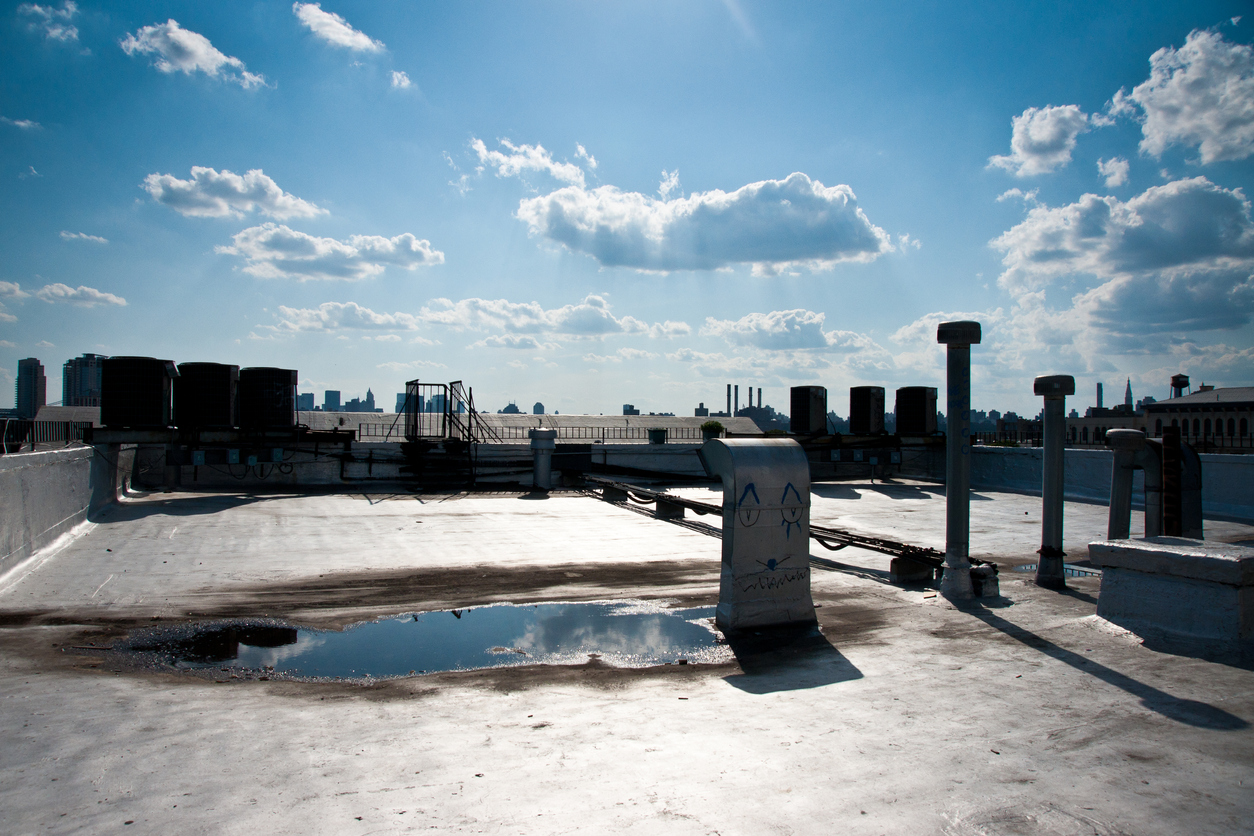
Tucson's UV Index exceeds 11 for roughly five months of the year. Rooftop surface temperatures on dark commercial membranes reach 175°F-plus by mid-afternoon in July. Monsoon convective cells can drop an inch of rain in forty minutes on a roof that has been baking for weeks. These are not edge conditions - they are the daily operating environment for every commercial flat roof in this market.
No commercial roofing market in the continental United States operates under more sustained UV and thermal stress than the Sonoran Desert. Tucson sits at 2,400 feet elevation in ASHRAE Climate Zone 2B with a dry-bulb design temperature of 106°F and a clear-sky UV Index that exceeds 11 - the WHO's 'Extreme' classification - for roughly five months of the year. That UV load degrades membrane polymers, oxidizes bitumen-based systems, and causes premature seam failure on roofs that might last 25 years in a northern climate but fail in 12 in Tucson.
The Sonoran Desert also delivers a climatic paradox that makes flat-roof management uniquely demanding: extreme dry heat for most of the year, punctuated by a monsoon season (July through September) that delivers the bulk of annual precipitation in intense convective events. A roof that has been thermally cycled all summer - seams stressed, membrane oxidized, sealants dried - faces its greatest water-infiltration challenge precisely when it is most vulnerable. We design and maintain commercial roofs in Tucson with both halves of that cycle in mind.
Heat Degradation Mechanisms on Tucson Commercial Roofs
UV radiation breaks down the polymer chains in TPO, PVC, and EPDM membranes over time. In the Sonoran Desert, this process runs at roughly twice the rate of a northern US or coastal market. The practical consequence is that membrane seam integrity - the primary failure point on single-ply systems - reaches a critical threshold earlier than manufacturer service-life tables, which are typically based on moderate-climate testing data. We account for Tucson's UV exposure when estimating remaining service life on existing roofs and when specifying warranted systems on new work.
Standard-density polyiso insulation loses effective R-value at high temperatures - a documented phenomenon the industry calls thermal drift. At 175°F surface temperature, the effective R-value of standard polyiso is materially below its labeled value. This matters for both energy-code compliance and for the insulation's ability to protect the structural deck from heat cycling. We specify high-density polyiso or a polyiso-plus-gypsum cover-board stack on Tucson commercial roofs to maintain effective insulation performance under actual operating conditions.
Parapet and penetration flashings take the highest UV dose on any commercial roof - they are vertical surfaces that receive direct radiation from the low-angle early-morning and late-afternoon sun that horizontal membrane surfaces avoid. Tucson's clear-sky solar intensity means parapet flashing systems degrade faster here than in most other markets. Our inspection protocol treats parapet flashings as the primary failure-risk component and documents their condition separately from the field membrane.
Reflective Membrane Systems for Tucson
White TPO and white PVC are the standard commercial membrane specifications in Tucson for three converging reasons: Arizona energy code (IECC 2018) mandates minimum solar reflectance values for new commercial roofs in Climate Zone 2; reflective membranes reduce rooftop surface temperatures by 50 to 70 degrees compared to dark surfaces, which extends membrane service life and reduces HVAC load; and major commercial property insurers in Arizona are beginning to recognize reflectivity as a risk-mitigation factor.
Silicone restoration coatings applied over sound existing membranes are increasingly the first-choice capital strategy on Tucson commercial roofs that have dry insulation and intact substrates. A properly specified silicone coating system adds 10 to 15 years of service life, restores solar reflectance on oxidized membranes that have darkened over time, and costs roughly one-third of full tear-off and replacement. The coating must be applied to a clean, dry, intact membrane - we pull moisture cores before recommending any coating project and document the core results.
For roofs where the membrane is compromised but the insulation is dry, a single-ply recover - new TPO or PVC mechanically attached over a cover board over the existing membrane - avoids the cost of tear-off and landfill disposal while delivering a new warranted system. Arizona's commercial construction volumes and landfill capacity make recover an economically and environmentally preferable option when the substrate supports it.
Monsoon Season Preparedness
Tucson receives approximately 12 inches of annual precipitation, of which roughly 60 percent falls during the July-through-September monsoon season. The monsoon delivers intense convective rainfall - National Weather Service Tucson records show single-event totals exceeding 2 inches at Tucson International Airport, with higher totals in the Rincon and Santa Catalina Mountain foothills that drain toward the city. An unprotected commercial roof section during a monsoon event can take on significant water in under an hour.
Our monsoon preparedness program for maintained roofs includes a pre-monsoon inspection in June that documents every drain, scupper, and overflow drain on the roof, clears debris from drain bowls and scuppers, and identifies any membrane areas at risk of water pooling. Blocked drains are the most common cause of monsoon-season interior water damage on Tucson commercial roofs - standing water that would drain in minutes on a functional drain backs up against perimeter flashings, overwhelms seams, and enters the building through the path of least resistance.
For buildings we maintain, we run a 24-hour storm-response protocol after any monsoon event that produces documented rainfall above one inch at Tucson International Airport. We walk the roof, document any water infiltration, and provide a written assessment within 24 hours of the event. Fast documentation is critical for insurance purposes - delayed reporting of storm damage can complicate claims.
UV and Heat Inspection Protocol
Our annual inspection protocol for Tucson commercial roofs includes infrared scanning on a cloudy evening or early morning - the thermal differential between wet and dry insulation is detectable by infrared imaging for 6 to 8 hours after solar heating ends, making Tucson's clear nights ideal for infrared scanning. We document wet areas by infrared image and GPS coordinates and present the scan results with moisture-core verification at any flagged locations.
Seam and lap inspection on all single-ply roofs includes a probe test of all field seams, laps, and T-joints. Tucson's thermal cycling - 70-degree daily temperature swings are common in spring and fall - stresses seam bonds more than moderate climates. We flag any seams that fail probe test and document them with photo and location for repair prioritization.
Drain inspection includes flow testing of all primary and overflow drains, documentation of any ponding areas where drain elevation has shifted due to thermal cycling or structural movement, and a written drain-maintenance recommendation.
Frequently asked questions
How much does Tucson's heat reduce a commercial membrane's service life?
UV and thermal exposure in the Sonoran Desert degrade membrane polymers at roughly twice the rate of a northern or coastal market. A TPO system with a 20-year manufacturer warranty may reach critical seam-degradation threshold in 12 to 15 years in Tucson without a diligent annual inspection and maintenance program. The maintenance contract - annual seam probe inspection, drain service, UV-exposed flashing replacement - is what keeps the membrane within its warranted performance envelope. We do not recommend manufacturer warranty programs we are not prepared to maintain.
What is a silicone coating and is it right for my Tucson building?
A silicone coating is a fluid-applied elastomeric waterproofing layer sprayed or rolled over an existing commercial membrane. It restores solar reflectance, seals minor surface cracks and laps, and protects the underlying membrane from further UV degradation. In Tucson it is typically the most cost-effective capital strategy for roofs where the substrate is dry, the membrane is intact, and the building owner has a 10-to-15-year planning horizon. We pull moisture cores to verify substrate condition before recommending any coating project - applying silicone over wet insulation voids the coating warranty and traps moisture.
Do you handle pre-monsoon maintenance inspections?
Yes. Pre-monsoon inspection is a core part of our annual maintenance program for Tucson commercial roofs. We inspect and clear all drains and scuppers, probe-test seams, document parapet flashing condition, and provide a written report with a prioritized punch list of repairs before the first monsoon event of the season. Drain clearing alone prevents the most common cause of monsoon-season interior water damage on Tucson flat roofs.
Can you do infrared scanning on our roof?
Yes. Infrared scanning is part of our inspection toolkit for Tucson commercial roofs. We scan on clear evenings when the thermal differential between wet and dry insulation is at its maximum. Scan results are documented with GPS coordinates and cross-referenced with physical moisture cores at flagged locations. The infrared scan report and core data are included in the written inspection report.
Get a Sonoran Desert heat assessment for your Tucson roof.
Our project managers will walk the roof, pull moisture cores at UV-stressed seam zones and parapet flashings, and produce a written condition report with a coating-vs-replace recommendation and pre-monsoon punch list.
Ready to talk through a roof?
Tell us about the building and the roof problem. We'll document it and put a plan in writing - with an honest repair-vs-replace recommendation and no upsell pressure.
Documented, repair-first commercial & industrial roofing across Tucson and Pima County. Flat and low-slope systems for occupied buildings, planned around your operation.
Services
© 2026 Commercial Roofing Contractors Tucson. All Rights Reserved. Privacy Policy · Terms of UseSite Map