
Self-Storage Facility Roofing in Tucson, AZ
Commercial roofing for self-storage facilities, mini-storage buildings, and climate-controlled storage properties throughout Tucson, AZ.
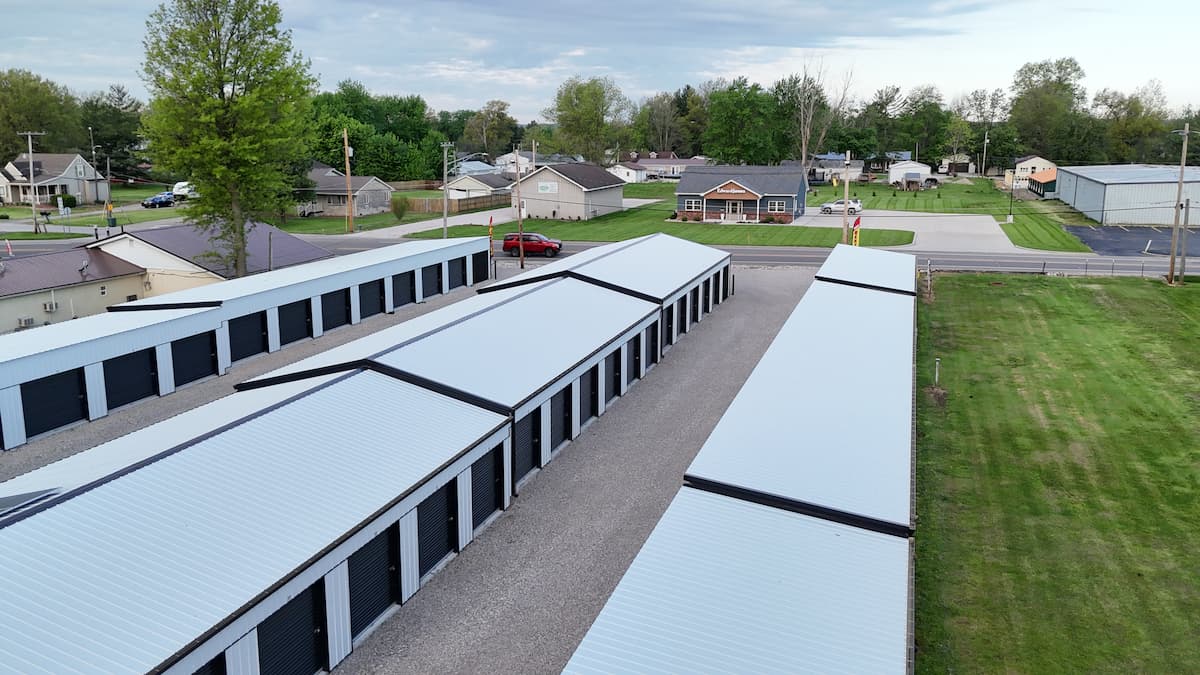
StorQuest Self Storage on East Broadway in Tucson operates one of the larger climate-controlled facilities in the metro area, with a campus footprint spanning tens of thousands of square feet of low-slope roofing exposed to Arizona's brutal ultraviolet radiation and monsoon-season moisture. When a facility of that scale develops even minor membrane failures, the consequences compound quickly - water intrudes into rental units, damages tenant belongings, and triggers liability claims that no operator wants to navigate. Commercial roofing in Tucson requires a contractor who understands both the extremes of desert climate and the specific demands of self-storage construction.
Self-storage buildings present a roofing profile unlike most commercial structures. The footprints are enormous relative to the wall height, meaning the roof surface carries essentially the entire weather load for everything stored below. A single penetration left unsealed, a lap joint that lifts under thermal cycling, or a drain that stays clogged after a July monsoon can send water traveling laterally across a flat deck for thirty feet before it finds a path into a unit. Tucson's monsoon season delivers intense, short-duration rainfall events that overwhelm poorly sloped or improperly drained roofs with little warning.
TPO and EPDM membranes are the most common choices for large self-storage roofs in southern Arizona, and each has specific installation requirements that matter enormously in this climate. TPO performs well under UV exposure when seams are heat-welded correctly, but field seams cut short during a rushed installation become failure points within a year or two of desert sun. EPDM offers excellent flexibility through temperature swings but demands careful adhesive application in high-heat conditions. Our crews are certified for both systems and understand the sequencing required when ambient temperatures exceed 100 degrees, which is a real constraint during Tucson summers.
Drainage design is not an afterthought on self-storage roofs - it is the most important engineering decision on the project. Tucson receives most of its annual rainfall in a six-week window during July and August, and a two-inch-per-hour storm over a 40,000-square-foot roof generates tens of thousands of gallons of runoff in a matter of minutes. Drain placement, tapered insulation slopes, and overflow scupper sizing all need to be calculated for those peak conditions, not average annual rainfall. We routinely perform drainage assessments before any reroof to ensure that new membranes do not simply cover up an underlying drainage problem.
Tenant protection during an active roofing project is a concern that separates experienced commercial roofers from residential crews that occasionally attempt storage work. Units in active rental cannot be shut down for weeks at a time. Our project sequencing divides large self-storage roofs into working sections with watertight temporary barriers at each boundary, so the facility continues operating throughout the project. Unit access is maintained, office operations continue, and the owner does not face the choice between a leaking roof and turning away paying customers.
The desert heat also accelerates the degradation of older built-up roofing (BUR) systems that were installed on Tucson storage facilities constructed in the 1980s and 1990s. When surface aggregate erodes and asphalt becomes brittle, blistering and splitting follow. A full tear-off and replacement with a modern single-ply system is often the most cost-effective long-term solution, since repeated patching of a compromised BUR system rarely extends service life meaningfully. We provide core sample analysis and infrared moisture surveys to help operators make that decision with data rather than guesswork.
Skylight wells and HVAC equipment pads create the penetration inventory that gives every self-storage roof its complexity. Climate-controlled facilities in Tucson run cooling equipment year-round, and those units require curb flashing details that hold up to thermal movement and rooftop vibration simultaneously. We use cured-in-place pipe boots and pre-fabricated curb caps wherever possible, supplemented by flexible sealant systems rated for long-term UV exposure, to keep those penetration details performing over a full membrane lifespan.
Our commercial roofing inspections for Tucson self-storage operators include a full photographic inventory of every penetration, seam, parapet cap, and drain, delivered as a PDF report the owner can file for insurance documentation or use as a baseline for future maintenance planning. Many operators find this report valuable when renewing property insurance or when preparing a facility for sale. A documented roof inspection history demonstrates active maintenance management and often influences underwriter decisions on commercial property policies in Maricopa and Pima Counties.
If you manage or own self-storage property in the Tucson area - from the foothills near Catalina to the south side near Sahuarita - we offer free commercial roofing assessments with no sales pressure. Our estimators are experienced in large-footprint flat roofing and will give you an honest evaluation of remaining membrane life, drainage performance, and any immediate repair needs before problems reach interior units and tenant property.
- How often should a Tucson self-storage roof be professionally inspected?
- Twice a year is the standard recommendation - once before monsoon season in late spring and once after it ends in September. Tucson's monsoon events can dislodge flashing and deposit debris in drains, so a post-season inspection catches damage before it sits unaddressed through the dry winter months.
- What membrane type holds up best under Tucson's UV exposure?
- Sixty-mil TPO with fully adhered or mechanically fastened installation and heat-welded seams is the most popular choice for new self-storage construction in the Tucson area. The white surface reflects heat and resists UV degradation better than black EPDM, which is an advantage in a climate where rooftop temperatures regularly exceed 170 degrees Fahrenheit in summer.
- Can reroofing work continue during monsoon season?
- Yes, with proper planning. Experienced commercial crews monitor National Weather Service forecasts, schedule tear-off for weather windows, and maintain temporary cover materials on-site to protect exposed decks if afternoon storms develop unexpectedly. Most Tucson reroofing projects can proceed through summer with minimal weather delays using this approach.
- What causes flat roofs on self-storage buildings to fail prematurely?
- The most common causes are inadequate drainage leading to ponding water, improperly sealed penetrations around HVAC curbs and pipe boots, and membrane seams that were not heat-welded or adhered according to manufacturer specifications. Deferred maintenance that allows small blisters or cracks to grow into large open splits is also a frequent factor.
- Is a roof replacement covered under standard commercial property insurance?
- Sudden storm damage is typically covered, but gradual wear and maintenance failures are generally excluded. Documenting regular inspections and timely repairs strengthens any storm damage claim by establishing that the roof was in maintained condition prior to the event. We provide inspection reports formatted to support insurance documentation for self-storage operators throughout the Tucson metro area.
Frequently asked questions
Can you coat a BUR roof instead of replacing it?
Sometimes - and in Tucson it is often the right call when the substrate qualifies. We pull moisture cores before making any recommendation. If the insulation is dry, the gravel contact is intact, and there is no active blistering, a silicone coating system with the appropriate BUR primer is frequently the most cost-effective path: typically one-third the cost of tear-off and replacement, with a 10-15 year warranty from the coating manufacturer. If the insulation is wet, coating is not the answer and we say so.
How does Tucson's climate affect BUR faster than other markets?
Sustained UV at Index 11-plus for roughly five months of the year oxidizes the surface bitumen at a faster rate than in northern or coastal markets. The monsoon season then stress-tests seams and flashings that have been UV-cycled all summer. The combination accelerates alligatoring, flashing degradation, and gravel contact breakdown faster than manufacturer service-life tables - which are typically calibrated to moderate-climate exposure - predict. Annual inspection and maintenance is not optional on Tucson BUR systems; it is what determines whether the system reaches the end of its useful life on a planned schedule or fails on a monsoon emergency.
Is new BUR installation an option for Tucson commercial buildings?
Rarely, and we do not recommend it as a first choice. New BUR installation in the Tucson market has been largely supplanted by TPO and silicone coating systems that provide better reflectivity performance in the IECC Climate Zone 2B compliance environment. We can spec and install new BUR where a building's situation specifically requires it - but for most Tucson commercial buildings, a reflective single-ply system or a silicone restoration coating is the more defensible recommendation.
Aging BUR on a Tucson commercial building?
We will walk the roof, pull core cuts, and produce a written assessment - replace vs. coat vs. recover - with system options, installed cost bands, and warranty paths. No obligation.
Ready to talk through a roof?
Tell us about the building and the roof problem. We'll document it and put a plan in writing - with an honest repair-vs-replace recommendation and no upsell pressure.
Documented, repair-first commercial & industrial roofing across Tucson and Pima County. Flat and low-slope systems for occupied buildings, planned around your operation.
Services
© 2026 Commercial Roofing Contractors Tucson. All Rights Reserved. Privacy Policy · Terms of UseSite Map