
Warehouse and Distribution Center Roofing in Tucson, AZ
Commercial roofing for warehouses, distribution centers, and industrial facilities throughout Tucson, AZ. TPO, EPDM, and metal roof systems.
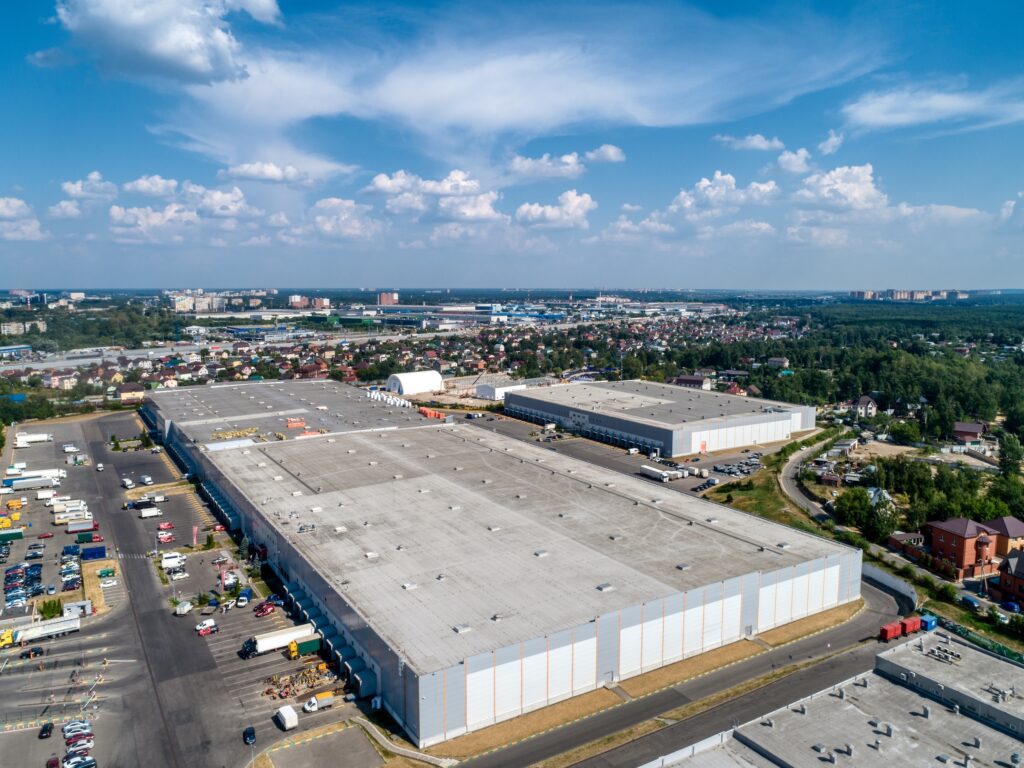
Pima County's distribution economy runs through warehouses like those operated by Raytheon Missile Systems' logistics campus off South Park Avenue, where roofs stretching several acres must perform flawlessly under the relentless Sonoran Desert sun. A warehouse roof in Tucson is not simply a cover - it is an active thermal barrier fighting ambient temperatures that routinely exceed 110°F on the roof deck surface during July and August. Commercial roofing contractors who specialize in large-footprint distribution and storage buildings understand that material selection, drainage geometry, and long-term energy performance all converge at this single building envelope system.
Drainage design is the first engineering challenge on any Tucson warehouse roof. Despite the desert climate, Tucson receives intense monsoon rainfall between June and September, with individual storms capable of dumping two inches in under an hour. A 200,000-square-foot warehouse footprint can accumulate hundreds of thousands of gallons during a single storm event. Internal drains positioned on a positive slope toward collection points are essential; ponding water on a low-slope membrane is the leading cause of premature failure, and Tucson's clay soils mean structural deck deflection can worsen over time if water is allowed to pool repeatedly.
TPO (thermoplastic polyolefin) has become the dominant single-ply choice for Tucson warehouse applications precisely because of its reflectivity in a sun-saturated climate. White TPO membranes can reflect 80 percent or more of incident solar radiation, reducing roof surface temperatures by 50-70°F compared to dark-surface built-up roofing. That temperature reduction translates directly into lower cooling loads - a significant operational savings for refrigerated distribution centers or facilities running manufacturing equipment. EPDM remains a viable alternative where budget constraints apply, though its dark-colored base membrane absorbs more heat unless a reflective coating is applied after installation.
Dock penetrations represent one of the more technically demanding flashing details on any warehouse roof. Loading dock canopies, exhaust fans, and conduit bundles punch through the membrane at intervals across the building's perimeter and interior. Each penetration is a potential failure point, particularly as the Tucson sun causes differential thermal expansion between the metal collar and the membrane. Stainless steel or aluminum pitch pockets filled with pourable sealant are sometimes used on legacy buildings, but modern best practice calls for prefabricated TPO pipe boots heat-welded directly to the field membrane for a monolithic, maintenance-free seal.
Forklift exhaust equipment presents a unique ventilation challenge inside large distribution buildings, and the roof system must accommodate the exhaust stacks and powered ventilators that remove carbon monoxide from the occupied floor. These roof-mounted units require curb-mounted flashing assemblies with flexible counterflashing to accommodate vibration without cracking the membrane seal. In Tucson's heat, the metal curbs themselves can reach temperatures that degrade standard butyl sealants within a single season, making heat-welded TPO counterflashing the preferred choice over adhesive termination bars.
Insulation specification for Tucson warehouses typically involves two or more layers of polyisocyanurate board installed in a staggered, offset pattern to eliminate thermal bridging at board joints. The Pima County energy code aligns with ASHEC 90.1 requirements for Climate Zone 2B, mandating minimum R-values that most modern warehouse installations meet with three inches of ISO board. Some tenants operating cold-storage or temperature-sensitive inventory push insulation values considerably higher to reduce refrigeration operating costs, and a well-designed roofing assembly can deliver R-30 or above within the standard low-slope profile.
Wind uplift in Tucson's monsoon season is often underestimated by building owners accustomed to thinking of Arizona as a calm weather state. Haboob dust storms and the thunderstorm outflows that precede them can generate brief but intense wind events exceeding 60 mph across the Tucson basin. ASCE 7 wind zone calculations for Pima County require enhanced fastening patterns at roof corners and perimeters, and single-ply membranes must be mechanically fastened or fully adhered in these zones rather than simply ballasted with stone. A ballasted system on a warehouse roof in Tucson is an invitation for wind-scour damage during the first significant monsoon storm.
Re-roofing existing Tucson warehouses often involves removing aged gravel-surfaced BUR systems that were standard construction through the 1980s and 1990s. These multilayer assemblies can weigh four pounds per square foot or more, and most structural steel decks have limited reserve load capacity. A careful structural review before specifying the replacement system is essential; if the deck cannot accommodate additional insulation without relief cuts or reinforcement, a lightweight TPO recover board system may be the only code-compliant path that avoids expensive structural upgrades. Tucson's dry climate means that most existing BUR systems do not harbor significant moisture, simplifying the tear-off decision.
Energy rebate programs through Tucson Electric Power and the Arizona Commerce Authority provide financial incentives for cool-roof installations that meet ENERGY STAR reflectivity thresholds. Warehouse owners undertaking re-roofing projects should coordinate with their roofing contractor to document the installed membrane's Solar Reflectance Index (SRI) value and submit the required paperwork before project closeout. These rebates can offset a meaningful portion of the premium cost of a high-reflectance TPO membrane compared to a standard gray or tan product, improving the overall return on investment calculation for the roofing project.
- How long does a TPO roof last on a Tucson warehouse?
- A properly installed TPO membrane on a Tucson warehouse typically performs for 20-25 years when maintained with annual inspections and prompt repair of any penetration or seam issues. The UV intensity in southern Arizona accelerates membrane aging compared to northern climates, so the quality of the initial installation and consistency of preventive maintenance are the primary factors determining service life.
- What roofing system is best for a refrigerated distribution center in Tucson?
- For cold-storage or refrigerated warehouse applications in Tucson, a fully adhered TPO system over high-R polyiso insulation is the standard recommendation. The white membrane minimizes solar heat gain, the adhered attachment eliminates wind-driven moisture pathways through fastener holes, and polyiso retains its R-value at low temperatures better than competing insulation products.
- Do Tucson warehouses need special drainage for monsoon season?
- Yes. Monsoon storms deliver high-intensity rainfall in short durations, so internal roof drains must be sized for the peak flow rate, not just the average annual rainfall. Secondary overflow scuppers at the parapet are required by code and should be inspected annually to ensure debris has not blocked the openings before the June start of monsoon season.
- What permits are required for a warehouse re-roof in Pima County?
- A commercial roofing permit from Pima County Development Services is required for any re-roofing project exceeding one square in area. The permit application must include a specifications document describing the membrane system, insulation, and attachment method, along with a site plan showing drain locations. Most licensed commercial roofing contractors handle the permitting process as part of the project scope.
- Can a warehouse roof in Tucson support rooftop solar panels?
- Many Tucson warehouse roofs can support rooftop photovoltaic systems, but a structural engineer must confirm the deck's load capacity before any solar installation. If re-roofing and solar installation are planned within a few years of each other, it is far more cost-effective to coordinate both projects simultaneously, as removing and reinstalling a solar array to replace the underlying membrane can cost as much as a new small array.
Frequently asked questions
Can you coat a BUR roof instead of replacing it?
Sometimes - and in Tucson it is often the right call when the substrate qualifies. We pull moisture cores before making any recommendation. If the insulation is dry, the gravel contact is intact, and there is no active blistering, a silicone coating system with the appropriate BUR primer is frequently the most cost-effective path: typically one-third the cost of tear-off and replacement, with a 10-15 year warranty from the coating manufacturer. If the insulation is wet, coating is not the answer and we say so.
How does Tucson's climate affect BUR faster than other markets?
Sustained UV at Index 11-plus for roughly five months of the year oxidizes the surface bitumen at a faster rate than in northern or coastal markets. The monsoon season then stress-tests seams and flashings that have been UV-cycled all summer. The combination accelerates alligatoring, flashing degradation, and gravel contact breakdown faster than manufacturer service-life tables - which are typically calibrated to moderate-climate exposure - predict. Annual inspection and maintenance is not optional on Tucson BUR systems; it is what determines whether the system reaches the end of its useful life on a planned schedule or fails on a monsoon emergency.
Is new BUR installation an option for Tucson commercial buildings?
Rarely, and we do not recommend it as a first choice. New BUR installation in the Tucson market has been largely supplanted by TPO and silicone coating systems that provide better reflectivity performance in the IECC Climate Zone 2B compliance environment. We can spec and install new BUR where a building's situation specifically requires it - but for most Tucson commercial buildings, a reflective single-ply system or a silicone restoration coating is the more defensible recommendation.
Aging BUR on a Tucson commercial building?
We will walk the roof, pull core cuts, and produce a written assessment - replace vs. coat vs. recover - with system options, installed cost bands, and warranty paths. No obligation.
Ready to talk through a roof?
Tell us about the building and the roof problem. We'll document it and put a plan in writing - with an honest repair-vs-replace recommendation and no upsell pressure.
Documented, repair-first commercial & industrial roofing across Tucson and Pima County. Flat and low-slope systems for occupied buildings, planned around your operation.
Services
© 2026 Commercial Roofing Contractors Tucson. All Rights Reserved. Privacy Policy · Terms of UseSite Map