
Manufacturer Warranty Management
Multi-manufacturer warranty portfolio tracking, renewal coordination, and warranty inspection support for Tucson commercial roof owners - keeping NDL warranties active through the Sonoran Desert's warranty-stressing UV and monsoon cycle.
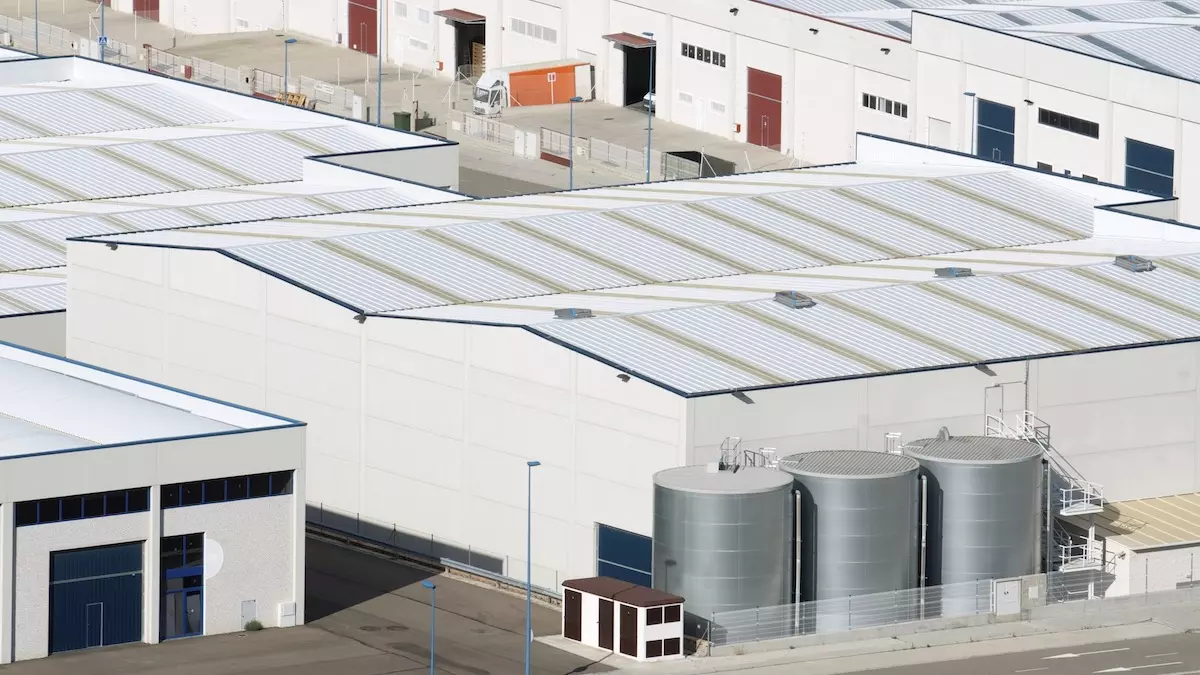
We track multi-manufacturer warranty portfolios for Tucson and Pima County building owners - renewal dates, maintenance documentation requirements, inspection coordination - across the full life of every warranty your roof carries.
A 20-year no-dollar-limit manufacturer warranty on a Tucson commercial roof is worth exactly what the maintenance documentation behind it supports. Most NDL warranties from Carlisle, GAF, Johns Manville, Sika Sarnafil, and Firestone require annual or semi-annual documented inspection and maintenance to remain active. The inspection must be performed by a credentialed applicator and results submitted to the manufacturer's warranty desk on a specific form, within a specific window - or the warranty lapses.
In the Tucson market, Sonoran Desert UV exposure creates a warranty management wrinkle that owners in less extreme climates do not face. The same UV load that degrades membrane polymers faster than moderate-climate service-life tables predict also means manufacturers' maintenance requirements are not optional administration tasks - they are the documented record that the owner maintained the system against its known UV stressors. A missed maintenance window on a Tucson roof does not just create a warranty administration gap; it creates an arguable basis for the manufacturer to assert that the owner failed to manage a known-risk condition.
We manage this operationally for Tucson owners and asset managers who have too many warranty touchpoints to track internally. We hold active credentials with the major single-ply manufacturers operating in the Pima County market and we know each manufacturer's warranty desk well enough to navigate the maintenance submission process efficiently - including the escalation path when a manufacturer inspector disputes a finding.
What We Track in a Warranty Portfolio
For each active warranty, we maintain: the original warranty document and registration number, the warranty issue date and expiration date, the manufacturer's required maintenance frequency and inspection form, the credentialed applicator requirement (most NDL warranties require a manufacturer-certified contractor to perform and document maintenance), the maintenance submission deadline and confirmation of each submission received, any open punch items from prior manufacturer inspections, and the manufacturer warranty desk contact for each policy.
We feed this into a calendar system that surfaces inspection and reporting deadlines 90, 60, and 30 days in advance. For Tucson properties, we coordinate the inspection schedule around the two high-risk seasonal windows the Sonoran Desert creates: the pre-monsoon window (May and June, before the July storm onset) and the post-monsoon window (October and November, after thermal cycling and precipitation stress have done their work). Any UV-related seam degradation or monsoon-related flashing condition gets documented and submitted before the next maintenance window closes.
Owners receive a quarterly summary showing every active warranty, its current status, next required action, and any open issues. The summary is formatted for capital planning - it identifies which warranties are approaching extension-eligible status, which are on watch for lapses, and which buildings carry warranties within five years of expiration that need a capital conversation.
Manufacturer Warranty Inspections - Tucson-Specific Conditions
Every major manufacturer runs its own field inspection program with different protocols. The conditions manufacturers flag most often in the Tucson market differ from what they flag in Dallas or Chicago. In the Sonoran Desert, the primary punch-list drivers are: seam degradation from UV polymer breakdown on membranes beyond year eight without diligent semi-annual probe inspection, parapet flashing shrinkage from daily thermal cycling in the 70-to-105-degree range, drain-area membrane stress from thermal expansion and contraction at drain rings, and UV oxidation at lap seams on older 45-mil TPO installed before 2012.
We document these conditions proactively during maintenance visits so the owner has a defensible record if a manufacturer inspector finds one of them and attempts to cite a maintenance deficiency. When a manufacturer inspection produces a punch list, we scope the remediation and submit completion documentation to the manufacturer's warranty desk within the required window. We have cleared warranty punch lists in the Pima County market for Carlisle, GAF, and Firestone, and we know the submission format each manufacturer accepts.
Renewals and Extensions
Several major manufacturers offer warranty extension programs at the 10-year mark - GAF's extended-system endorsement, Carlisle's warranty extension program, Johns Manville's renewal path. These extensions require a manufacturer field inspection, a clean maintenance record for the prior term, and a remediation scope for any conditions the manufacturer identifies at the extension inspection.
We identify extension-eligible Tucson commercial roofs 18 months before the extension Owners who manage this proactively extend warranty coverage on aging roofs without accelerating the replacement cycle - particularly relevant in a market where a warranted silicone restoration coating can extend a Sonoran-exposed roof another 10 to 15 years at one-third the replacement cost.
Frequently asked questions
What happens if we miss a required maintenance submission window?
The manufacturer's response varies. Some issue a cure notice with 30 to 90 days to document and submit the deferred maintenance before the warranty is suspended. Others treat the missed window as an immediate lapse. We have navigated both with manufacturers in the Tucson market. Getting ahead of a missed window before the manufacturer finds it is always better than responding to a suspension notice - especially on a Sonoran-exposed roof where UV condition progression is faster than in most markets.
Which manufacturers do you hold credentials with in Tucson?
We hold active credentials with Carlisle, GAF, Johns Manville, Sika Sarnafil, Versico, and Firestone - covering the large majority of commercial single-ply NDL warranties active across Tucson commercial buildings. For specialty systems or less common manufacturers, we coordinate with the manufacturer's field rep directly to determine the credentialed-applicator requirement.
Can you take over warranty management on a roof you did not install?
Yes, but it requires a manufacturer inspection to document current condition as the baseline. The manufacturer needs to establish what they are warrantying going forward. We do this regularly for owners who acquired Pima County buildings with active warranties and need a credentialed contractor to carry the maintenance obligation.
Does the Sonoran Desert climate change how aggressively we need to manage warranties?
Yes, materially. UV Index values above 11 for five months of the year accelerate the membrane degradation mechanisms that manufacturer inspectors are trained to find. A missed maintenance cycle on a Tucson roof is not the same risk as a missed cycle on a Denver roof - the UV stressor is running harder here, and the documentation gap is more likely to coincide with a detectable condition. We recommend semi-annual maintenance for any Tucson commercial roof under an active NDL warranty.
Managing warranty deadlines across multiple Tucson buildings?
We will audit your current warranty portfolio, identify any lapse risk, and set up the ongoing tracking and maintenance submission cadence that keeps every warranty active through Tucson's UV and monsoon cycle.
Ready to talk through a roof?
Tell us about the building and the roof problem. We'll document it and put a plan in writing - with an honest repair-vs-replace recommendation and no upsell pressure.
Documented, repair-first commercial & industrial roofing across Tucson and Pima County. Flat and low-slope systems for occupied buildings, planned around your operation.
Services
© 2026 Commercial Roofing Contractors Tucson. All Rights Reserved. Privacy Policy · Terms of UseSite Map