Weather watch · Prepare your roof
Prepare for flood watch conditions in Casas Adobes, Catalina Foothills, Drexel Heights, Marana, Oro Valley, Sahuarita, and Tucson
The National Weather Service has issued a flood watch covering Casas Adobes, Catalina Foothills, Drexel Heights, Marana, Oro Valley, Sahuarita, and Tucson. Heavy rain and drainage loading can expose roof leaks, blocked drains, and ponding water. This is a weather exposure advisory; it does not establish damage to a specific roof.
Review your leak-response contacts and existing roof concerns. Arrange drainage checks only when safe. Follow official local weather guidance.
National Weather Service · Updated Sep 27, 2026, 4:17 AM UTC
Tornado Damage Roof Repair in Tucson
Tornado damage assessment and repair scope for Tucson commercial flat roofs - structural deck evaluation, EF-scale documentation, and Arizona insurance scope packages for rare but documented Arizona tornado events.
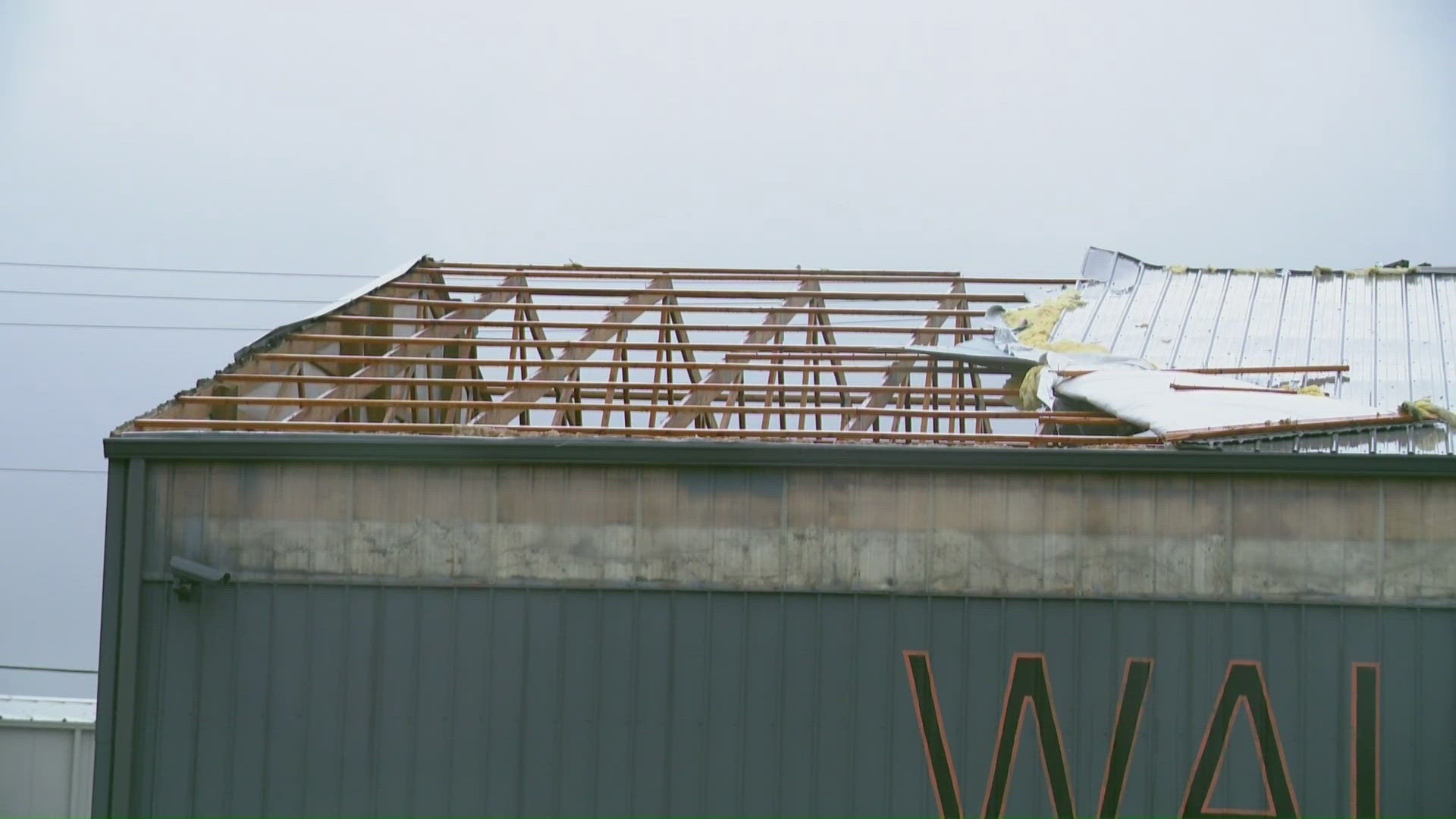
Tornadoes are rare in the Tucson metro, but they are not unknown. Arizona experiences an average of three to five confirmed tornadoes per year, typically as waterspouts that make landfall on state park lake surfaces or as brief EF-0 and EF-1 touchdowns associated with monsoon supercells. When one crosses a commercial building, we scope the roof damage in a format that Arizona carriers can process.
Arizona averages between three and six confirmed tornado touchdowns per year, according to the National Weather Service Phoenix and Tucson offices. The majority are EF-0 events associated with monsoon supercell activity, with touchdowns lasting a few minutes and path lengths measured in blocks rather than miles. Tucson and the surrounding Pima County metro have experienced documented EF-0 and EF-1 events in the historic record - the August industrial corridor in southeast Tucson, and similar events have been documented in the Green Valley and Vail areas.
The damage on commercial flat roofs from an EF-0 or EF-1 tornado is concentrated but intense within the track. Membrane pull-off at the corner and perimeter zones, displaced flashing caps, HVAC unit displacement, and debris impact patterns across the field membrane are typical. Unlike a straight-line microburst, the tornado-path damage has a rotational signature - membrane pull-off that fans in directions inconsistent with any single wind vector, debris impact at angles that reflect the vortex rather than a single storm motion.
We scope tornado-path damage with the same structured approach we use for any post-event commercial roof: documented zone walk, photo log, core samples where structural deck damage is possible, and a written repair-vs-replace recommendation. We coordinate with structural engineering review when the damage pattern suggests deck or structural connection compromise - and we tell you clearly when we think that review needs to happen before the roofing scope is finalized.
Reading Tornado-Path Damage vs. Monsoon Microburst Damage
Distinguishing a brief EF-0 tornado from a severe microburst on the roof surface is not always straightforward. Both produce concentrated high-wind damage over a compact footprint. The rotational evidence is what separates them: on a tornado-path building, membrane pull-off on two adjacent faces may show peel-back in opposing directions - windward lift on one face, rotational peel-back on the adjacent face - which cannot be produced by a unidirectional downdraft. We document that rotational signature in the photo log with directional notation, because it is the evidence that supports tornado attribution versus microburst attribution in the insurance file.
HVAC unit displacement is another tornado indicator on Tucson commercial roofs. The rooftop equipment density on a typical Tucson commercial building - multiple packaged HVAC units on a mid-size office building serving a climate that operates cooling equipment most of the year - means there are several heavy units on the roof that a tornado's rotational uplift can shift off their curb mounts. A microburst rarely produces HVAC unit displacement; a brief EF-0 tornado regularly does. We document any displaced unit, photograph the curb mount damage, and note it in the scope as evidence of the event type.
Structural deck damage from an EF-0 or EF-1 tornado on a standard Tucson commercial building is uncommon but not impossible. At the perimeter zones where uplift pressure is highest, deck fasteners at the joist connection can elongate under rotational uplift loading. We scope deck inspection ports at any location where the membrane pull-off pattern suggests loading above normal design wind speed - and we recommend structural engineering review when the deck inspection reveals elongated fastener holes or panel separation.
EF-Scale Damage Scope on Tucson Commercial Buildings
EF-0 tornado damage on a commercial flat roof - the most common Arizona tornado rating - typically produces perimeter and corner membrane pull-off, displaced flashing caps and edge metal, HVAC unit displacement on curb mounts, and debris scatter across the field membrane. The deck is generally intact. Repair scope is membrane reinstallation at pulled zones, edge metal replacement, flashing cap reinstallation, debris clearance, and HVAC curb resetting coordinated with a mechanical contractor. This is the most common post-tornado scope in the Tucson market.
EF-1 tornado damage on a commercial flat roof produces more extensive perimeter pull-off and may involve partial deck panel uplift at the building's most exposed corner. Scope is typically full replacement of the affected roof area with deck inspection at the damaged zones and structural engineering review where deck uplift evidence is present. Parapet walls need separate structural assessment - parapets that were laterally loaded by EF-1 rotational wind may look intact from the roof while being structurally disconnected at the base.
EF-2 and above tornado damage on a commercial building in the Tucson area would represent a significant and exceptional event. If structural deck uplift, joist displacement, or parapet collapse are present, we do not scope the roofing work in isolation from structural engineering review. The roofing scope follows structural clearance. We coordinate the documentation and the repair sequence with the structural engineer of record.
Arizona Insurance Documentation for Tornado Events
A confirmed tornado is one of the clearest peril events in the commercial property insurance world - the NWS issues official tornado reports that document the touchdown location, track, EF rating, and path width, and those reports are the primary anchor for the claim attribution. We include the relevant NWS Tucson Storm Data publication entry and any NWS survey reports in the scope package so the adjuster has the official event documentation alongside our roof-level damage scope.
Arizona carriers - USAA, State Farm, Farmers, Allstate, and Auto-Owners are the major commercial property carriers in the Pima County market - have their own adjustment protocols for tornado claims. Our scope package is built in a format those adjusters can process: GPS-tagged zone diagram with the damage footprint mapped against the NWS-reported track, photo log organized by damage category, core sample results at structural deck inspection locations, and written repair-vs-replace recommendation with the basis stated.
Where FEMA documentation is required - in the event of a federal disaster declaration for Pima County following a tornado event - we build our roof scope documentation in a format that integrates with FEMA's damage assessment requirements. The zone diagram, photo-indexed damage log, and written scope with quantities all align with what a FEMA P-154 assessment coordinator needs from the commercial roofing contractor.
Frequently asked questions
We had a brief tornado touch down near our Tucson building - how serious is the roof damage likely to be?
For a brief EF-0 event, the most common damage pattern is perimeter and corner membrane pull-off, displaced flashing caps, HVAC unit displacement, and debris impact across the field membrane. Structural deck damage at that EF rating is uncommon but possible at the most exposed corner zones. We walk the full roof to assess what actually happened before estimating the scope - the damage footprint from a brief tornado can be very localized, and what is visible from the parking lot does not always predict what is on the roof.
Do you do emergency tarping after a tornado-adjacent event?
Yes. Emergency dry-in is the first step after any tornado-adjacent event that produces open roof areas or active leaks. We can mobilize for emergency dry-in same-day or next-day after a Tucson area event, weather permitting. Emergency dry-in scope and cost are documented separately from the damage assessment and the insurance documentation package.
How does a tornado affect our Arizona commercial property claim differently from a microburst?
A confirmed NWS tornado event is a specifically documented peril that typically carries its own coverage pathway in commercial property policies. We are roofers, not coverage attorneys - but our documentation distinguishes tornado-path damage from microburst damage using the rotational evidence on the roof surface and the NWS event documentation. Whether that distinction affects your specific coverage is between you, your adjuster, and any public adjuster or attorney you have engaged.
When do you recommend bringing in a structural engineer before finalizing the roofing scope?
When the damage pattern suggests loading above normal design wind speed - elongated fastener holes at deck panel connections, parapet walls that feel or move differently than they should, visible joist distortion. We tell you clearly when we think the structural picture needs to be settled before a reliable roofing scope can be finalized. We do not scope roofing work over uncertain structural conditions.
Tornado-adjacent damage to a Tucson commercial roof?
We walk the roof, document the rotational damage pattern with GPS-tagged photo logs and NWS event records, scope the repair or replacement, and coordinate structural engineering review where the damage warrants it.
Ready to talk through a roof?
Tell us about the building and the roof problem. We'll document it and put a plan in writing - with an honest repair-vs-replace recommendation and no upsell pressure.
Documented, repair-first commercial & industrial roofing across Tucson and Pima County. Flat and low-slope systems for occupied buildings, planned around your operation.
Services
© 2026 Commercial Roofing Contractors Tucson. All Rights Reserved. Privacy Policy · Terms of UseSite Map