
Fire Damage Roof Repair in Tucson
Commercial roof fire damage assessment and repair for Tucson buildings - HVAC fire damage, wildfire ember exposure, and smoke-affected membrane scope packages for Arizona insurance adjusters.
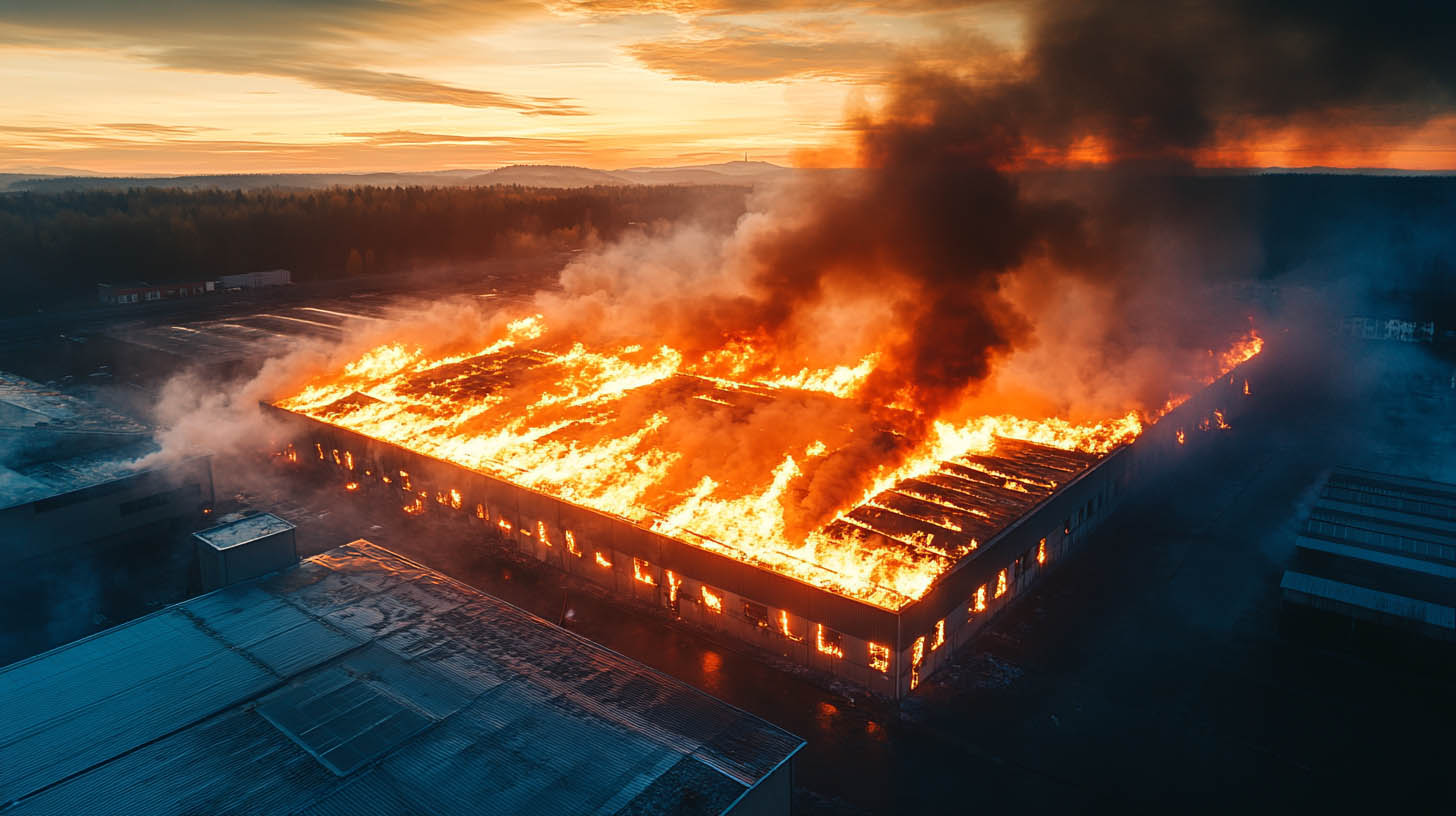
Tucson's fire damage risk on commercial roofs comes from two sources that most markets do not combine: rooftop HVAC units that are among the densest concentrations of mechanical equipment in any American commercial market, and proximity to Sonoran Desert and sky island wildland-urban interface where ember transport from wildfire is a documented hazard. We scope both.
Tucson's commercial building stock runs cooling equipment for a significant portion of the year - the combination of 105°F ambient summer temperatures and a commercial market that cannot afford interior heat gain means that most commercial buildings in the metro run multiple packaged rooftop HVAC units nine to ten months per year. That concentration of mechanical equipment on the roof creates a fire exposure that is higher than most markets: electrical shorts at aging compressors, refrigerant leaks that ignite at compressor-motor contact points, and heat-exchanger failures that produce localized combustion events. HVAC-origin rooftop fires in Tucson damage membrane, insulation, and deck in concentrated zones around the affected unit.
The second fire vector is unique to the Southwest: wildfire-driven ember transport. The 2020 Bighorn Fire in the Santa Catalina Mountains burned over 119,000 acres visible from Tucson commercial rooftops. The 2003 Aspen Fire in the Catalinas had burned to the outskirts of Summerhaven. In major wildland-urban interface fire events near Tucson, ember transport on wind can carry burning material into commercial zones well outside the direct fire perimeter. Ember landing on a Sonoran Desert commercial flat roof - a hot, dry surface with insulation and bitumen-containing materials - produces a localized ignition risk that is different from a direct structure fire.
We scope fire damage on commercial flat roofs by zone: the directly affected membrane and insulation area, the smoke-and-heat affected zone around it, and the adjacent zones where ember impact or fire-suppression water created secondary damage. The scope package is documented in a format your Arizona commercial property adjuster can use.
HVAC-Origin Rooftop Fire Damage Scope
A rooftop HVAC compressor fire in Tucson typically affects a concentrated zone: the unit curb, the membrane directly under and around the unit, the insulation board beneath the curb, and the deck at the unit attachment points. Beyond the immediate burn zone, heat exposure without direct flame affects a radius of typically 6 to 12 feet around the unit - membrane that is charred at the surface, seams that have de-bonded from heat exposure, and insulation that has experienced partial thermal degradation without ignition.
Fire-suppression water from sprinkler activation or fire department operations affects a much larger zone than the fire itself. A single fire-suppression event using a standard fire department preconnect at full flow for 5 minutes can deposit 250-plus gallons of water on a Tucson commercial roof. That water flows across the membrane surface, enters the first available drain or seam gap, and saturates insulation across a wide zone that may be 50 to 100 feet from the burn origin. We scope the fire-suppression water damage as a separate element of the fire damage investigation - with infrared scanning to map wet insulation beyond the burn zone.
HVAC unit replacement is coordinated with the mechanical contractor; our scope covers the rooftop membrane, insulation, and deck at the unit location and in the heat-affected zone. We do not write HVAC scopes, but we coordinate the sequencing: the mechanical contractor removes and replaces the unit before we finalize the deck and membrane scope, so the curb configuration and drain locations are set before we write the membrane replacement dimensions.
Wildfire Ember Impact Documentation
Ember transport during a Tucson-area wildfire event produces distinctive damage on commercial flat roofs: small, concentrated burn marks - typically 1 to 4 inches in diameter - scattered across the field membrane in a pattern that follows the ember transport wind direction. On white TPO or PVC membrane, ember scorch marks are clearly visible. On modified bitumen or EPDM, they may require close inspection to distinguish from UV degradation or prior traffic damage.
The documentation challenge for ember-transport damage is establishing that the marks correlate with the wildfire event rather than prior HVAC maintenance operations or other heat sources. We document the scorch pattern's directional consistency with the fire's documented ember transport wind, the event date correlation with fire activity reports from the Coronado National Forest or Arizona State Forestry Division, and the scorch characteristics - fresh versus aged surface, uniform versus random distribution - that support attribution.
Not all ember impact marks produce functional membrane damage. A TPO membrane that has a clean scorch mark from a small ember that self-extinguished may have intact waterproofing at the scorch site. We probe-test every scorch location and document the result: cosmetic surface mark with intact waterproofing, partial membrane thickness reduction requiring repair, or full penetration requiring patching. The repair scope is based on what the inspection actually finds, not on the scorch mark count.
Smoke Damage and Membrane Chemical Interaction
Sustained smoke exposure from a Tucson wildfire or a major structural fire on or near the building can deposit carbon and combustion particulates on the membrane surface. On white TPO and PVC, heavy smoke deposit darkens the surface, reducing solar reflectance significantly - which matters in Tucson's IECC energy-code environment and for the membrane's operating temperature. We document the smoke deposit extent and reflectance impact as part of the fire damage scope.
Smoke particulates that infiltrate insulation through open seams or fire-compromised membrane sections can cause insulation degradation over time. The acidic components of wood-smoke combustion products react with the organic facers on polyiso insulation boards. We assess insulation condition at any location where smoke infiltration through the membrane is probable and include insulation testing in the scope when the fire event characteristics suggest sustained smoke infiltration.
Cleaning versus replacement of smoke-affected membrane is a scope decision that depends on the extent of smoke deposit, the membrane age and condition, and whether reflectance can be adequately restored through cleaning. We assess each situation individually and document the recommendation with its basis. For Tucson commercial roofs near wildland-urban interface, a smoke event that reveals membrane condition issues - UV degradation, seam oxidation - may produce a combined fire-damage-and-replacement scope that addresses both the fire event and the underlying membrane condition.
Frequently asked questions
Our HVAC unit had a compressor fire - how much of the roof membrane do we typically need to replace?
The direct burn zone around a typical Tucson commercial HVAC compressor fire is 4 to 8 feet in radius from the unit, plus the unit curb area itself. The heat-affected zone beyond that - de-bonded seams, heat-softened membrane - extends another 4 to 8 feet. Fire-suppression water damage from the fire department's operations can spread wet insulation across a much larger area, which we map with infrared scanning after the event. The total replacement scope depends on what the inspection finds, not on a standard formula.
We saw smoke from the Catalina or Rincon Mountains during a wildfire - should we have our roof inspected?
If you are within the documented ember transport zone of a major wildfire event - which can extend several miles downwind of the active fire front - a visual inspection of the membrane surface for scorch marks is worthwhile. We probe-test any marks we find to determine whether the waterproofing layer is intact. Cosmetic surface scorch on a sound membrane is a documentation issue, not a repair issue. Penetrating scorch damage is a repair issue. The inspection tells you which you have.
Does Arizona property insurance typically cover wildfire ember damage to a commercial roof?
Fire damage from an identified wildfire event is generally a covered peril under commercial property policies, but coverage specifics depend on your policy language and any exclusions. We are not coverage advisors. What we do is document the ember damage pattern with event attribution evidence - fire activity reports, wind direction documentation, scorch mark pattern analysis - that your Arizona adjuster can use to assess the claim. We have documented ember damage from Tucson-area wildfire events for Arizona carriers including Farmers, State Farm, USAA, and Allstate.
What is the typical timeline from fire damage event to completed roof repair?
Emergency dry-in at any open membrane areas is same-day or next-day. The damage investigation scope - infrared scanning for fire-suppression water, probe testing of scorch marks, core pulls - is typically completed within a week of the event. Material lead times for TPO or PVC replacement membrane and polyiso insulation in the Tucson market are currently 1 to 3 weeks for standard sizes. A typical HVAC-fire rooftop repair is completed within 3 to 6 weeks of the event, depending on insurance process timing and material availability.
Fire damage assessment for a Tucson commercial roof?
We scope HVAC-origin rooftop fires and wildfire ember damage with separate documentation for the burn zone, heat-affected membrane, and fire-suppression water infiltration - in a format your Arizona adjuster can use for the commercial property claim.
Ready to talk through a roof?
Tell us about the building and the roof problem. We'll document it and put a plan in writing - with an honest repair-vs-replace recommendation and no upsell pressure.
Documented, repair-first commercial & industrial roofing across Tucson and Pima County. Flat and low-slope systems for occupied buildings, planned around your operation.
Services
© 2026 Commercial Roofing Contractors Tucson. All Rights Reserved. Privacy Policy · Terms of UseSite Map