
Movie Theater & Cinema Roofing in Tucson, AZ
Long-span cinema and multiplex roofing in Tucson, AZ. We engineer fastening to the auditorium deck, flash the dense rooftop HVAC cluster, and sequence work around the screening schedule.
The defining feature of a cinema roof is what is not under it: no columns. A multiplex auditorium is a clear-span box, and the deck overhead bridges 80 to 150 feet with nothing in the middle to carry it. That span flexes under wind and thermal load in ways a strip-center roof never does, and a fastening pattern copied from retail work will pull, fatigue, and open seams over an auditorium. We engineer the attachment to the actual deck and span on a theater, because the structure is the whole problem.
Tucson's cinema demand runs from the multiplexes anchoring shopping centers off Oracle Road and along the Speedway and Broadway corridors to the El Con and Park Place areas, plus the long-running independent and revival houses the city is known for, including The Loft on East Speedway near the University of Arizona. A college town with a strong film culture keeps these screens busy late into the night, and that late, seven-day operating pattern is the second thing that shapes the roofing job.
Engineering for the clear-span deck
Large-span steel deck is not a single thing. Older buildings carry short-rib deck with lower fastener pull-out values; modern construction uses deeper three-inch rib with much more holding capacity. We verify deck type and gauge with pull tests before we commit a mechanical-attachment pattern, and where deflection across the span is a real concern we move to an adhered or hybrid system to take the concentrated point loads off the fasteners at the seams. Concrete decks over structural steel - common on the older single-screen conversions here - take adhered or, where the structure allows, ballasted systems rather than direct mechanical attachment.
The rooftop mechanical cluster
For a building with so much empty volume, a multiplex carries a startling amount of iron on the roof. Each auditorium runs its own dedicated rooftop unit, the concession stand has kitchen exhaust and make-up air, the lobby has its own heating vents, and the food-service coolers and freezers run condensers up top. The penetration cluster over a busy Tucson multiplex rivals a hospital or a data center, and every curb, duct boot, and conduit run is flashed and documented individually before any membrane covers it.
- Curbs are confirmed to warranty height and re-flashed one by one; the field membrane is the simple part of a cinema roof.
- Reinforced walkway pad is run to the high-traffic units, because projection and HVAC techs are on this roof constantly.
- Acoustic and vibration isolation at the unit curbs is respected during the work, since a unit re-set wrong telegraphs hum into a quiet auditorium below.
Membrane and drainage
Our default cinema specification is 60-mil or 80-mil TPO mechanically attached over tapered polyiso. The tapered insulation is the part that earns its cost: decades-old flat theater roofs always carry drainage flats and ponding, and rebuilding positive slope to the drains is what actually extends the new membrane's life under the Tucson sun. White TPO also meets the cool-roof intent that the local energy code now applies to commercial reroof permits, which matters on a roof this large baking through a desert summer. Before we recommend recover versus full tear-off, we pull a core sample to confirm the existing insulation layers, the moisture content, and the total weight already in place.
Drainage is its own design problem on a large cinema roof, and the Tucson climate makes it a feast-or-famine one. For most of the year the roof sees nothing, and then a single summer monsoon cell drops more rain in an hour than the roof gets in months. A drainage system sized for gentle average rainfall backs up fast under that load, so we size primary drains and overflow scuppers for the storm intensity that actually hits this valley and confirm the tapered layout sheds water off the long auditorium spans toward those drains rather than ponding mid-span where the deck deflects. Standing water over a clear-span deck is both a structural load and a leak waiting for the next freeze-thaw night.
Working around the screening schedule
Cinemas open in the afternoon and run late, seven days a week, so the constraint resembles a 24-hour building more than a 9-to-5 one. We sequence tear-off and dry-in so every section is watertight before evening screenings start, coordinate any HVAC shutdown windows needed for curb or penetration work with facilities, and keep crews and material handling clear of the evening opening procedures and the foot traffic near building entries. Daily dry-in is confirmed in writing - a multiplex cannot take a leak over a sold-out auditorium.
Marquees, canopies, and the chronic leaks
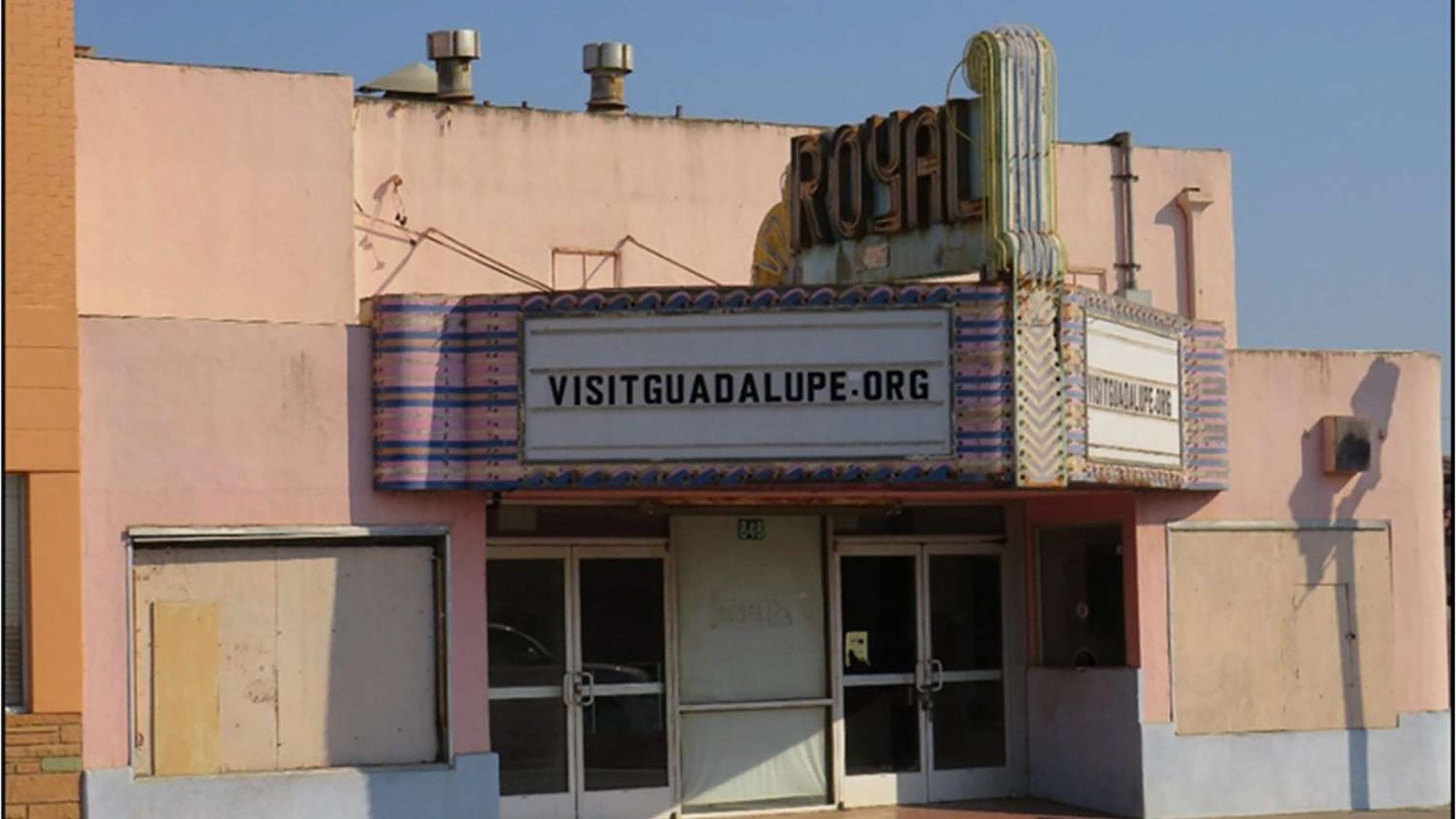
The entry canopy and the marquee or sign supports are where older theaters leak, every time. Those connections see hard thermal cycling and differential movement against the building wall, and the original retail-grade flashing was never built to hold up to it. We treat every canopy-to-wall transition and every sign-support penetration as its own flashing item, evaluate them on the walk, and re-flash them as part of the project rather than chasing the same drip back year after year.
Movie Theater Roofing Questions
What membrane do you spec for a multiplex?
Usually 60-mil or 80-mil TPO mechanically attached over tapered polyiso. The taper corrects long-standing drainage flats, white TPO meets cool-roof permit requirements, and reinforced walkway pad protects the membrane in the heavy-traffic zones around rooftop units.
How do you handle the auditorium clear spans?
We verify deck type and gauge with pull-out testing before setting a fastener pattern, since short-rib older deck holds far less than modern three-inch rib. Where deflection is a concern across the span, we use an adhered or hybrid system to take point loads off the seam fasteners.
Can the work be done without disrupting screenings?
Yes. The work is planned around the screening schedule, with tear-off and dry-in sequenced so each section is watertight before evening shows, and any HVAC shutdown windows coordinated with facilities in advance.
How is a cinema roof priced?
Per roof square, based on membrane spec, existing assembly condition, penetration density, and access constraints, set after a roof walk and core sample. Most multiplex reroofs include tapered insulation, which adds cost but extends service life by ending the ponding.
Do you handle the marquee and entry canopy connections?
Yes. Marquee and canopy attachment points are treated as individual flashing items. The canopy-to-building transition is the most common chronic leak on older theaters, and we re-flash it as part of every cinema project here.
Ready to talk through a roof?
Tell us about the building and the roof problem. We'll document it and put a plan in writing - with an honest repair-vs-replace recommendation and no upsell pressure.
Documented, repair-first commercial & industrial roofing across Tucson and Pima County. Flat and low-slope systems for occupied buildings, planned around your operation.
Services
© 2026 Commercial Roofing Contractors Tucson. All Rights Reserved. Privacy Policy · Terms of UseSite Map