
Sports & Recreation Roofing in Tucson, AZ
Tucson sports and recreation roofing for long clear spans and pool-hall humidity - chloramine-rated details, vapor control, and work scheduled around programming.
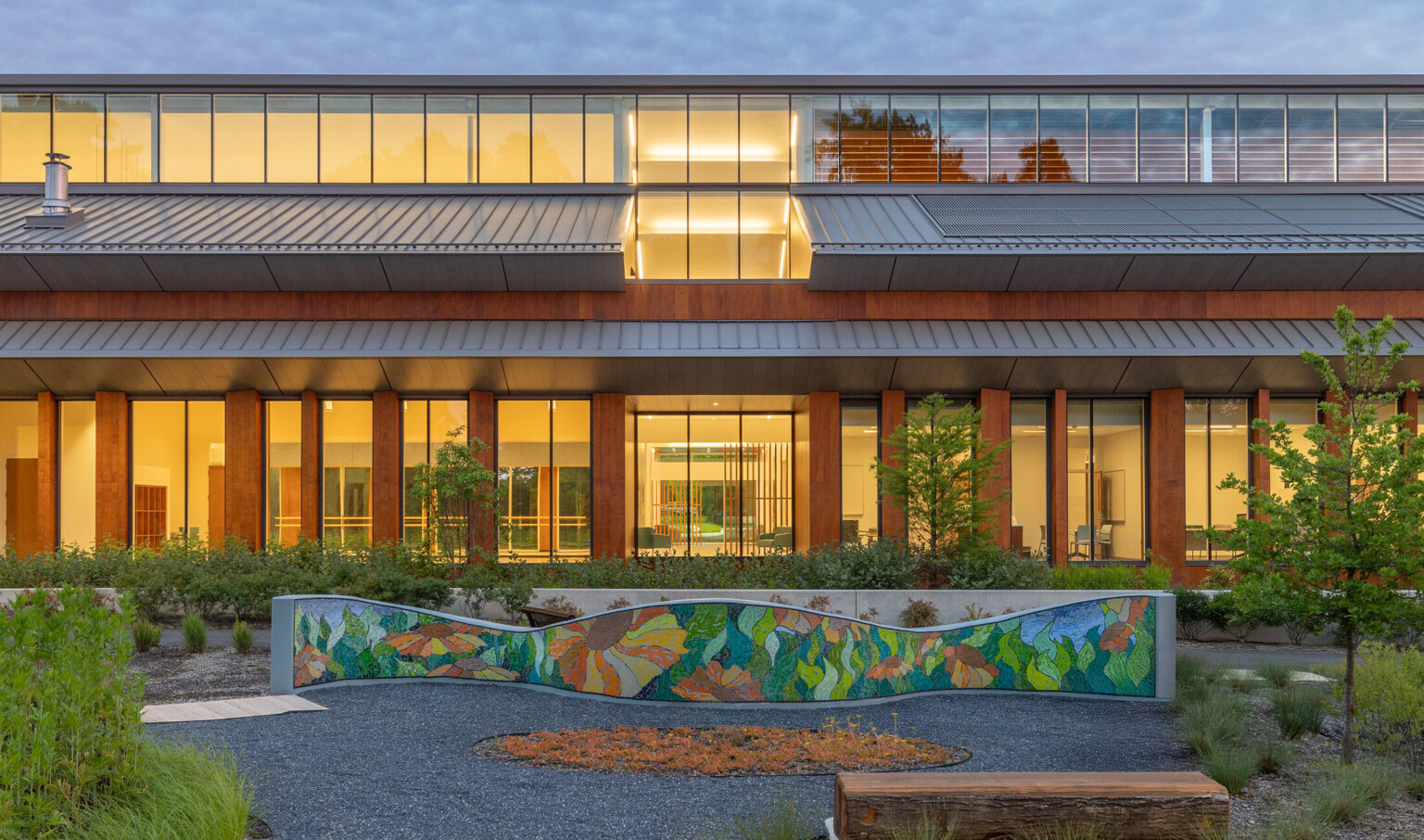
Tucson plays outdoors and in. The city and Pima County run a long list of recreation buildings - the Edith Ball Adaptive Recreation Center and the Hirsch Aquatic Center among them - and the private side keeps pace with indoor courts, climbing gyms, ice rinks, and the spring-training and college athletic facilities tied to the University of Arizona. These buildings share a roofing profile you do not find on a typical office: a big roof carried on long clear spans, heavy occupancy-driven mechanical loads, and, in the aquatic buildings, a humidity problem that eats ordinary materials alive.
The clear span is the structural headline. A gym, a court house, or an arena floor cannot have columns in the middle, so the roof bridges sixty, eighty, sometimes a hundred-plus feet of open space on steel joists or trusses. That deck moves and deflects under wind and thermal cycling far more than a short-span roof, and the membrane and its attachment have to be engineered for the actual span and deck rather than pulled off a standard detail. We run the fastener pull-out math for the real conditions, because the same steel deck behaves very differently at thirty feet than it does at eighty.
Long Clear Spans Need Engineered Attachment
On a long-span recreation roof we usually land on a 60-mil or 80-mil TPO mechanically attached over polyiso, and the reflective white surface earns its keep against Tucson's UV and summer heat. But the spec is only as good as the attachment design under it. Wind uplift concentrates at corners and edges, and a deep, flexible long-span deck sets the fastener withdrawal values, so we evaluate the deck type and span and design the fastening pattern to match. We also look hard at deflection at the perimeter and at expansion joints, where a moving deck and a static parapet meet and where long-span roofs tend to open up over time.
The Natatorium Is a Different Building
Indoor pools are the most demanding roofs in this whole category, and Tucson has a lot of them. Chlorine reacting with the organic load swimmers bring in produces chloramine gas, which collects in the air above the pool and is brutally corrosive - it goes after steel flashing, aluminum edge metal, fasteners, and some membrane adhesives. A natatorium roof built like a gym roof will not last. We specify stainless or copper flashing in the chloramine zones, confirm the membrane and adhesive against the manufacturer's chemical-resistance data, and treat the assembly as a corrosion problem first.
Humidity is the partner problem. The warm, wet air over a pool drives moisture toward the deck, and if the vapor retarder sits in the wrong plane that moisture condenses inside the roof and rots it from within. Tucson's dry exterior actively misleads people here - the climate outside says one thing, the air over the water says another, and the assembly has to answer to the pool hall. We run a moisture survey before finalizing any aquatic reroof, because recovering over a wet or wrongly built assembly just buries the problem deeper. The ventilation also has to exhaust the chloramine to the outside rather than recirculate it back across the roof envelope, and we coordinate any exhaust or HVAC penetration work with the pool operators so air exchange is never interrupted while a session is running.
Working Around the Programming Calendar
Recreation buildings are busiest exactly when most crews want to go home - evenings, weekends, school breaks, tournament dates. We build the schedule off the programming calendar the facility gives us. Gym and arena roof work concentrates in weekday daytime hours with the dry-in confirmed before evening programs begin, and we stay clear of active courts, pools, and event spaces. The work fits around the building's life rather than shutting it down.
Public Bids and Older Built-Up Roofs
Many of these facilities are public - city and county recreation centers, school gymnasiums, university buildings - and that changes how the job gets contracted. Public bid advertising, bid and performance bonds, and prevailing-wage rules all factor into the timeline, and we carry the bonding and insurance that public work in Arizona requires. Older recreation buildings frequently still have built-up roofs on the long-span structure, and on those we core-sample and survey for trapped moisture before any recover decision, since a tired but intact-looking surface often hides wet insulation underneath. Whether the path is a public bid or a private club's event-driven schedule, we have worked both and plan the project around the constraints each one brings.
Heavy Rooftop HVAC for High Occupancy
A recreation building packs a lot of bodies into a big open volume, and conditioning that volume takes serious rooftop equipment. A full court house, a fitness floor, or an arena seating a crowd carries large air handlers and exhaust units sized for peak occupancy, and on a long-span roof that equipment lands on a deck that already flexes. The curbs supporting those units have to be built and flashed for both the load and the deck movement, and the penetrations around dense mechanical clusters are where leaks start if the flashing is treated as routine. We detail each curb for the equipment it actually carries and for the deflection of the span it sits on, rather than copying a flat-deck detail onto a moving long-span roof.
Ductwork, condensate lines, and electrical penetrations multiply around that equipment, and on an aquatic building the exhaust handling the chloramine air adds corrosive exposure on top of the load. We route condensate deliberately, flash every penetration as its own item, and keep the corrosion-resistant materials concentrated where the pool-hall air reaches.
Tucson Heat and the Monsoon on a Big Roof
A recreation roof is a large, exposed surface, and Tucson's sun works every square foot of it. Reflective membranes hold the rooftop temperature and the cooling load down across that whole area, which matters when the HVAC is already sized for a packed gym on a summer afternoon. The monsoon then tests the roof differently - short, hard storms that dump water fast and drive it sideways. On a long-span roof with perimeter deflection and expansion joints, those are exactly the conditions that find a tired transition. We size drainage for the peak burst and detail the edges and joints for wind-driven rain, because the average rainfall figure is not what floods one of these roofs.
Built for the Way These Buildings Are Used
From the city and county aquatic and recreation centers to the university athletic facilities and the private courts and gyms scattered across town, the common thread is a big roof on a long span carrying heavy mechanical loads, often over humid air. We engineer the attachment for the real span, specify corrosion-resistant materials where pool air reaches, place the vapor control for the conditions inside rather than the desert outside, and schedule the work around the programming so the building keeps serving its members and its public. The roof has to match how the building actually lives, and these buildings live hard.
Ready to talk through a roof?
Tell us about the building and the roof problem. We'll document it and put a plan in writing - with an honest repair-vs-replace recommendation and no upsell pressure.
Documented, repair-first commercial & industrial roofing across Tucson and Pima County. Flat and low-slope systems for occupied buildings, planned around your operation.
Services
© 2026 Commercial Roofing Contractors Tucson. All Rights Reserved. Privacy Policy · Terms of UseSite Map