
Maintenance Program Management
Recurring maintenance contract administration for Tucson commercial roofs - semi-annual cadence keyed to monsoon season, manufacturer warranty maintenance compliance, and documented condition reporting for capital planning.
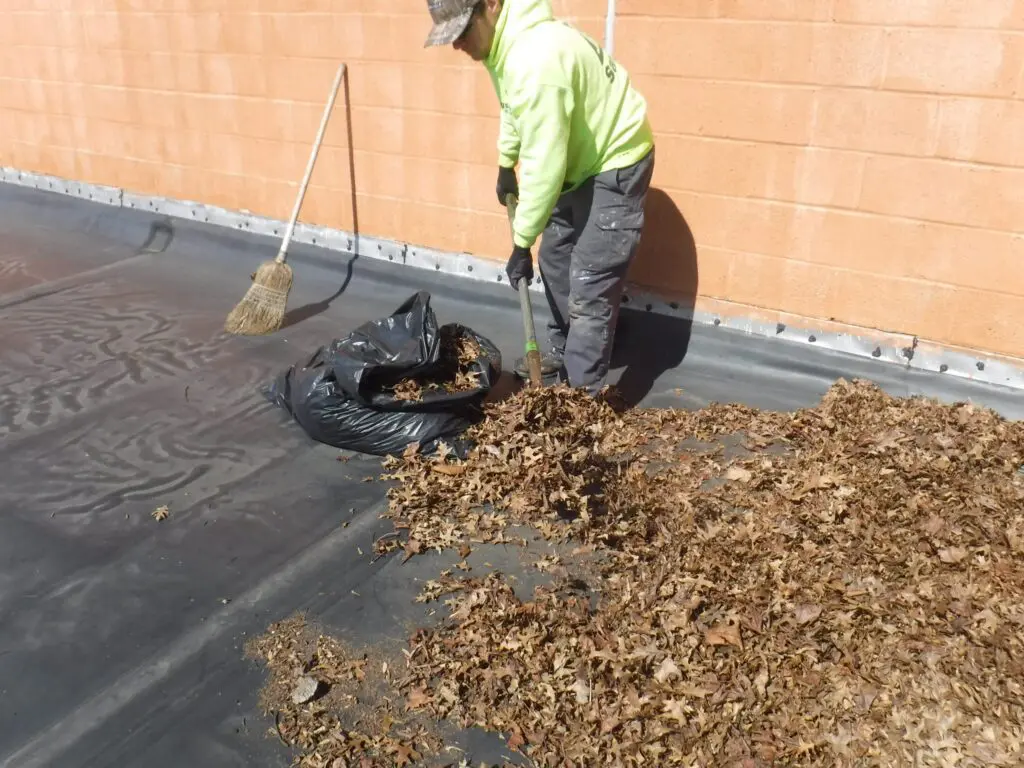
A commercial roof maintenance contract in the Tucson market means something specific or it means nothing. The kind that means nothing: a contractor shows up once a year, walks the roof for 20 minutes, patches a couple of seams, invoices for a maintenance visit, and never produces documentation that satisfies a manufacturer warranty desk or that a facility manager can use for capital planning. Owners pay every year and the warranty lapses anyway because the submission timing and format were not met.
Our maintenance program is based on documentation first. Every visit produces a written condition report keyed to a roof zone diagram, a photo log organized by zone, a repair summary with before-and-after photos at each corrected item, and a manufacturer maintenance submission in the format the warranty desk accepts. For owners with multiple Tucson buildings on our program, documentation is uniform across all properties - same zone diagram format, same photo organization, same report structure - so the regional facilities team can read any building's report without learning a new system.
The visits follow a checklist calibrated to the Sonoran Desert climate and the specific roof system on each building. What we check on a 2019 TPO building in the Reid Park commercial corridor is not the same checklist as what we run on a 2003 modified bitumen building on the Speedway office strip. The maintenance program is asset management applied to a specific roof on a specific building - not a one-size-fits-all vendor visit.
Semi-Annual vs. Annual Cadence - Which Is Right for Tucson
Most manufacturer NDL warranties require documented inspection at minimum once per year. Some require semi-annual. We default to semi-annual for Tucson buildings for two reasons beyond the warranty requirement: the pre-monsoon window (May and June) and the post-monsoon/post-summer-heat window (October and November) each create a distinct category of roof stress that needs separate documentation.
The pre-monsoon visit (May, before July monsoon onset) documents baseline condition after the UV-intensive spring period, clears drain bowls and scuppers in advance of intense convective rainfall, verifies parapet and penetration flashing condition after the spring thermal cycling, and produces the pre-storm condition baseline that becomes critical if a monsoon event causes interior water damage. Fast documentation of pre-storm condition is important for AZ Insurance Code compliance on storm damage claims - the insurer needs to see what the roof looked like before the event.
The post-monsoon fall visit (October or November, after heat-stress and storm season) documents any membrane degradation from the summer UV and thermal cycle, checks seam condition across the field and at parapet transitions, documents any equipment-related punctures from summer HVAC maintenance season, and clears the drainage system before the lower-precipitation but thermally cycling winter period. Annual-only programs are appropriate for newer roofs under eight years, light foot traffic, and manufacturer warranty requirements that specify only annual documentation. We will tell owners honestly when semi-annual is not warranted for their building.
What We Deliver on Each Visit
Condition report: Zone-by-zone assessment covering membrane condition (UV surface chalking, seam integrity, lap adhesion, puncture or cut damage), flashing condition at all penetrations, drains, parapets, and curbs, rooftop equipment condition as it affects the roof (missing curb flashing, abandoned penetrations, HVAC condensate routing that is pooling on the membrane), and drainage system status (drain screen condition, scupper condition, ponding locations and extent).
Repair scope: Any condition requiring immediate repair is scoped and priced on the same visit. We separate cosmetic conditions from active infiltration risks from warranty-jeopardizing conditions. Owners get a tiered repair list with recommended priority so the facility budget can sequence work without everything being flagged as urgent.
Manufacturer submission: For buildings on an active NDL warranty, we complete and submit the manufacturer's maintenance form within the required window after each visit. We retain confirmation from the manufacturer's warranty desk and include it in the visit package - this is the document that keeps the warranty active.
Drainage verification: Tucson flat-roof drainage failures are not always blockages. They are often low points created by insulation compression under sustained UV and thermal load, parapet wall movement, or tapered-insulation systems that were undersized for the actual drainage area. We document ponding locations with GPS coordinates, extent, and photographs. Ponding that persists 48 hours after a monsoon event on a system under NDL warranty is a warranty-flag condition that most Tucson maintenance programs miss.
Emergency Response Priority for Maintenance Contract Clients
Maintenance contract clients are prioritized for emergency dry-in dispatch during and after monsoon events. Tucson monsoon cells can deliver more than an inch of rainfall in under 40 minutes, and multiple buildings can require simultaneous dry-in response when a major convective storm passes through the metro. Contract clients are dispatched ahead of non-contract calls - same day for Downtown Tucson, midtown, and the University of Arizona corridor; same-day for the Oracle Road and Foothills corridors when crew availability allows.
Emergency calls inside a maintenance contract do not consume the maintenance billing cycle. A dry-in call after a July monsoon event and a scheduled pre-monsoon visit in May are two separate line items. We invoice the emergency dry-in at our standard rate; the maintenance contract is not debited for emergency response. Owners on maintenance contracts who call us for emergency work are not penalized for it.
Frequently asked questions
What does a typical maintenance contract cost for a 75,000 sq ft Tucson commercial building?
Semi-annual program with two visits and full documentation for a 75,000 sq ft single-membrane roof (TPO or PVC, under 15 years old, moderate equipment density): roughly $3,500 to $5,500 per year depending on condition complexity, equipment density, and active warranty documentation requirements. Buildings with heavy rooftop equipment, older systems, or active NDL warranty maintenance submission requirements run higher. We price per visit after the initial inspection, not off a rate card.
Can we put multiple Tucson buildings on a single maintenance contract?
Yes, and the documentation format advantage compounds as you add buildings. We schedule multi-building route days across the Pima County metro to reduce mobilization cost - a midtown building and a Foothills building can often share a route day. Portfolio owners with five or more buildings typically see 15 to 20 percent lower per-visit cost than single-building clients.
Do you subcontract the maintenance visits?
No. Our own project managers perform every inspection visit. We do not use third-party inspection vendors. The field inspector who does your pre-monsoon visit is the same person who would manage a repair scope if one is identified - the inspection is not a separate function from the rest of our work.
What happens if we have a manufacturer warranty dispute during the maintenance period?
We produce the documentation record that supports your warranty position. If the manufacturer disputes a claim on a building where we hold the maintenance contract, we engage directly with the manufacturer's warranty desk. We know the escalation path at each manufacturer and we have resolved disputed claims in the Pima County market.
Interested in a Tucson commercial roof maintenance program?
We will inspect your building, document current condition, identify any warranty maintenance gaps, and propose a semi-annual cadence that keeps every manufacturer warranty intact and every drain clear before monsoon season.
Ready to talk through a roof?
Tell us about the building and the roof problem. We'll document it and put a plan in writing - with an honest repair-vs-replace recommendation and no upsell pressure.
Documented, repair-first commercial & industrial roofing across Tucson and Pima County. Flat and low-slope systems for occupied buildings, planned around your operation.
Services
© 2026 Commercial Roofing Contractors Tucson. All Rights Reserved. Privacy Policy · Terms of UseSite Map