
Airport Terminal & Aviation Facility Roofing in Tucson, AZ
Airport terminal and aviation facility roofing in Tucson, AZ - Tucson International Airport and surrounding general aviation and cargo facilities.
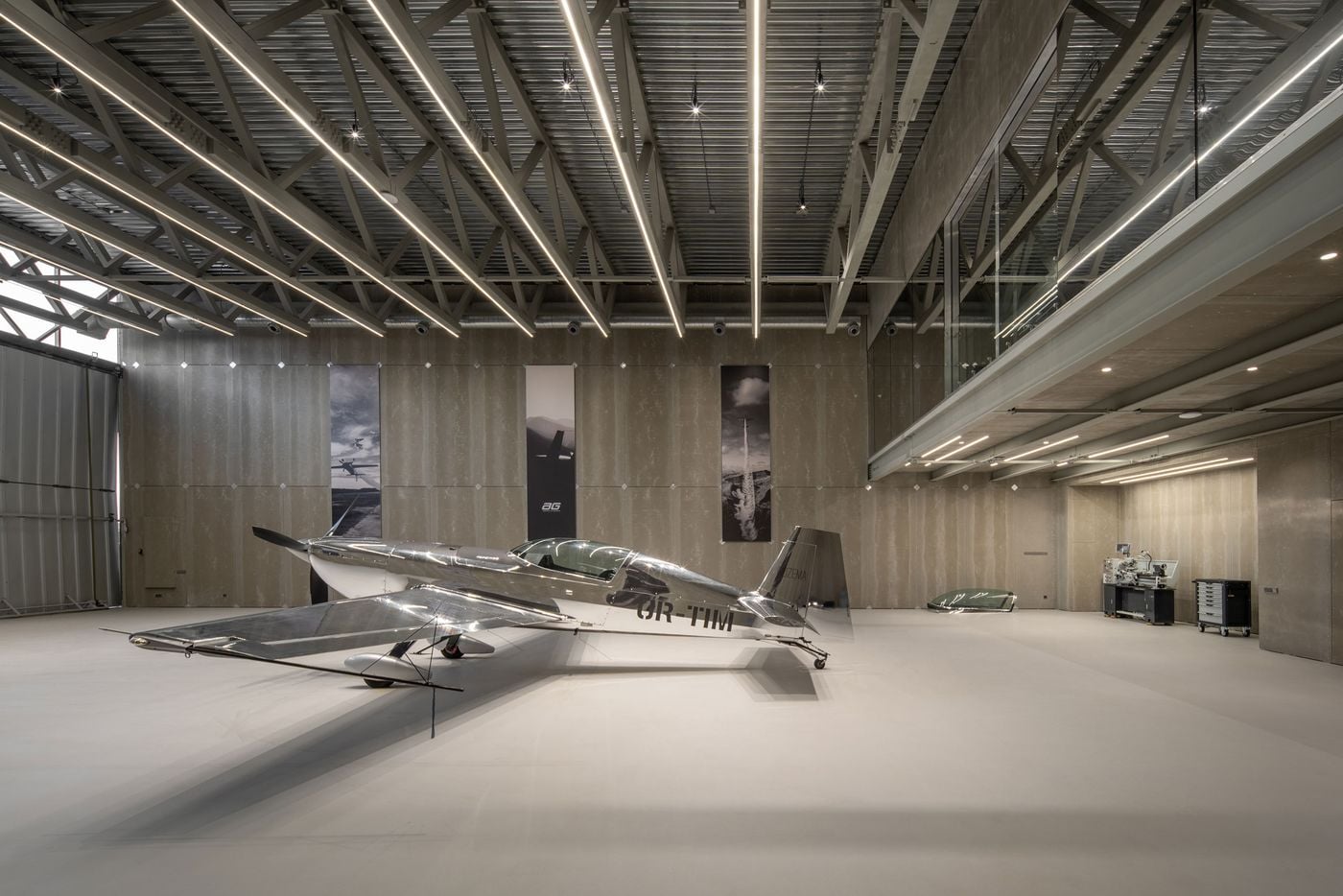
TUS and Davis-Monthan's AMARG complex - the 'Boneyard' with 4,000+ stored aircraft - combined with Marana Regional's commercial airliner maintenance campus, make Tucson one of the most unique aviation roofing markets in the US, dominated by maintenance and long-term storage facility needs.
Secondary and Reliever Airports Serving Tucson:
- Davis-Monthan Air Force Base (DMA) - home of the USAF Aerospace Maintenance and Regeneration Group (AMARG) - the world's largest aircraft storage and maintenance facility - and A-10 combat wing
- Marana Regional Airport (AVQ) - Pinal Air Park in Marana, one of the world's largest aircraft storage and maintenance facilities for commercial airliners
The roofing systems on airport terminals and aviation support structures carry requirements beyond standard commercial membranes. Jet blast exposure on airside roofs requires membrane adhesion and ballast specifications that exceed what you'd specify for a comparable logistics building. HVAC systems on terminals are denser and heavier than standard commercial, requiring a higher number of curbed penetrations and more frequent flashing maintenance touchpoints. Terminal roofs often span long, flat expanses with minimal slope - which means drainage design is critical and ponding tolerance is near zero. We've done this work, and we don't learn those lessons on your project.
Aviation-adjacent commercial roofing - cargo facilities, rental car centers, FBO hangars, aircraft maintenance facilities, hotel structures on airport campuses - presents a different set of challenges than the terminal building itself, but the airport coordination requirement doesn't go away. Our crews understand that badging and security access at any part of an airport campus is non-negotiable and is planned for, not discovered onsite.
For general aviation facilities - FBOs, private hangars, and reliever airport structures - the security protocols are less intensive but the building type is often more demanding. High-bay hangar structures with large clear-span roofs require specific fastening patterns and seam geometry to handle the wind uplift loads these buildings generate. We spec and install those systems in Tucson and throughout AZ.
Airport & Aviation Roofing Questions
We work with the airport facilities department and FAA Part 139 coordinator to develop a phased work plan approved by airport operations. Material deliveries, crane lifts, and any work near airside areas are scheduled during approved windows and coordinated with the FAA NOTAM process if required. We've done this at multiple airports and it's a standard part of our project setup - not an exception.
Most terminal re-roofing in Tucson uses a TPO or PVC single-ply membrane on a tapered insulation system designed to improve drainage and address ponding. For new high-bay aviation structures and hangars, standing seam metal is often specified. The selection depends on the existing deck, load capacity, and operational constraints - we develop a spec after walking the roof with your facilities engineer.
Terminal HVAC density is significantly higher than standard commercial. Our pre-project survey documents every penetration, curb height, and mechanical clearance before we develop the work plan. Flashing details for oversized equipment curbs and complex through-penetrations are engineered individually - we don't use standard residential-pattern flashing details on aviation structures.
Yes, with appropriate badging and in full coordination with airfield operations. Airside work requires a higher level of pre-planning and crew credentialing, which we factor into the bid timeline. We do not mobilize crew members without confirmed airside authorization - that's a baseline requirement we enforce, not a favor we ask.
Yes. General aviation hangar roofing - whether for a single-bay private hangar or a multi-unit FBO complex - is a regular part of our commercial project mix in Tucson. High-bay hangars with wide-flange steel or pre-engineered building systems require roofing contractors who understand those structures' specific uplift and thermal movement characteristics. We do.
Tucson's warehouse and distribution inventory is concentrated along two distinct corridors. The I-10 corridor between downtown Tucson and the Marana interchange holds a mix of 1980s and 1990s tilt-up industrial buildings and newer speculative distribution facilities developed through the 2010s. Most of the older stock is running original or first-replace modified bitumen that has been thermally cycled through decades of Sonoran summers. The Marana and Sahuarita logistics parks - driven partly by regional e-commerce demand and partly by Tucson's position on the I-10 freight corridor between Phoenix and El Paso - represent a newer generation of large-footprint buildings on first-generation single-ply systems approaching their first major maintenance milestone.
Warehouse roofing at this scale is not the same work as a retail strip or medical office building. A 250,000 square foot distribution facility has rooftop equipment density - multiple rooftop HVAC units, evaporative coolers, exhaust fans, dock ventilation - that makes flashing work the most time-intensive part of the scope. Slope-to-drain is chronically inadequate on Stemmons-era equivalents across the Tucson I-10 corridor, and blocked interior drains on a building of this scale during a Tucson monsoon event can produce five or six figures of inventory damage in under an hour. We address both the membrane and the drainage system in every warehouse reroof scope we write.
The operational reality of a Tucson distribution facility - active receiving, outbound shipping, and often 24-hour processing - means sequencing matters as much as membrane specification. We plan zone-by-zone production schedules around facility operations before we mobilize, not after.
Membrane Specification for Tucson Warehouse Roofs
Mechanically attached 60-mil or 80-mil TPO is the standard specification for Tucson I-10 corridor warehouse reroofs. White TPO satisfies Arizona IECC 2018 solar-reflectance requirements for Climate Zone 2 and reduces rooftop surface temperatures by 50 to 70 degrees compared to dark membranes - a meaningful factor on a building where HVAC loads are already driven by Tucson's sustained summer heat. The 80-mil specification is appropriate for facilities with active maintenance traffic, high penetration density, or buildings where the next ownership event falls inside a 25-year warranty window.
Fastener pattern is calculated to the building's ASCE 7 wind-uplift zone, not applied generically. A Marana warehouse along the I- in open terrain exposure carries different uplift demands than a building sheltered by adjacent structures in the Tucson Airport industrial park on Valencia Road. We calculate for each building and document the fastener-density specification in the permit package - manufacturer warranty inspections have disqualified underspecified mechanically attached systems in Arizona, and the repair is far more expensive than getting it right at installation.
Tapered insulation is part of almost every I-10 corridor warehouse reroof scope we write. Original construction slope on 1980s Tucson tilt-up warehouses was built to the minimum drainage standard, and decades of insulation settling and drain sedimentation have produced chronic ponding in mid-field and low-parapet areas. We design the taper package around the actual existing drain locations and the ponding map we produce during inspection - not a standard engineered-slope drawing.
Monsoon Dry-In Protocol for Large-Deck Distribution
Tucson's monsoon season runs July through September. A Marana distribution center or I-10 corridor warehouse with an open roof section at two in the afternoon on an August day is at real risk - a National Weather Service Tucson flash-flood warning can activate within 30 minutes of storm initiation, and a convective cell over the Tucson Mountains can produce an inch of rainfall in under an hour. Interior inventory damage from an unprotected deck section is not a recoverable event for most active distribution operations.
Our monsoon dry-in protocol for warehouse reroofs is non-negotiable July 1 through September 30: daily tear-off sections are sized to what we can fully dry in within the same work window. No section is left open overnight. For a 300,000 square foot facility, this means smaller daily sections than optimal for production speed, and the project timeline reflects that discipline. Owners receive a written sequencing plan before contract execution that documents section sizes, dry-in method, and the monsoon-response protocol for weather events that interrupt the work window.
We monitor the National Weather Service Tucson point forecast and the regional NOAA radar loop throughout the monsoon work window. When a haboob or convective cell is within 30 miles of the job site and tracking toward it, we initiate emergency dry-in procedures regardless of where production stands. This is standard practice in Tucson commercial construction and is built into our monsoon-season production rates.
Coordinating Around Active Distribution Operations
The Marana logistics parks and the Sahuarita warehouse corridor serve Tucson-area distribution tenants operating inbound and outbound freight windows that do not pause for roof replacement. Amazon Tucson TUS5 and TUS2, FedEx, UPS, and Walmart Distribution facilities on the I-10 corridor run continuous processing operations. We sequence warehouse reroof production in zones that match the facility's interior operations layout - if the active shipping dock is on the south side of the building, we start north and push south, so the most operationally sensitive zone is the last disturbed.
Debris containment during tear-off is an operational requirement on occupied distribution facilities. We use vacuum-equipped equipment that pulls material directly from the deck to containers rather than dumping it off the edge into a dumpster positioned at the dock. Interior ceiling protection - poly sheeting over inventory or active processing lines - is part of our pre-construction scope on any building where the deck condition suggests fiber or aggregate may enter the space through penetrations during tear-off.
Penetration sealing is same-day on all active distribution facilities regardless of where production stands at crew departure. We do not leave rooftop equipment curbs unsealed overnight on any building with active HVAC or refrigeration operations. This adds complexity to daily production planning and is factored into our project schedules.
Frequently asked questions
What causes most I-10 corridor warehouse roofs to fail prematurely?
Two patterns dominate Tucson's I-10 industrial corridor: ponding water from slope-to-drain inadequacy on original tilt-up construction, and flashing failure at high-density rooftop equipment penetrations. Both are addressable - tapered insulation restores drainage, and a complete flashing rebuild at every equipment curb and penetration is standard in our replacement scope. The third cause we encounter is modified bitumen that has been thermally cycled past its service life without a maintenance inspection program - UV degradation in the Sonoran Desert advances membrane aging faster than manufacturer service-life tables built on northern-climate testing data.
How does monsoon season affect a Tucson warehouse reroof timeline?
Monsoon season (July through September) extends production timelines because we size daily tear-off sections to what we can dry in the same day. We do not leave open sections overnight during monsoon. For a 250,000 square foot warehouse, this typically adds two to three weeks compared to a non-monsoon-season schedule. Owners receive a written sequencing plan before contract signing that documents daily section sizes and the monsoon dry-in protocol.
Can you work around 24-hour distribution operations at Tucson logistics parks?
Yes, with pre-construction sequencing. We coordinate production zones with the facility's operations schedule, work early-morning shifts near active dock areas, and seal all penetrations before shift transitions that involve forklift movement below our work area. We have coordinated around continuous distribution operations at Tucson-area logistics facilities on the I-10 corridor.
Do you pull building permits for Marana and Sahuarita warehouse projects?
Yes. Commercial roofing replacements in the Town of Marana require permits from Marana's Building Safety Division. Sahuarita work falls under Town of Sahuarita or unincorporated Pima County jurisdiction depending on parcel location. We identify the applicable jurisdiction and manage the permit submittal - including IECC energy compliance documentation - as part of every project.
Get a warehouse roof scope for your Tucson distribution facility.
Our project managers will walk the full deck, document equipment penetrations and ponding patterns, and deliver a written scope with a production-phase plan that works around your operations schedule.
Ready to talk through a roof?
Tell us about the building and the roof problem. We'll document it and put a plan in writing - with an honest repair-vs-replace recommendation and no upsell pressure.
Documented, repair-first commercial & industrial roofing across Tucson and Pima County. Flat and low-slope systems for occupied buildings, planned around your operation.
Services
© 2026 Commercial Roofing Contractors Tucson. All Rights Reserved. Privacy Policy · Terms of UseSite Map