
Food Processing Roofing in Tucson, AZ
Tucson food processing roofing for washdown humidity, heavy refrigeration loads, and USDA-compliant materials - sequenced around your production shifts.
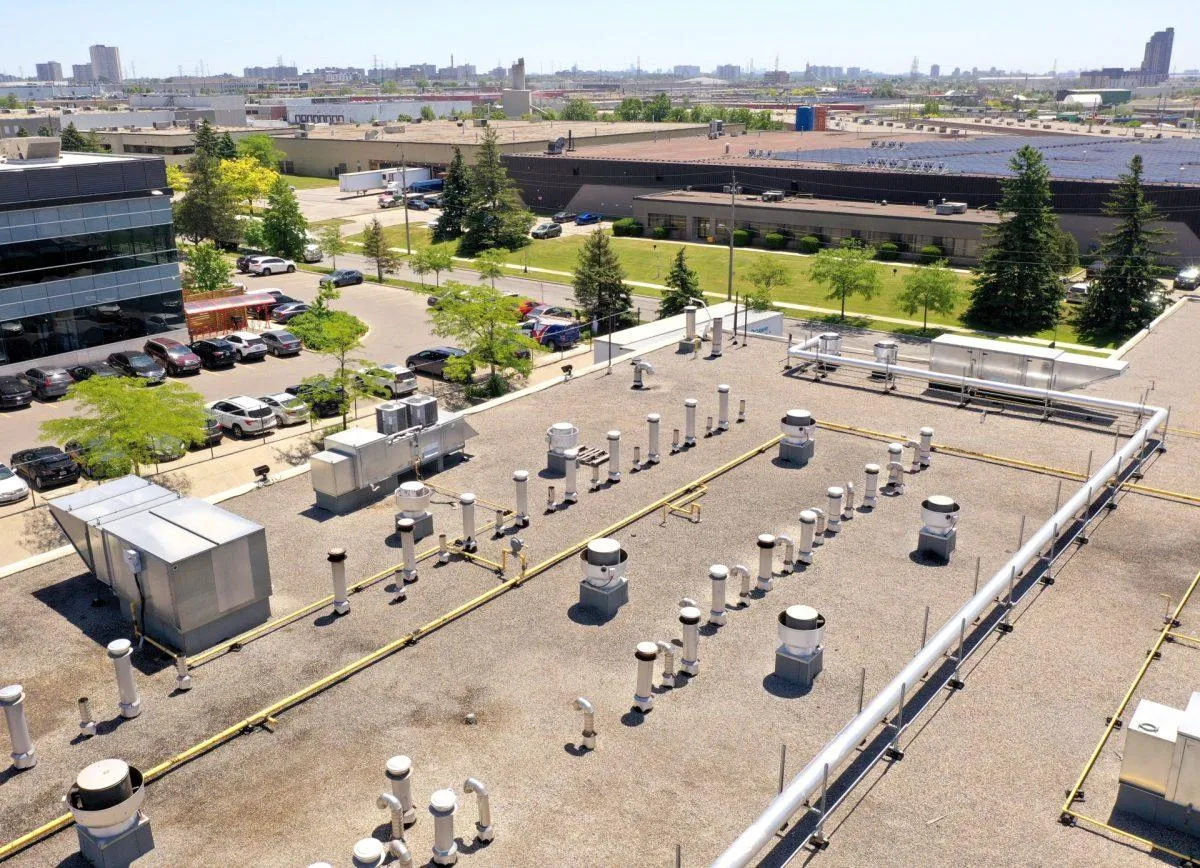
Tucson earned a UNESCO City of Gastronomy designation, and behind the restaurant scene sits a real food-production base. Tortilla and masa plants, salsa and chile processors, regional bakeries, beverage and water bottlers, and cold-storage distributors run lines across the South Park industrial area, the warehouse corridor off I-10, and the produce-handling operations connected to the Nogales port traffic moving up I-19. These plants run hard and clean, and the roof over a processing floor lives a tougher life than almost any other commercial roof in the city.
Two forces work on a food plant roof at once, and they pull in opposite directions. Inside, washdown sanitation pushes warm, wet air toward the deck every cycle. On top and through the deck, heavy refrigeration equipment and tapered cold-storage assemblies fight the desert heat. Get the balance wrong and the failure hides inside the roof where no one sees it until the deck is already compromised. We design food-plant roofs around both pressures together rather than treating the roof as a simple weather cap.
Washdown Humidity Drives From the Inside
High-pressure sanitation is the part outsiders underestimate. Crews wash the production floor and equipment on a strict schedule, and that sends a wall of warm vapor upward. Without the right vapor control in the assembly, that moisture migrates into the insulation, condenses against cooler structure, and stays there. In Tucson's dry climate owners assume moisture is not their problem, but inside a washdown room the air is anything but dry, and the vapor drive can run the wrong way for a roof built to a generic desert spec. We place the vapor retarder for the conditions that actually exist over each room, not for the weather outside the building.
Drainage matters here too. When the monsoon lands a hard rain on an under-drained roof over a wet processing area, ponding stacks on top of the interior moisture load and the assembly never gets a chance to dry. We map drainage on every inspection and add tapered insulation to clear water to the drains and scuppers where the original design fell short.
Refrigeration and Cold-Chain Loads
Refrigeration is the other half of the problem. Freezer rooms, blast cells, and chill spaces carry tapered cold-storage assemblies that have to hold thermal continuity, and the rooftop equipment serving them is heavy and dense. Over a freezer the vapor drive can reverse compared to the rest of the building, so the insulation thickness and vapor strategy have to be designed around the actual operating temperature of the room below. Get it wrong and you get condensation inside the assembly - deck corrosion and soaked insulation with no visible leak on the surface to warn you. We confirm the existing deck can carry the equipment and insulation loads before we settle the system, and we coordinate any work near coils or condensing units with the refrigeration team so the cold chain is never put at risk.
Materials Have to Pass the Food-Safety Test
Not every roofing product belongs over a food-contact zone. USDA- and FDA-regulated plants need the membrane, and just as importantly the adhesives, primers, and sealants used in the flashing details, confirmed acceptable for a food-production environment before anything goes down. White TPO and PVC are generally workable over enclosed processing areas because the reflective surface also fights the Tucson heat load, but the specific product and the install method get checked against the plant's food-safety plan. Plenty of standard roofing adhesives are solvent-based and have no business over an active line, so we confirm acceptability with the plant's quality team rather than assuming a product is fine.
Fit to the Production Schedule
A processing plant does not stop for a roofer. Many Tucson plants run two or three shifts with a single weekly sanitation window as the only real opening, and a leak over a running line is a food-safety event, not a maintenance ticket - it can trigger a product hold and regulatory documentation. So we phase the work around the production calendar. Anything that opens the envelope over an active area goes into the sanitation window, with the floor confirmed clean and protected before we start. We hold a 24-hour emergency contact and priority dry-in response, and we provide the condition records and repair history that quality managers can put in front of a USDA or FDA inspector, since roof condition is a standard inspection item. The plant's schedule sets the sequence; we work inside it.
The Failure You Cannot See Coming
The most expensive food-plant roof problems are the ones that never show a drip. When the vapor strategy is wrong for a washdown room or a freezer, moisture builds inside the assembly and corrodes the steel deck and saturates the insulation from within. The surface membrane can look fine for years while the structure underneath quietly loses capacity. By the time a stain finally appears, the repair has grown from a flashing detail into a deck-replacement project. That is why we survey for trapped moisture before we ever recommend a recover, and why we will not simply lay a new membrane over a wet assembly to make a roof look new - that only seals the damage in.
We use moisture surveys and core sampling on these buildings as a matter of course, especially on older plants in the South Park area and the I-10 warehouse corridor where the roof has lived through years of washdown cycles and refrigeration loads. Finding wet insulation early lets the plant plan a measured repair instead of reacting to a sudden interior failure over a running line.
Penetrations, Rooftop Equipment, and Pest Control
A processing-plant roof is crowded. Refrigeration units, large make-up air and exhaust fans, condensate lines, process piping, and sanitation-related equipment all break the membrane, and each penetration is a potential entry point for water and, just as important in a food plant, for pests. Gaps around poorly flashed curbs and abandoned penetrations are exactly the kind of finding a food-safety inspector flags. We detail every penetration tightly, close out abandoned ones properly rather than leaving them capped and forgotten, and keep the rooftop clean of the debris and standing water that attract problems. Condensate from rooftop refrigeration gets routed deliberately, because uncontrolled condensate is a recurring source of both ponding and staining on these roofs.
Built for the Desert and the Wet Room at Once
Tucson's climate pulls a food-plant roof in two directions. The summer sun and high UV bake the surface and drive the cooling load, which is why a reflective white membrane that knocks down rooftop temperature earns its place over a building already spending energy on refrigeration. The monsoon then delivers most of the year's heavy rain in short, intense bursts that test drainage and flashing far harder than a steady rain ever would. Inside, the washdown rooms stay warm and humid regardless of how dry it is outside. A roof that answers only to the desert and ignores the wet rooms below - or the reverse - will fail at the seam between the two. We design for both conditions together.
Tucson's standing as a City of Gastronomy rests on a production base that keeps running quietly behind the restaurants, and the roofs over those plants do a job that does not forgive shortcuts. We build them for the humidity, the refrigeration loads, the food-safety requirements, and the desert all at once, and we sequence the work so the line never stops on our account.
Ready to talk through a roof?
Tell us about the building and the roof problem. We'll document it and put a plan in writing - with an honest repair-vs-replace recommendation and no upsell pressure.
Documented, repair-first commercial & industrial roofing across Tucson and Pima County. Flat and low-slope systems for occupied buildings, planned around your operation.
Services
© 2026 Commercial Roofing Contractors Tucson. All Rights Reserved. Privacy Policy · Terms of UseSite Map