
Weather watch · Prepare your roof
Prepare for flood watch conditions in Drexel Heights
The National Weather Service has issued a flood watch covering Drexel Heights. Heavy rain and drainage loading can expose roof leaks, blocked drains, and ponding water. This is a weather exposure advisory; it does not establish damage to a specific roof.
Review your leak-response contacts and existing roof concerns. Arrange drainage checks only when safe. Follow official local weather guidance.
National Weather Service · Updated Sep 27, 2026, 4:17 AM UTC
Commercial Roofers in Drexel Heights, AZ
A practical commercial roofing plan for Drexel Heights, AZ properties separates urgent leak control from repair, coating, maintenance, and replacement decisions supported by photos and condition findings. Commercial roof inspections, replacements, and maintenance for Drexel Heights commercial buildings along the Ajo Way and Drexel Road corridors in southwest Tucson, including retail centers, light industrial, and service commercial.
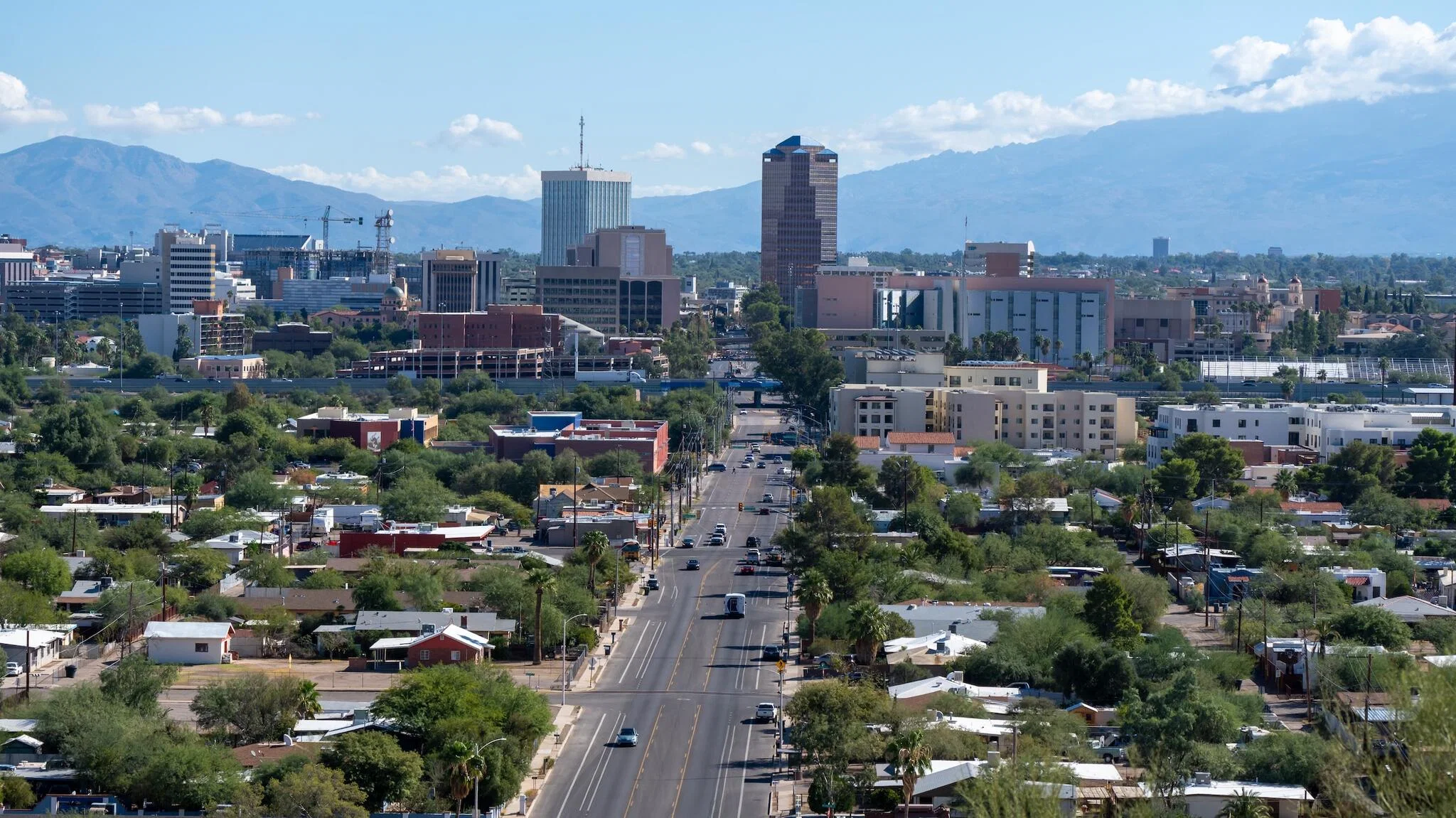
Drexel Heights is southwest Tucson's primary unincorporated commercial corridor - Ajo Way and Drexel Road serving working-class retail, auto service, light industrial, and neighborhood commercial buildings that skew older and are often overlooked by larger contractors focused on the higher-profile north-Tucson market.
Drexel Heights is an unincorporated Pima County community in the southwest Tucson metro, roughly bounded by I-19 to the east, Ajo Way to the north, and the Tohono O'odham Nation lands to the west. Its commercial character is defined by Ajo Way - the main arterial that runs from I-10 west toward Sells - and the Drexel Road corridor, which serves the residential communities of the southwest valley. The commercial buildings here are a mix of neighborhood-serving retail, auto repair, light industrial, and service commercial, with building vintages ranging from the 1960s through the 2000s.
Drexel Heights commercial buildings see fewer replacement proposals and less documented maintenance attention than comparable buildings in north Tucson - the market skews toward deferred maintenance rather than proactive capital planning. That deferral pattern means that when roofs in this corridor do fail, they often fail with multiple years of undetected saturation in the substrate, which converts what could have been a recover project into full tear-off and replacement. We run the same condition-documentation process in Drexel Heights as we do on high-profile north-Tucson commercial buildings: moisture cores at drains and parapet corners, seam probe testing on all single-ply sections, and photographic documentation of surface condition. The building deserves the same analysis regardless of zip code.
Drexel Heights Commercial Inventory
Ajo Way commercial corridor (I- 86): The primary arterial serving southwest Tucson, with grocery, pharmacy, fast food, auto service, and neighborhood retail built primarily 1970 through 2005. Building vintage skews toward modified bitumen and early single-ply systems. The 1970s through 1990s commercial stock on this corridor carries built-up roofing or APP-modified bitumen systems - many in active or overdue replacement cycles. We approach assessment on these older systems with physical cores rather than relying on surface condition alone, since aged BUR systems can appear intact while carrying significant inter-ply saturation.
Drexel Road corridor (Ajo Way to Valencia Road): Neighborhood-serving commercial buildings along Drexel Road, including a mix of strip retail, medical and dental offices, and service commercial. Building vintage ranges from the 1980s to the 2010s. The newer buildings on this corridor carry TPO systems in the first maintenance cycle; the older construction carries modified bitumen approaching replacement.
Light industrial and storage (south Drexel Heights): Warehouse, light manufacturing, and self-storage buildings south of the Drexel Road commercial area. These large-footprint buildings - typically 10,000 to 80,000 square feet - carry flat membrane systems on metal or wood deck structures. Several of these buildings are in the 20 to 35 year range on their original roofing and are candidates for either full replacement or recover evaluation.
Auto service and trade commercial (Ajo Way at I-19): A concentration of auto dealerships, auto body repair, and trade commercial buildings at the I- interchange. These buildings often have metal deck and metal framing construction - the membrane system must be specified with fastener patterns calibrated to metal deck thickness and the thermal expansion characteristics of metal deck under Sonoran Desert temperature cycles.
Southwest Tucson Heat and Desert Floor Conditions
Drexel Heights sits on the desert floor west of the Tucson Mountains at approximately 2,400 to 2,500 feet elevation. The terrain is flat and open - no mountain uplift effect and no urban heat island moderation from a dense downtown core. Summer ambient temperatures in this corridor are among the highest in Pima County, comparable to Marana's low-basin readings. Rooftop surface temperatures on dark or uncoated modified bitumen cap sheets in this area can exceed 180°F during July afternoons.
The older modified bitumen systems on Drexel Heights commercial buildings have typically lost their white or aluminum-coating reflectivity layer through years of UV oxidation and granule loss - dark, oxidized cap sheet is the condition we see on deferred-maintenance buildings in this corridor. Restoring reflectivity is the single highest-value maintenance action on these buildings: a clean coat of aluminum fibrated roof coating on an intact modified bitumen cap sheet can reduce rooftop surface temperature by 40 to 60 degrees and extend remaining service life meaningfully at a fraction of replacement cost. We assess coating candidacy on every older modified bitumen roof we inspect in the southwest Tucson corridor.
Monsoon drainage in the flat southwest Tucson terrain requires particular attention to internal roof drainage and scupper sizing. There is no natural terrain gradient to assist drainage - roof slope must be created entirely by tapered insulation or structural slope, and drains must be sized and maintained to handle peak monsoon flow without backup. Flat or nearly flat roof sections with inadequate drain capacity are common on older Drexel Heights commercial buildings, and ponding water accelerates membrane degradation at the rate-limiting factor for these roofs.
Pima County Permits in Southwest Tucson
Drexel Heights is unincorporated Pima County - all commercial permits are issued through Pima County Development Services. For buildings with incomplete permit history - which is more common in the older Drexel Heights commercial stock - we conduct a pre-permit condition assessment to document existing conditions before submittal. This prevents inspection holds and change orders that arise when the installed conditions differ from what permit drawings assumed.
The IECC 2018 Climate Zone 2B requirements apply in Drexel Heights as they do across Pima County. For older commercial buildings being reroofed for the first time in 20 to 30 years, the new system must document reflectivity compliance - which, for the heavily UV-degraded and darkened systems we encounter on Drexel Heights commercial buildings, represents a significant improvement over the existing condition regardless of code requirements.
Metal building owners in Drexel Heights should be aware that metal building permits for roof systems may require engineering documentation for fastener pattern design on metal deck - particularly on older buildings where the original deck gauge cannot be confirmed from permit records. We identify deck documentation needs in the pre-permit assessment and, where necessary, engage a structural engineer to confirm the applicable fastener pattern before permit submittal.
Frequently asked questions
Do you service Drexel Heights on a regular route?
Yes. Southwest Tucson is on our regular coverage area. Drexel Heights and the Ajo Way corridor are accessible in 15 to 25 minutes from our Tucson office. Emergency dry-in response for commercial buildings in this corridor is same-day for calls received before noon.
Can you assess a very old modified bitumen or built-up roof in the Drexel Heights area?
Yes. Older BUR and modified bitumen systems require physical core assessment - we pull cores in a grid pattern to document the saturation profile and layer count before writing any scope. Surface condition alone is not sufficient to determine whether recover or replacement is the right call on these systems, and we will not recommend a scope without the core data.
Is aluminum coating a viable option on a degraded modified bitumen roof?
It depends on what the core data shows. If the cap sheet is intact and the substrate is dry, aluminum fibrated coating is often the best capital call in the short to medium term - it restores reflectivity, reduces rooftop surface temperature, and protects the underlying membrane from further UV degradation. If the substrate shows saturation, coating is not appropriate and we will tell you that in writing with the core documentation attached.
What is the permit process for commercial roofing in Drexel Heights?
Drexel Heights is unincorporated Pima County - permits come from Pima County Development Services, not the City of Tucson. For buildings with incomplete or unclear permit history, we conduct a pre-permit condition assessment before submittal to document existing conditions. This prevents inspection holds on older commercial buildings where as-built conditions differ from what county records show.
Need a Drexel Heights commercial roof inspection or scope?
Our project managers cover the Ajo Way and Drexel Road corridors on regular southwest-Tucson routes. We will walk your roof, pull cores on aged systems, and produce a written condition report for capital planning or replacement scoping - regardless of building vintage or size.
Ready to talk through a roof?
Tell us about the building and the roof problem. We'll document it and put a plan in writing - with an honest repair-vs-replace recommendation and no upsell pressure.
Documented, repair-first commercial & industrial roofing across Tucson and Pima County. Flat and low-slope systems for occupied buildings, planned around your operation.
Services
© 2026 Commercial Roofing Contractors Tucson. All Rights Reserved. Privacy Policy · Terms of UseSite Map