
Commercial Roofers in Nogales, AZ
A practical commercial roofing plan for Nogales, AZ properties separates urgent leak control from repair, coating, maintenance, and replacement decisions supported by photos and condition findings. Commercial roofing for Nogales, Arizona and Santa Cruz County - Mariposa Port of Entry commercial zone, Grand Avenue retail corridor, and border commerce industrial buildings supporting cross-border trade.
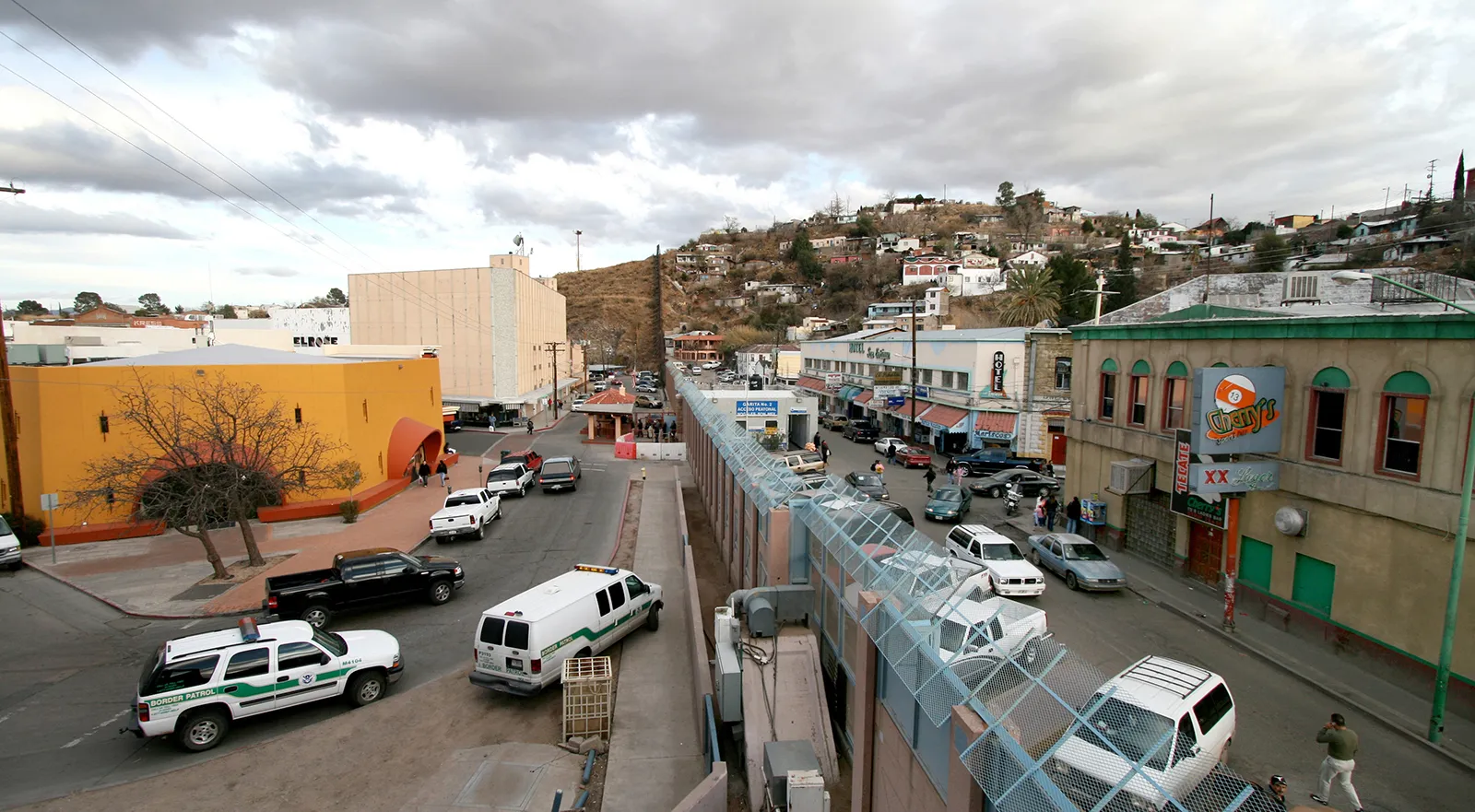
Nogales sits on the US-Mexico border at the Mariposa Port of Entry - one of the busiest commercial land ports in North America - with a commercial building inventory shaped by border commerce, international trade logistics, and the Santa Cruz County community it anchors. The commercial roofing market here is distinct from Tucson proper in climate, building vintage, and the operational requirements of border-adjacent businesses.
Nogales, Arizona serves as the commercial and logistical hub for Santa Cruz County and a major port for US-Mexico trade on I-19 south of Tucson. The Mariposa Port of Entry on the western edge of the city processes billions of dollars of cross-border freight annually, with the logistics, cold-storage, and warehousing infrastructure that supports this trade concentrated in the industrial corridors along Industrial Park Drive, Mastick Road, and the Patagonia Highway north of the port. These buildings serve customs brokers, produce distributors, manufactured-goods importers, and the transportation companies that move freight across the border.
Nogales sits at approximately 3,800 to 4,000 feet elevation - roughly 1,400 feet above the Tucson basin. This elevation materially changes the climate profile relative to Tucson: summer high temperatures average 10 to 12 degrees Fahrenheit cooler than Tucson, monsoon season produces higher annual rainfall (Nogales averages 18 to 20 inches annually versus Tucson's 12), and the combination of higher rainfall, moderate temperatures, and Santa Cruz River valley terrain produces a biological-growth environment on north-facing roof surfaces that is more active than Tucson's lower, drier elevations.
The Grand Avenue commercial corridor through central Nogales carries the retail, medical-office, and service-commercial inventory serving the local population - a mix of 1950s through 1990s masonry commercial buildings with the parapet conditions and accumulated roof system history typical of mid-century Southwest commercial construction. Cold-storage buildings in the Mariposa industrial zone represent the highest-complexity roofing work in the market - specialized vapor retarder systems, high R-value insulation stacks, and 24-hour operational constraints that do not allow section exposure during temperature-controlled operations.
Mariposa Port of Entry Commercial Zone
The industrial zone adjacent to the Mariposa Port - Nogales's western border crossing on SR 189 - is the logistical core of Santa Cruz County's commercial economy. Produce distribution warehouses, customs brokerage facilities, refrigerated freight staging buildings, and light-manufacturing operations serving the maquiladora economy on the Sonora side of the border are concentrated in the Industrial Park Drive and Mastick Road corridors.
Cold-storage and refrigerated produce-handling buildings in this zone require roofing scopes that go beyond standard commercial flat-roof replacement. Vapor retarder design, R-value requirements at the R-40 to R-60 range for cold-storage applications, and continuity detailing at penetrations and wall transitions require mechanical engineering input on every replacement scope. We bring a mechanical engineer into the design process on every cold-storage project and document the vapor retarder position, insulation specification, and penetration-continuity details in the final scope.
Customs and border security requirements apply to buildings within US Customs and Border Protection's operational area adjacent to the port. While standard commercial roofing work on private industrial buildings near the port does not require CBP authorization, construction activities visible from or adjacent to CBP operational areas require coordination with local CBP supervisory staff to ensure no conflict with port security operations. We initiate this coordination at the pre-construction phase for any project within the CBP security perimeter.
Grand Avenue and Central Nogales Commercial Stock
Grand Avenue through central Nogales carries commercial buildings from the 1940s through the 1980s in retail, restaurant, medical, and professional-office use. The building stock here shares characteristics with Tucson's 4th Avenue historic district and South Tucson commercial corridor: masonry construction, wood or steel joist decks, unreinforced parapets, and accumulated kitchen-exhaust grease contamination on restaurant buildings.
Pre- corridor requires asbestos assessment before any tearoff work. The Santa Cruz County jurisdiction processes permits through a separate building department - commercial roof work in the City of Nogales requires permits from the Nogales Building Safety Department. We manage the Nogales building permit process as part of every project and are familiar with the city's permit timeline and energy-code documentation requirements.
The Nogales International Airport on the northeast edge of the city - a general aviation facility with limited commercial service - creates Part 77 obstruction surface considerations for commercial buildings in the airport's approach zones. Buildings along the North Airport Road and Mariposa Road corridors closest to the airport may have crane and aerial-lift height restrictions that affect equipment selection. We assess Part 77 applicability for all Nogales-area projects and document the assessment before specifying lift equipment.
Nogales Elevation, Rainfall, and Biological Growth
At 3,800 to 4,000 feet elevation, Nogales receives meaningfully more annual precipitation than Tucson - typically 18 to 20 inches per year versus Tucson's 12 inches, concentrated in the July through September monsoon season. The Santa Cruz River valley terrain channels moisture from the Sierra Madre foothills into the Nogales area, producing a monsoon-season rainfall intensity per event that is higher than Tucson's standard IDF tables reflect. Commercial building drain systems in Nogales need to be sized for this elevated peak-flow environment.
The moderate summer temperatures and higher annual moisture in Nogales create a biological-growth environment on north-facing and shaded roof surfaces that is more aggressive than Tucson proper. Algae, lichen, and moss growth on TPO and modified-bitumen surfaces in Nogales can accelerate UV-related oxidation and contribute to seam-area moisture retention. We specify antimicrobial membrane formulations for new installations at Nogales and include biological-growth inspection and treatment in the maintenance program for buildings we maintain.
Winter temperatures in Nogales also differ from Tucson - elevation and latitude combine to produce freeze-thaw events that are rare in the Tucson basin. Nogales records below-freezing nighttime temperatures on 30 to 40 nights per year, with overnight lows occasionally below 20°F. Freeze-thaw cycling contributes to seam-bond fatigue and parapet-mortar deterioration on masonry buildings in ways that Tucson's warmer winters do not. We account for freeze-thaw exposure in our parapet-condition assessments and in our flashing specifications for Nogales commercial buildings.
Cross-Border Commerce Operational Requirements
Produce distribution buildings in the Mariposa zone operate on schedules driven by US Customs inspection processes and cross-border truck movements - many facilities handle 24-hour cargo operations during peak produce seasons (January through April for Mexican produce entering the US market). Roof work on these buildings must be sequenced to avoid any open section during cold-chain transfer operations, and the production schedule must account for seasonal peak-operation periods that effectively freeze renovation activities.
Spanish-language project communication is standard practice for Nogales commercial roofing projects where ownership or facility management is Mexico-based or bilingual. Our project management team includes bilingual staff for owner and facility manager communication on Nogales projects. Documentation - scope narratives, inspection reports, warranty packages - is provided in English for permit and insurance purposes, with Spanish summaries for ownership communication where requested.
Emergency response for Nogales commercial buildings covers a 60-mile route from our Downtown Tucson office. We maintain a standing relationship with a Nogales-based subcontractor for immediate tarping and emergency dry-in on buildings that need same-day response before our full crew can mobilize. Monsoon-season emergency calls from Nogales are handled under this protocol - we dispatch the local subcontractor within two hours and follow with our own crew within four hours for full assessment and repair.
Frequently asked questions
Can you handle cold-storage roofing for produce distribution buildings near the Mariposa Port?
Yes. Cold-storage roofing requires vapor retarder design and R-value specification at levels above standard commercial flat-roof work. We bring a mechanical engineer into every cold-storage scope to specify the vapor retarder position, R-value, and continuity detailing at penetrations and wall transitions. Incorrect vapor retarder placement in cold-storage applications causes deck corrosion that can take years to become visible - getting the design right at replacement is critical.
Does Nogales require permits from the City or from Santa Cruz County?
Commercial buildings within the city limits of Nogales, Arizona require permits from the Nogales Building Safety Department. Unincorporated Santa Cruz County properties require permits from the Santa Cruz County Building Department. We identify the applicable jurisdiction for every project before permit submittal and manage the process through the appropriate office.
How does Nogales elevation affect biological growth on commercial roofs?
Nogales's 3,800-foot elevation, higher annual rainfall, and moderate summer temperatures create a more active biological-growth environment than Tucson's lower, drier elevations. Algae and lichen growth on north-facing and shaded roof surfaces are more prevalent and grow faster in Nogales. We specify antimicrobial membrane formulations on new installations and include biological-growth treatment as a standard item in the annual maintenance program for Nogales commercial buildings.
What is your emergency response protocol for Nogales buildings?
Our Nogales response protocol uses a local subcontractor for immediate tarping and emergency dry-in - typically within two hours of the call. Our own crew follows within four hours for full condition assessment and repair scope. Monsoon-season response is prioritized under this protocol because the peak rainfall events that trigger emergency calls in Nogales often happen in the early afternoon when our Tucson-based crews can still mobilize the same day.
Schedule a Nogales commercial roof assessment.
Our project managers cover the Mariposa Port industrial zone, Grand Avenue commercial corridor, and the surrounding Santa Cruz County commercial inventory. Written condition reports with cold-storage vapor analysis, biological-growth documentation, and Nogales Building Safety Department permit coordination - scoped for border commerce operations and Santa Cruz County's elevated rainfall environment.
Ready to talk through a roof?
Tell us about the building and the roof problem. We'll document it and put a plan in writing - with an honest repair-vs-replace recommendation and no upsell pressure.
Documented, repair-first commercial & industrial roofing across Tucson and Pima County. Flat and low-slope systems for occupied buildings, planned around your operation.
Services
© 2026 Commercial Roofing Contractors Tucson. All Rights Reserved. Privacy Policy · Terms of UseSite Map