
School and K-12 Educational Building Roofing in Tucson, AZ
Commercial roofing for public and private schools, K-12 campuses, and educational facilities throughout Tucson, AZ.
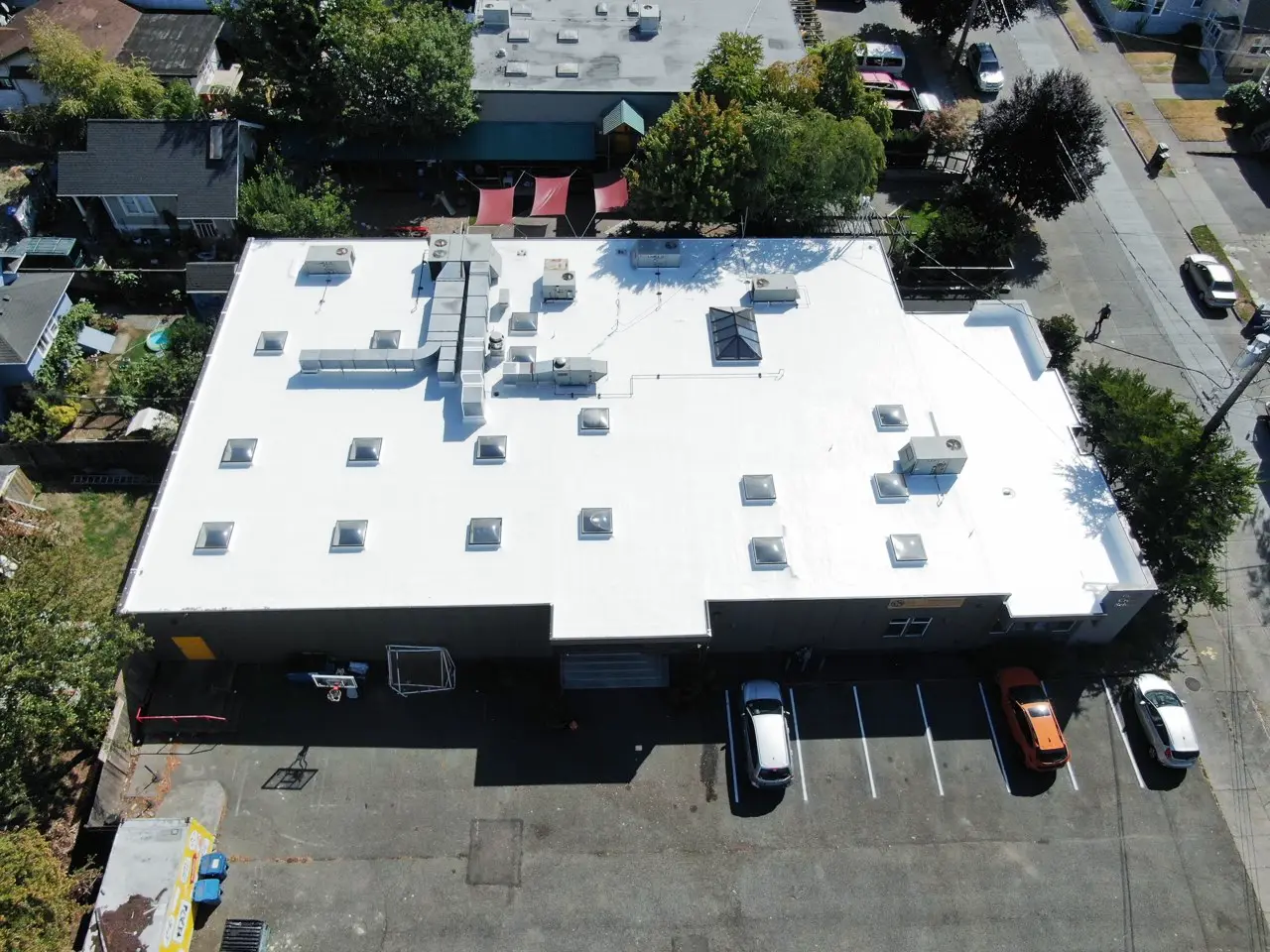
Tucson Unified School District, the largest K-12 district in southern Arizona with over 40,000 students across more than 80 campuses, faces roofing maintenance challenges that span a century of construction technology-from 1920s unreinforced masonry elementary schools in the historic barrio neighborhoods to late-1990s tilt-up concrete classroom buildings on the expanding suburban fringe. Managing this portfolio responsibly requires roofing contractors who understand the budget cycle dynamics, prevailing wage obligations, and summer-window scheduling constraints that govern public school construction in Arizona.
Arizona's school construction funding is allocated through the School Facilities Board and individual district bond measures, creating a budget calendar that differs substantially from private commercial real estate. Major reroofing projects for TUSD campuses must typically be funded through voter-approved general obligation bonds or maintenance and operations budget allocations reviewed by the governing board, both of which operate on timelines that require contractor engagement well before the desired construction year. We work with district facilities departments to develop multi-year roofing capital plans that align project sequencing with anticipated funding availability rather than reacting to emergency conditions after roof failures occur.
Summer scheduling is the dominant logistical constraint for Tucson school roofing. The academic year extends through late May and resumes in late July for TUSD's modified calendar schools, leaving a narrow construction window during which noise, fumes, and access disruption are acceptable. Monsoon season begins in late June, creating weather risk during the peak construction window. We mobilize school projects the day after the last day of classes, work compressed schedules with larger-than-standard crews to maximize production before school resumes, and maintain construction progress documentation required by district project management staff who report to governing board oversight committees.
The extreme Tucson summer heat creates worker health and safety requirements for school roofing projects that go beyond standard OSHA standards. Our crews working on dark-surface tear-off operations in June and July implement mandatory hydration protocols, heat illness prevention monitoring, and work-rest rotation schedules that comply with Arizona OSHA's heat illness prevention standards. We document these protocols in our site safety plans and review them with district safety officers before mobilization, because school districts in Arizona have been held liable for contractor worker safety violations on school property.
Asbestos abatement is a hidden complexity in TUSD roofing projects because many of the district's pre-1980 buildings contain asbestos in built-up roofing felts, vapor barriers, and pipe insulation beneath existing roof assemblies. Before any reroofing project involving demolition of existing materials, we conduct a building materials survey by a certified industrial hygienist and incorporate abatement scope into the project budget when regulated materials are identified. Arizona schools are subject to AHERA requirements that mandate specific notification, abatement, and recordkeeping procedures for asbestos-containing materials in school buildings.
Historic buildings within TUSD's portfolio-particularly the early twentieth-century schools in Tucson's established central neighborhoods-present preservation challenges similar to those encountered on historic churches. Pueblo Revival and Spanish Colonial Revival school buildings have original clay tile sections, ornate parapet copings, and decorative concrete cornices that are not replaceable with modern substitute materials without affecting the historic character that makes these buildings civic landmarks. We approach these buildings with the same investigative care and material authenticity we apply to commercial historic preservation projects, because school district facilities staff and community members are highly attentive to how their historic neighborhood schools are maintained.
Prevailing wage requirements apply to public school reroofing projects in Arizona when project value exceeds applicable thresholds or when federal funding sources are involved. TUSD projects funded through federal Title I supplemental funding or E-Rate technology infrastructure programs may carry Davis-Bacon Act prevailing wage obligations. We maintain certified payroll documentation capabilities and comply with all applicable prevailing wage requirements on public school projects, providing the certified payroll reports that district finance staff must submit to oversight agencies.
Roof drainage is particularly critical at Tucson school campuses because improperly maintained drains are the most common source of interior damage in school buildings. Cottonwood and mesquite seed material, equipment debris, and wind-deposited caliche clogs school roof drains with surprising speed during spring and monsoon seasons. Our maintenance programs for school district clients include seasonal drain clearing, inspection of overflow provisions, and documentation of drainage capacity that helps facilities directors justify maintenance budget allocations to governing boards who may not understand why routine drain maintenance is a capital preservation priority.
Project documentation for TUSD and other Pima County school districts must meet public works reporting standards that exceed those required for private commercial projects. We provide certified as-built drawings, manufacturer warranty certificates, material safety data sheets, and O&M manuals in digital formats compatible with district document management systems. This documentation supports the district's asset management program and ensures that future facilities staff have accurate records of what was installed, when, and under what specifications-information that is essential for planning the next replacement cycle.
- How does the Arizona School Facilities Board process affect reroofing project timing for TUSD?
- SFB funding applications require documentation of existing conditions, cost estimates, and project justification submitted through the district's five-year capital improvements plan process. We provide condition assessments and cost estimates formatted for SFB submission and can testify to condition findings at governing board hearings when requested by district staff.
- Does asbestos abatement always add cost to a Tucson school reroofing project?
- Not always-some school buildings were constructed after asbestos use in roofing materials was phased out, and some earlier buildings have had previous abatements. A pre-project building materials survey by a certified industrial hygienist is always required before demolition begins, and abatement scope is added to the project budget only when regulated materials are confirmed present.
- How do you manage the monsoon season risk during summer school roofing work?
- We sequence work to maintain watertight conditions over every interior space at all times, including at end-of-day when weather risk is highest in July and August. We maintain temporary waterproofing capability on-site and monitor National Weather Service monsoon watches to adjust daily work plans when afternoon thunderstorm probability exceeds thresholds that would leave exposed areas at risk.
- What prevailing wage documentation is required for a TUSD reroofing project?
- Davis-Bacon Act-covered projects require weekly certified payroll reports, a poster of wage determinations posted at the job site, and interview documentation showing workers received at least the applicable prevailing wage. We provide all required documentation in the formats specified in the project contract and maintain records for the three-year retention period required by federal prevailing wage regulations.
- Can you develop a multi-year roofing plan for a large school district portfolio?
- Yes. We conduct condition assessments across entire campus portfolios and develop prioritized replacement schedules aligned with anticipated funding availability, remaining useful life estimates, and emergency risk levels. These plans are formatted for governing board presentations and include cost projections at current pricing with escalation estimates for future-year projects.
Frequently asked questions
Can you coat a BUR roof instead of replacing it?
Sometimes - and in Tucson it is often the right call when the substrate qualifies. We pull moisture cores before making any recommendation. If the insulation is dry, the gravel contact is intact, and there is no active blistering, a silicone coating system with the appropriate BUR primer is frequently the most cost-effective path: typically one-third the cost of tear-off and replacement, with a 10-15 year warranty from the coating manufacturer. If the insulation is wet, coating is not the answer and we say so.
How does Tucson's climate affect BUR faster than other markets?
Sustained UV at Index 11-plus for roughly five months of the year oxidizes the surface bitumen at a faster rate than in northern or coastal markets. The monsoon season then stress-tests seams and flashings that have been UV-cycled all summer. The combination accelerates alligatoring, flashing degradation, and gravel contact breakdown faster than manufacturer service-life tables - which are typically calibrated to moderate-climate exposure - predict. Annual inspection and maintenance is not optional on Tucson BUR systems; it is what determines whether the system reaches the end of its useful life on a planned schedule or fails on a monsoon emergency.
Is new BUR installation an option for Tucson commercial buildings?
Rarely, and we do not recommend it as a first choice. New BUR installation in the Tucson market has been largely supplanted by TPO and silicone coating systems that provide better reflectivity performance in the IECC Climate Zone 2B compliance environment. We can spec and install new BUR where a building's situation specifically requires it - but for most Tucson commercial buildings, a reflective single-ply system or a silicone restoration coating is the more defensible recommendation.
Aging BUR on a Tucson commercial building?
We will walk the roof, pull core cuts, and produce a written assessment - replace vs. coat vs. recover - with system options, installed cost bands, and warranty paths. No obligation.
Ready to talk through a roof?
Tell us about the building and the roof problem. We'll document it and put a plan in writing - with an honest repair-vs-replace recommendation and no upsell pressure.
Documented, repair-first commercial & industrial roofing across Tucson and Pima County. Flat and low-slope systems for occupied buildings, planned around your operation.
Services
© 2026 Commercial Roofing Contractors Tucson. All Rights Reserved. Privacy Policy · Terms of UseSite Map