Active leak or monsoon damage?Protect the building first.

Call with the property address, leak location, and access notes. We will help organize immediate water control, document the affected roof area, and define the permanent repair.

We document roofs before we price them

Commercial Roofing Contractors Tucson is a commercial-only roofing contractor serving Tucson and Tucson and Pima County. We work on flat and low-slope roofs for occupied buildings - offices, industrial and warehouse, retail, healthcare, schools, and specialty facilities - where the roof has to be fixed without shutting the building down. Every engagement starts with a documented roof walk and a written scope before any number is discussed.

About Our Operation

What we do

Commercial roof services for desert-exposed buildings

Repair, replacement, coatings, inspection, and maintenance - each scope tailored to roof access, heat exposure, drainage, and your tenants' operations.

Protect the roof investment

Start with the roof decision that matters now.

A written inspection makes the next repair or capital decision easier. A service agreement keeps that roof record current after the immediate work is done.

top of page

Service

Commercial Roof Drainage and Ponding Repair in Tucson

In Tucson, drains pack with desert dust, Palo Verde flower debris, and monsoon-delivered organics - and in the Sonoran Desert's low humidity, that dry debris can fully obstruct a drain without any visible moisture signal. A blocked drain before monsoon season is the fastest path from a functioning roof to an interior water claim.

A commercial flat roof drain has one job: move water off the roof fast enough that ponding does not accumulate to a depth that stresses the membrane or overloads the structure. In Tucson, drain failure takes a form that is unique to the Sonoran Desert environment: debris obstruction by dry material. In a humid climate, blocked drains typically show visible wet debris or obvious standing water. In Tucson, a drain can be 70% blocked by a compacted layer of desert dust, Palo Verde petals, cottonwood seed, and windblown grit - all dry, all invisible from the roof surface - and then fail completely when the first monsoon event of the season dumps an inch of rain on the building in 45 minutes.

Tucson monsoon events are fast and intense. The National Weather Service Tucson records show single-event totals exceeding two inches at Tucson International Airport, with higher totals in the foothill and mountain-adjacent corridors where orographic enhancement amplifies storm intensity. A four-inch internal drain that is 60% blocked by dry desert debris cannot clear a two-inch-per-hour event - the roof surface fills, water backs up against perimeter flashings that were managing fine under normal drainage, and an otherwise sound roof produces an interior water claim because the drain was not serviced before monsoon season.

We clean, repair, and replace drains across the full range of internal drain components on Tucson commercial buildings. Pre-monsoon drain service is one of the most impactful single maintenance items for Tucson flat-roof buildings - clearing drains in May or June before the July storm season opens is what separates buildings that get through monsoon unscathed from buildings that call us in August with interior water damage.

Internal Drain Replacement

A drain bowl that has corroded through at the clamping ring seat - common on older cast-iron drain bodies that have been subject to standing water and the concentrated salts that the Sonoran environment deposits at low points as water evaporates - cannot be repaired by retightening the ring. The bowl has to come out. We core through the roofing system, extract the failed bowl, inspect the drain leader connection for corrosion, install a new drain body with a compatible flashing ring, and integrate the new bowl into the membrane system with the manufacturer's specified flashing detail.

Drain leader connections are sometimes the source of slow leaks that resemble roof leaks but originate below the roof surface. A leader joint that has separated allows water entering the drain to exit into the ceiling plenum before reaching the storm system. We scope drain leaders with a camera when interior leak evidence is consistent with a drain location but the drain bowl itself looks intact.

Drain replacement on occupied Tucson commercial buildings requires temporary bypass draining while the new drain body cures. We plan the work sequence around the monsoon-season forecast and stage temporary drainage provisions so the building is not left without drainage capacity if a storm develops during the work window.

Scupper Repair and Clearing

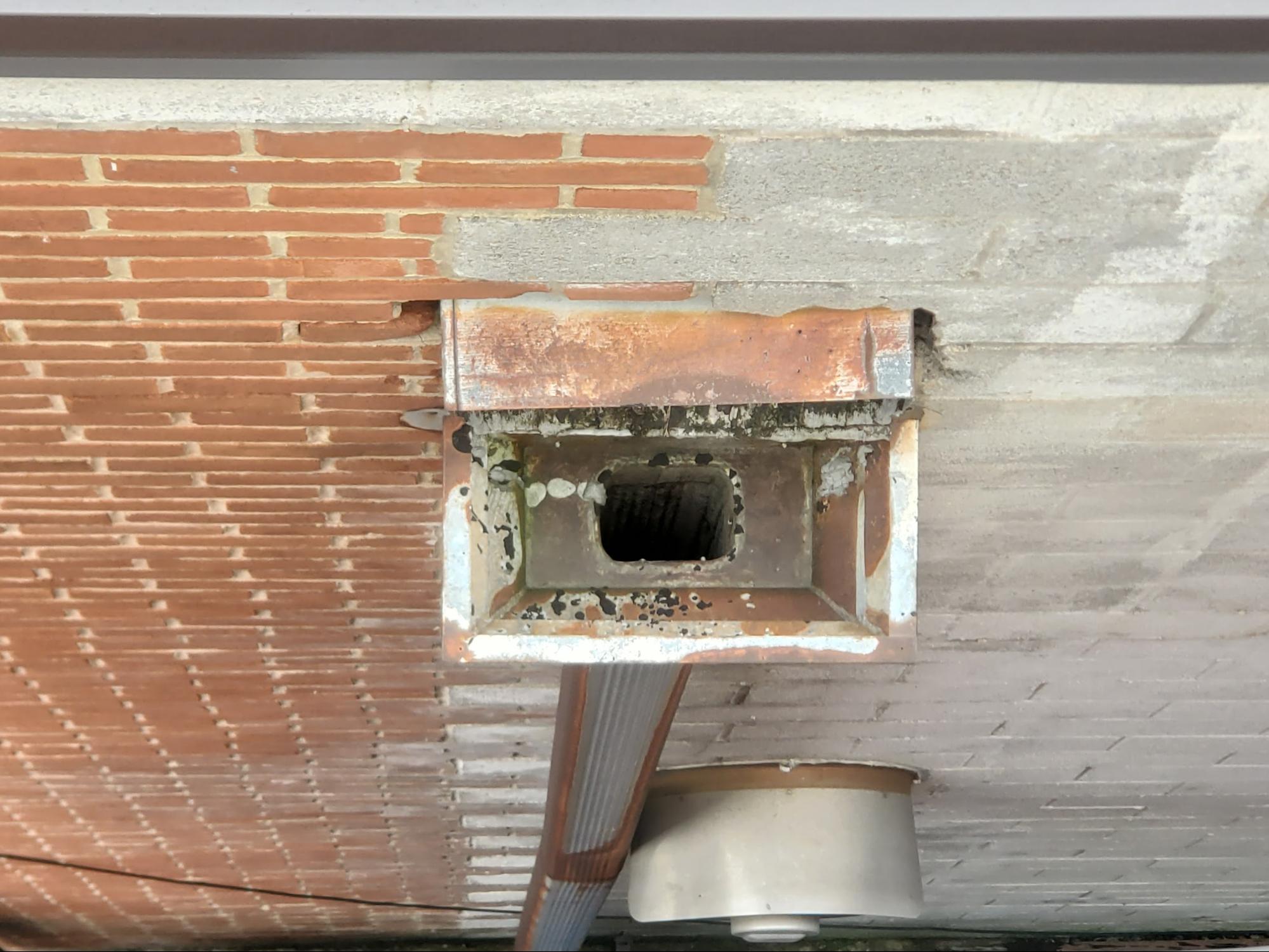
Scuppers - the through-wall or through-parapet overflow openings that serve as secondary drainage - are consistently the most neglected drain component on Tucson commercial buildings. Primary drains receive at least occasional attention; scuppers accumulate years of desert debris, rusting metal liners, and cactus wren or swallow nesting material without being touched. A scupper that cannot function as emergency overflow provides no protection when the primary drain is overwhelmed by a fast-moving monsoon cell.

We clear scuppers of debris and inspect the metal liner and exterior face of the opening. Scupper liners that have corroded or separated from the parapet face allow water to infiltrate the parapet wall assembly from behind rather than channeling it cleanly through the wall opening. We replace failed liners with stainless or aluminum fabricated units sealed into the parapet with backer rod and polyurethane sealant.

On Tucson commercial buildings where scuppers serve as primary drainage rather than overflow - common on lower-budget construction in the industrial corridors along Tucson Boulevard and the Airport Authority zones - we size the scupper openings against the roof area they drain and verify they can handle the peak-flow monsoon events their location receives. Scuppers that were adequate for original design loads but have been partially blocked by parapet modifications or accumulated sealant over successive repair cycles are a routine finding on our inspection routes.

Ponding Correction

Ponding deeper than one inch at 48 hours after a rain event is a building code violation under IBC and most Tucson-area jurisdictions. Chronic ponding on a Tucson commercial roof also accelerates UV damage - standing water concentrates salts and particulates that the dry desert air deposits on the membrane surface, and repeated wet-dry cycling stresses seams and promotes algae growth that retains moisture against the membrane between storm events.

We address ponding at the source. If the drain is functioning and ponding results from insufficient roof slope, the correct repair is tapered insulation fill directing water to the drain. If the drain has settled or shifted below the roof's actual low point - a common condition on older Tucson commercial buildings where thermal cycling and long-term deck deflection have moved the drain relative to the membrane surface - we reposition the drain or install a secondary drain at the actual low point.

Tapered insulation fill for ponding correction is engineered against an actual elevation survey of the ponded area, not an estimate. We use a laser level to map low points and design the taper package to achieve positive drainage at a minimum 1/4-inch-per-foot slope across the corrected area. On Tucson roofs where summer UV has caused the membrane to oil-can or the deck to deflect asymmetrically, the actual low point is sometimes not where it appears on the original architectural drawings.

Frequently asked questions

How often should Tucson commercial roof drains be cleaned?

At minimum, annually - and the pre-monsoon window in May or June is the highest-priority timing. Palo Verde trees flower in April and May across Tucson, releasing large quantities of dry floral debris that packs drain bowls quickly. Buildings surrounded by desert landscaping with native trees should have drains inspected and cleared before the monsoon season opens. Buildings adjacent to construction sites or in open desert corridors may need more frequent clearing due to windblown dust accumulation.

Can a drain be repaired without disturbing the roof membrane?

In some cases. If the clamping ring has failed but the drain body and leader connection are intact, we can sometimes replace the ring and strainer assembly without full bowl extraction. We assess this case by case - the goal is always minimum disturbance to an intact membrane.

What is the cost difference between drain cleaning and drain replacement?

Cleaning a blocked drain - pulling the strainer, clearing desert debris from the bowl, and verifying flow - is a maintenance item, typically a few hundred dollars per drain. Full drain replacement including bowl extraction, membrane integration, and leader inspection is a repair item that runs significantly higher depending on drain depth and membrane system. We quote both options after the inspection so the decision is based on actual condition, not assumption.

Next Step

Drains not cleared before monsoon season?

We inspect, clean, and repair - and we address drainage geometry so a blocked drain does not repeat the same ponding damage next storm season.

Request a Drain Inspection →

Separate immediate service from capital work

The recommendation must answer whether cleaning is enough, whether a drain or flashing detail needs repair, or whether chronic slope and capacity problems require redesign. An isolated repair, repair program, restoration, recover assembly, and full replacement solve different condition patterns and should not be presented as interchangeable price levels. Compare the distribution of wet materials, attachment and deck concerns, drainage, detail density, repair frequency, disruption, expected ownership period, energy goals, code assumptions, and warranty requirements. Cost without those differences is not a lifecycle comparison. Ownership should be able to see why a roof can be maintained, why it qualifies for restoration, or why removal is necessary. The report earns that conclusion through field evidence rather than sales urgency.

The handoff should survive the service call

The work becomes more valuable when it leads to a roof-condition review that connects drainage failures to membrane and insulation performance. A service call, inspection, and capital project should use one continuous property and roof-area history. A persistent roof file connects dates, weather, symptoms, findings, repairs, costs, and follow-up. Trends become visible: recurring locations, growing wet areas, drainage issues, or a rising frequency of unrelated failures. The result is more than a completed patch or proposal. It is a controlled sequence from immediate response to documented condition, from condition to an appropriate option, and from that option to scheduled stewardship of the roof asset.

Collect the details that shape safe dispatch

Before dispatch, collect the address, responsible building contact, safe access route, occupied area below the problem, time and behavior of the leak, known roof type, and any temporary protection already attempted at the Tucson property. If the building has prior reports, warranties, repair invoices, roof plans, or known drain locations, those records can shorten the investigation. They should be treated as history to verify, not as proof that the present failure has the same cause. Clear intake notes reduce wasted roof time and prevent the handoff from losing urgent details. They also create the first event in the roof history that later inspections and repair records can reference.

Define scope and pricing boundaries

The owner should see the boundary between the base scope and contingent work. That includes moisture limits, substrate repair, additional layers, damaged deck, blocked piping, inaccessible details, hazardous materials, and work by other trades. Schedule assumptions also belong beside price: weather windows, material lead time, permits, shutdowns, tenant coordination, daily dry-in, and access restrictions. An unexplained low number can become an expensive sequence of changes if these constraints are omitted. Closeout requirements should be priced as part of the work: final photographs, repair locations, warranty or material records, open punch items, and the next recommended inspection. Those documents keep the completed scope connected to the roof plan.

Why local exposure changes the field plan

Tucson, AZ roofs work through intense ultraviolet exposure, large surface-temperature swings, windblown debris, and concentrated monsoon rainfall. That exposure guides the field sequence, but it does not by itself explain slow roof drains, blocked strainers, backed-up leaders, leaking drain bowls, undersized scuppers, missing overflow paths, or ponding that remains after rainfall. The review should connect the time and location of water entry with roof zones, elevations, drainage paths, and construction transitions. That map helps distinguish one isolated defect from several conditions activated by the same rainfall. This distinction protects the owner from treating a correlation as proof. It also lets the next technician revisit the precise unknown instead of repeating the entire investigation.

Document the condition before choosing the scope

A decision-grade Tucson roof record includes water depth and duration, debris, drain and scupper condition, membrane terminations, interior staining, discharge restrictions, roof slope, overflow provisions, and repeated ponding locations. Conditions should be organized by roof area and priority rather than buried in a chronological photo dump. The practical method is to follow water from the roof field through low points, sumps, drain bodies, clamping rings, scuppers, leaders, overflow openings, and safe discharge points. Where destructive or electronic testing is proposed, the scope should identify its purpose, limitations, and restoration procedure before work begins. Observed facts, recommended actions, completed work, and open items should never share one unlabeled list. Separating them lets an off-site approver see exactly what was authorized and what still needs a decision.

Treat each roof assembly on its own terms

Roof-system identification changes the diagnosis. Around Tucson, the target page inventory includes Built Up Roof Systems, PVC Roof Systems, and TPO Roof Systems, each with its own seam, flashing, fastener, and compatibility questions. Preparation and repair language must fit the substrate. Cleaning, drying, reinforcement, fastening, priming, welding, adhesion, and cure requirements should not be copied from one roof system to another without verification. Drainage stays in the analysis because a sound patch cannot correct water held against a curb, an overloaded outlet, or settlement at a low point. System language should support whether cleaning is enough, whether a drain or flashing detail needs repair, or whether chronic slope and capacity problems require redesign instead of functioning as a product catalog.

Roof work has to fit real operations

Museum Cultural Facility Roofing, Distribution Center Roofing, and Aerospace Defense Roofing do not share the same interruption tolerance. The roof scope should be written around the occupied property as well as the exterior defect. Document roof access, sensitive rooms and inventory, deliveries, public entrances, tenant hours, exhausts and air intakes, interior evidence, and the route used to move tools and debris. These conditions belong in the written scope before scheduling. Operating controls are roof-quality controls. Water, debris, odor, noise, or an unsecured access point can harm the owner even when the installed detail itself is correct, so those risks need owners and closeout checks.

Tucson decision checklist

  • Map the interior symptom to a named roof area before selecting a repair detail.
  • Record temporary measures separately from permanent work and list every open item.
  • Verify drainage, penetrations, walls, edges, earlier repairs, and transitions around the affected area.
  • State the observed roof assembly, unknown construction, access limits, and testing assumptions.
  • Connect the recommendation to repair, restoration, replacement, maintenance, or capital-planning thresholds.
  • Set the next inspection or follow-up date so the roof history continues after this visit.

Commercial roof decision questions

Does this condition automatically mean the roof must be replaced?

No. The review should establish whether cleaning is enough, whether a drain or flashing detail needs repair, or whether chronic slope and capacity problems require redesign. Replacement becomes a defensible recommendation only when the field evidence, moisture, assembly condition, repair history, deck or attachment concerns, and lifecycle comparison support it.

What should the Tucson roof scope document?

It should document water depth and duration, debris, drain and scupper condition, membrane terminations, interior staining, discharge restrictions, roof slope, overflow provisions, and repeated ponding locations. It should also label temporary and permanent work separately, state assumptions and exclusions, and identify the inspection or service step that follows the current scope.

How does an urgent call become a maintenance or capital plan?

The immediate visit creates the first roof-area record. A follow-up inspection establishes condition and priorities. Completed repairs, recurring observations, drain service, warranties, and future recommendations are then retained so maintenance stays scheduled and larger work can be placed into the appropriate capital year.
From service call to roof plan

Use the next decision, not the biggest sale.

Stabilize the problem, document the roof, compare the viable paths, and keep the resulting roof history active.

Request commercial roof help

bottom of page
Commercial roof service agreements

Stay ahead of the next leak.

Scheduled roof walks, drain and detail checks, photo records, repair tracking, and budget notes give the property team a living roof file instead of another surprise after the next monsoon.

Review Service Agreements
Commercial Roof Maintenance - commercial roofing in Tucson, AZ

Built for Tucson commercial roofs

From repair and re-roofing to coatings, inspection, and maintenance, we specify assemblies for the Sonoran Desert: sustained UV at Index 11-plus for much of the year, monsoon downpours, spring wind and hail, and a wide daily temperature swing that cycles flashings and seams harder than most markets.

View All 52 Services

Repair-first, documented, no upsell

Because the right call is not always a full replacement, every roof we touch gets photos, moisture and drainage notes, and a written record of what is failing and why - then an explicit repair-vs-replace recommendation. You only spend on what the building actually needs.

Roof Systems We Install
EPDM Roofing - commercial roofing in Tucson, AZ

Roofing across Tucson and Pima County

Galvanized by manufacturer-certified crews and full closeout documentation, we keep buildings dry and on-budget from downtown Tucson to Oro Valley, Marana, Sahuarita, and the foothills. Tell us about the roof and we will put a plan in writing.

View All 22 Service Areas